
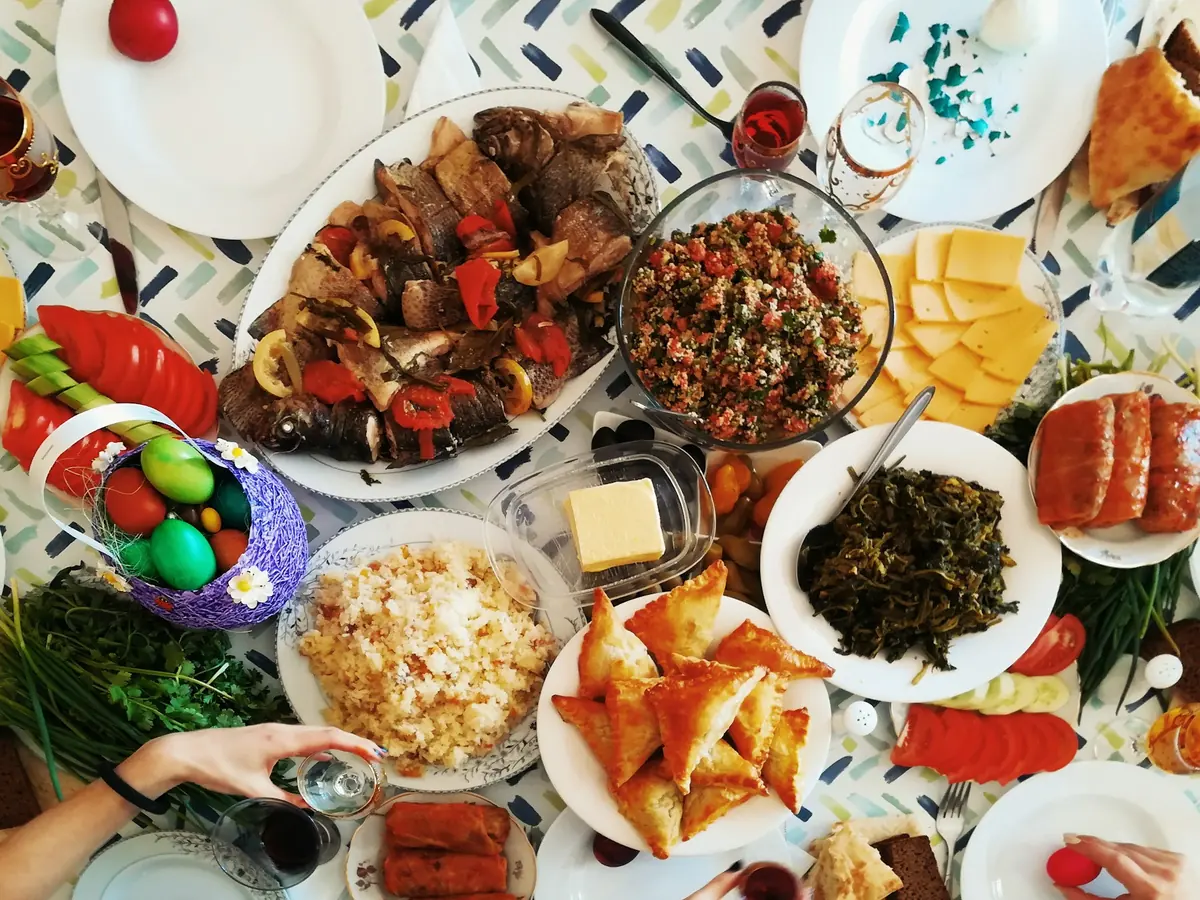
“Arabic food” is one of those phrases that everybody uses and almost nobody defines. It appears on restaurant signs, in search results and in conversation, covering everything from a Lebanese mezze table to a Saudi rice platter the size of a car bonnet.
It is a genuinely useful term, but it describes something wider than most people picture. Here is what it covers, how the regions differ, and what you will actually be handed at an Arabic restaurant in the United States.
The short answer
Arabic food means the cooking of the Arabic-speaking world — roughly twenty-two countries from Morocco to Oman. It is defined by language and culture rather than by geography, which is why it overlaps with Mediterranean and Middle Eastern cooking without being the same as either.
A language, not a country
This is the thing that makes the term confusing. “Italian food” maps onto a country and “Mediterranean food” maps onto a sea, but Arabic food maps onto a language spoken across two continents and an enormous range of climates.
The result is more internal variation than in almost any other cuisine labelled with a single word. A Moroccan tagine and a Kuwaiti machboos are both correctly described as Arabic food, and they have very little in common on the plate. What holds the category together is a shared set of habits rather than a shared list of dishes: bread with everything, rice as a foundation, generous shared platters, and hospitality treated as an obligation rather than a courtesy.
The Levant
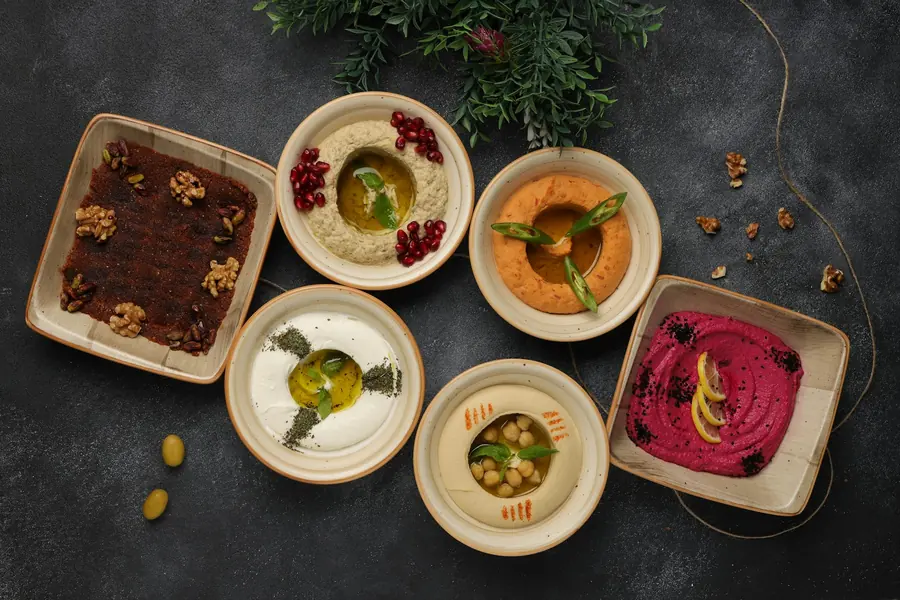
Lebanon, Syria, Jordan and Palestine. This is the corner of the Arabic-speaking world that most Americans have actually eaten from, because it is what the overwhelming majority of “Mediterranean” restaurants in the US are serving.
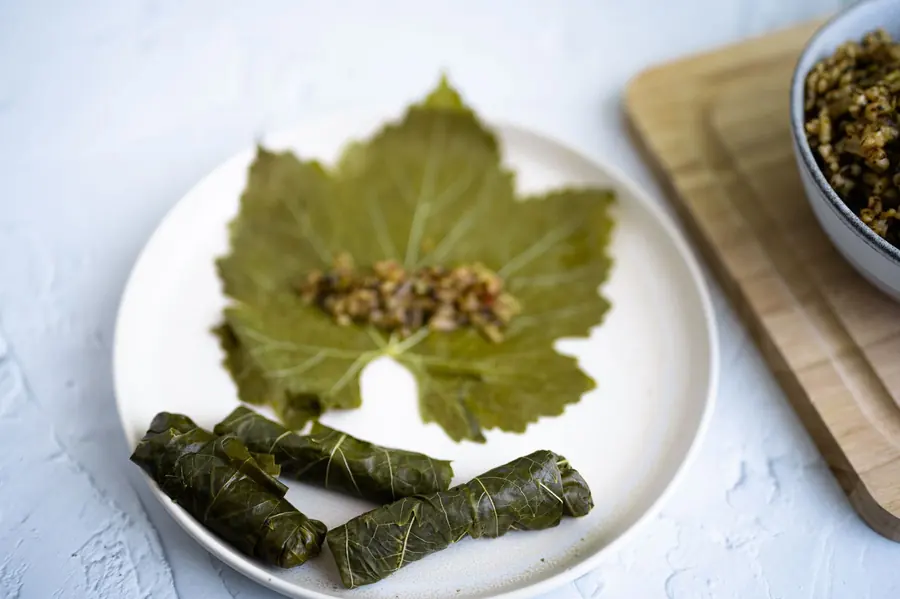
It is the lightest and most vegetable-forward of the regional styles: olive oil, lemon, garlic, parsley and mint doing most of the work, with grilled meat alongside rather than at the centre. Hummus, tabbouleh, fattoush, falafel, shawarma and stuffed vine leaves all come from here. Our guide to Lebanese food covers this region in more depth.
The Gulf
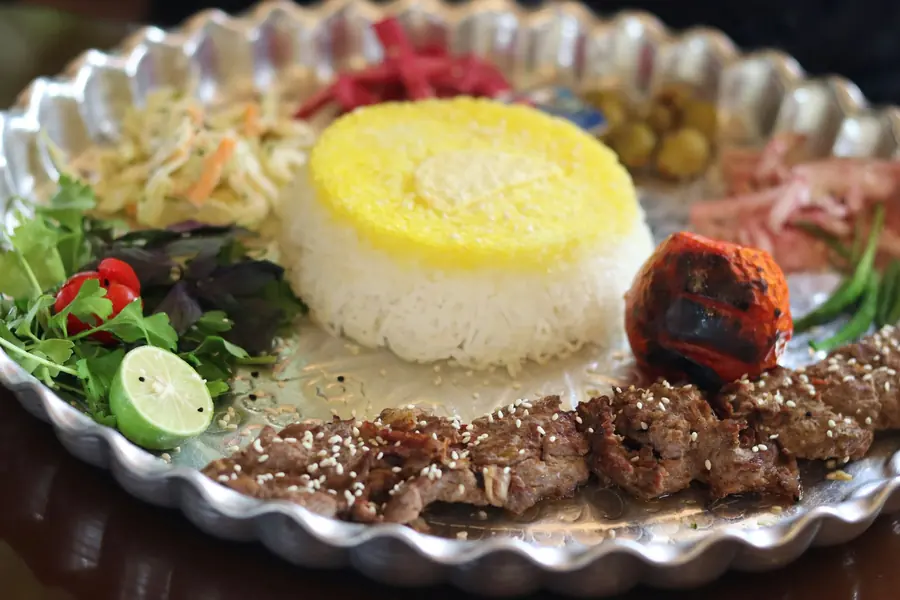
Saudi Arabia, the UAE, Kuwait, Qatar, Bahrain and Oman. Rice-centred, generously spiced, and built around large communal platters in a way the Levant is not.
Centuries of maritime trade brought cardamom, saffron, turmeric, cloves and dried limes into the everyday cooking, which gives Gulf dishes a warmth and aromatic depth that Levantine food does not have. Kabsa, machboos and mandi are the dishes to know — spiced rice cooked with meat, served on a single platter for everyone to eat from.
North Africa
Morocco, Algeria, Tunisia, Libya and Egypt. Arabic-speaking, and cooking with a distinct accent again — preserved lemon, olives, harissa, cumin and cinnamon, with couscous rather than rice as the staple in the western half.
This is the region furthest from what an American diner pictures when they hear “Arabic food”, and the one least represented on US menus outside cities with a large North African community.
Side by side
| Levant | Gulf | North Africa | |
|---|---|---|---|
| Staple | Flatbread and bulgur | Rice | Couscous, bread |
| Signature flavours | Lemon, garlic, olive oil, parsley | Cardamom, saffron, dried lime | Preserved lemon, harissa, cumin |
| Typical dishes | Hummus, tabbouleh, shawarma, kibbeh | Kabsa, machboos, mandi | Tagine, couscous, brik |
| Serving style | Many small shared plates | One large communal platter | Shared central dish |
| Common in the US? | Very — most Mediterranean menus | Growing, mostly in larger cities | Least common |
It is also worth distinguishing Arabic food from the other large halal-friendly cuisine most Americans meet. Our guide to Mediterranean versus Indian and Pakistani food covers how the two use the same spices to completely different ends.
The seasonings that carry the flavour
Three names come up constantly on Arabic and Levantine menus and are almost never explained, which is a shame, because between them they account for a great deal of what the food tastes like.
Za’atar
Za’atar is two things at once, and that is the source of most of the confusion about it. It is a plant — a wild relative of oregano and marjoram in the mint family, recorded as Origanum syriacum L. — and it is also the name of the blend built around that plant. The blend is typically the dried herb with sumac, toasted sesame seeds and salt, in proportions that are a regional and household matter rather than a fixed formula.
On a menu it turns up on bread, over labneh, on roasted vegetables and stirred into oil for dipping. The sesame in it is worth flagging: za’atar is one of the places sesame appears without the word sesame appearing anywhere, which our guide to allergens on a Mediterranean menu goes through in more detail.
Sumac
Sumac is the dried and ground fruit of Rhus coriaria L., a shrub of the Mediterranean and the Middle East that belongs to the same botanical family as the cashew and the mango. It is deep red, coarse rather than powdery, and sour.
Sourness is its entire function. Where a European kitchen reaches for lemon, a Levantine one often reaches for sumac, because it delivers acidity as a dry ingredient — so it can be scattered over something at the last moment without making it wet. It is what is on the onions in a fattoush, and what is dusted over grilled meat and over a bowl of hummus.
Baharat and the seven-spice blends
Baharat is simply the Arabic word for spices, and as a blend it is warm rather than hot: black pepper, cumin, coriander, cinnamon, cloves, cardamom, nutmeg and paprika, in proportions that shift from country to country. Lebanese seven-spice is a close relative. Both vary between households to a degree that makes any single published recipe for them slightly beside the point.
| What it is | What it tastes like | Where you meet it | |
|---|---|---|---|
| Za’atar | A herb, and a blend of that herb with sumac and sesame | Herbal, tangy, faintly nutty | Bread, labneh, roasted vegetables, dipping oil |
| Sumac | Dried ground fruit of a Mediterranean shrub | Sharply sour, slightly fruity | Fattoush, grilled meat, hummus, raw onion |
| Baharat | A warm spice blend | Sweet-warm and aromatic, not hot | Rice, stews, ground meat |
Taken together they explain why this cooking reads as aromatic rather than fiery. The lift in a Levantine dish usually comes from acidity and warm spice rather than from chilli, and heat, when it is offered at all, tends to arrive separately in a sauce.
What you will actually find in the US
If you search for an Arabic restaurant in most American towns, what you find will almost certainly be Levantine, and it will probably be described as Mediterranean on its own signage. The two terms are used interchangeably in practice even though they do not mean the same thing.
That is worth knowing before you go, because it sets expectations correctly: expect hummus, grilled meat, rice plates, wraps and salads rather than a Gulf-style platter or a Moroccan tagine. Our guide to the difference between Mediterranean and Middle Eastern food unpicks why the labels blur, and Mediterranean salads explained covers the ones you will meet first.
Bread and coffee
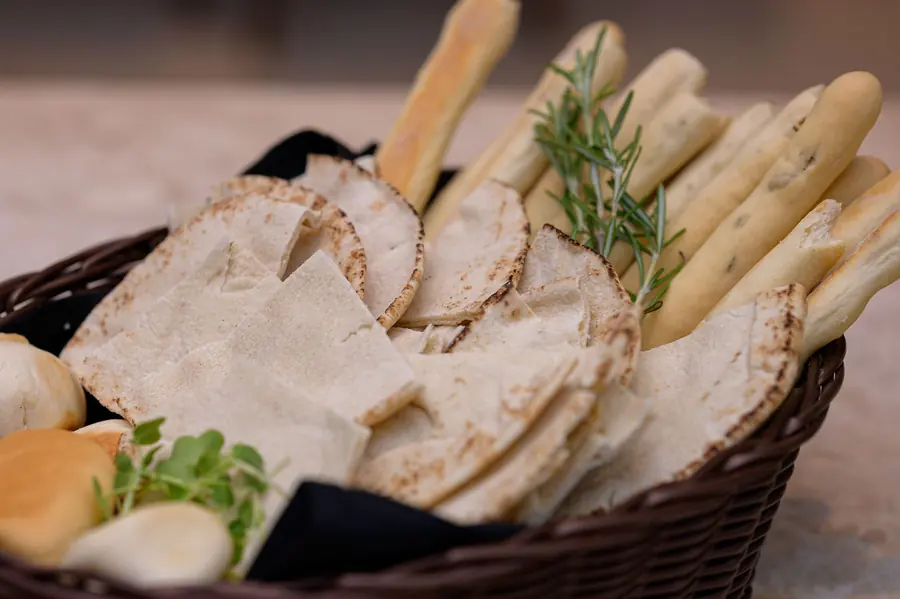
Two things run through the whole Arabic-speaking world regardless of region. The first is bread, which arrives with everything and functions as a utensil as much as a side — our guide to pita, naan and flatbread covers the differences between the versions you are likely to be handed.
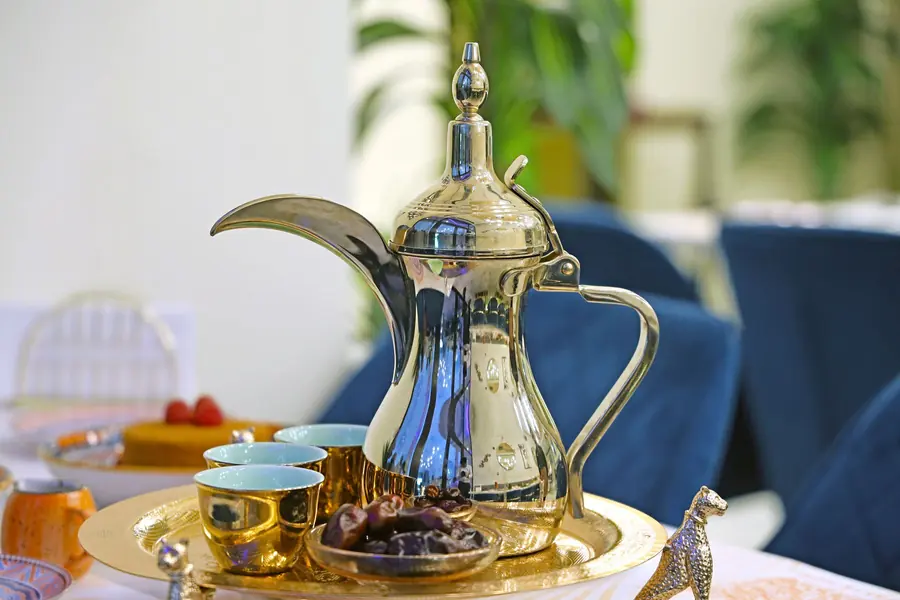
The second is coffee. Arabic coffee is lightly roasted, cardamom-scented, served in small cups without handles, and governed by real etiquette: it is inscribed on UNESCO’s intangible cultural heritage list as a symbol of generosity, which notes that older people and guests are served first, that the pot is poured with the right hand, and that a guest shakes the cup to signal they have had enough.
Is Arabic food halal?
Not automatically, and for the same reason no cuisine is: halal describes sourcing and preparation, not a style of cooking. The Arabic-speaking world is majority Muslim, so the cooking developed largely without pork and the traditional repertoire contains very little that is inherently problematic. That is a useful prior, not a guarantee.
The things to check abroad are the same everywhere: whether the meat is halal, whether alcohol is used in cooking, and whether anything is shared with non-halal preparation. Our overview of what halal food covers sets out the rules, and our guide to telling whether a restaurant is really halal covers how to ask.
What we serve
Our menu is Levantine in character, which is what most people are looking for when they search for Arabic or Mediterranean food locally — rice plates with chicken, gyro or beef, wraps, falafel, hummus, and salads alongside. Everything is made with halal ingredients.
The full menu is here, and our guide to what to order at a Mediterranean restaurant is the place to start if the format is new to you.
Coffee is the drink most bound up with all of this, and it is not the only one — our guide to what to drink with Mediterranean food covers ayran, mint tea and where coffee sits in the meal.
Frequently asked questions
What is the difference between Arabic food and Mediterranean food?
Arabic food is defined by the Arabic-speaking world and includes the Gulf and North Africa, which are not on the Mediterranean. Mediterranean food is defined by the sea and includes Greece, Italy and Spain, which are not Arabic-speaking. They overlap heavily in the Levant, which is why the terms get used interchangeably.
Is Arabic food the same as Middle Eastern food?
Close but not identical. Middle Eastern includes Iran, Turkey and Israel, which are not Arabic-speaking, while Arabic food includes North Africa, which is not usually counted as the Middle East. Most US restaurants using either label are serving Levantine food.
What are the most common Arabic dishes in the US?
Almost all of them are Levantine: hummus, falafel, shawarma, tabbouleh, fattoush, kofta and stuffed vine leaves. Gulf dishes such as kabsa and mandi are less common outside larger cities, and North African cooking is the least represented.
Is Arabic food spicy?
Generally not hot. Arabic cooking is aromatic rather than fiery, using cardamom, cumin, cinnamon and sumac for depth rather than heat. Heat is usually offered separately as a chilli sauce, with North African harissa the main exception.
Is all Arabic food halal?
No cuisine is automatically halal, since halal describes sourcing and preparation rather than style of cooking. The Arabic-speaking world is majority Muslim and the traditional repertoire contains little pork, which makes it a reasonable starting assumption, but the meat sourcing is still worth confirming.
What is za’atar?
Both a herb and a blend. The herb is a wild relative of oregano and marjoram; the blend is that dried herb mixed with sumac, toasted sesame seeds and salt, in proportions that vary by region and household. The sesame in it is worth knowing about if you have an allergy, because the word sesame does not appear.
What is sumac?
The dried, ground fruit of a Mediterranean and Middle Eastern shrub, deep red and sharply sour. It is used where another kitchen would use lemon, with the advantage that it adds acidity without adding liquid, so it can be scattered over a finished dish.
The useful takeaway: Arabic food is a language-shaped category covering three quite different regional styles, and what you will meet in most of the United States is the Levantine one.
Levantine cooking, made with halal ingredients, in San Marcos.