
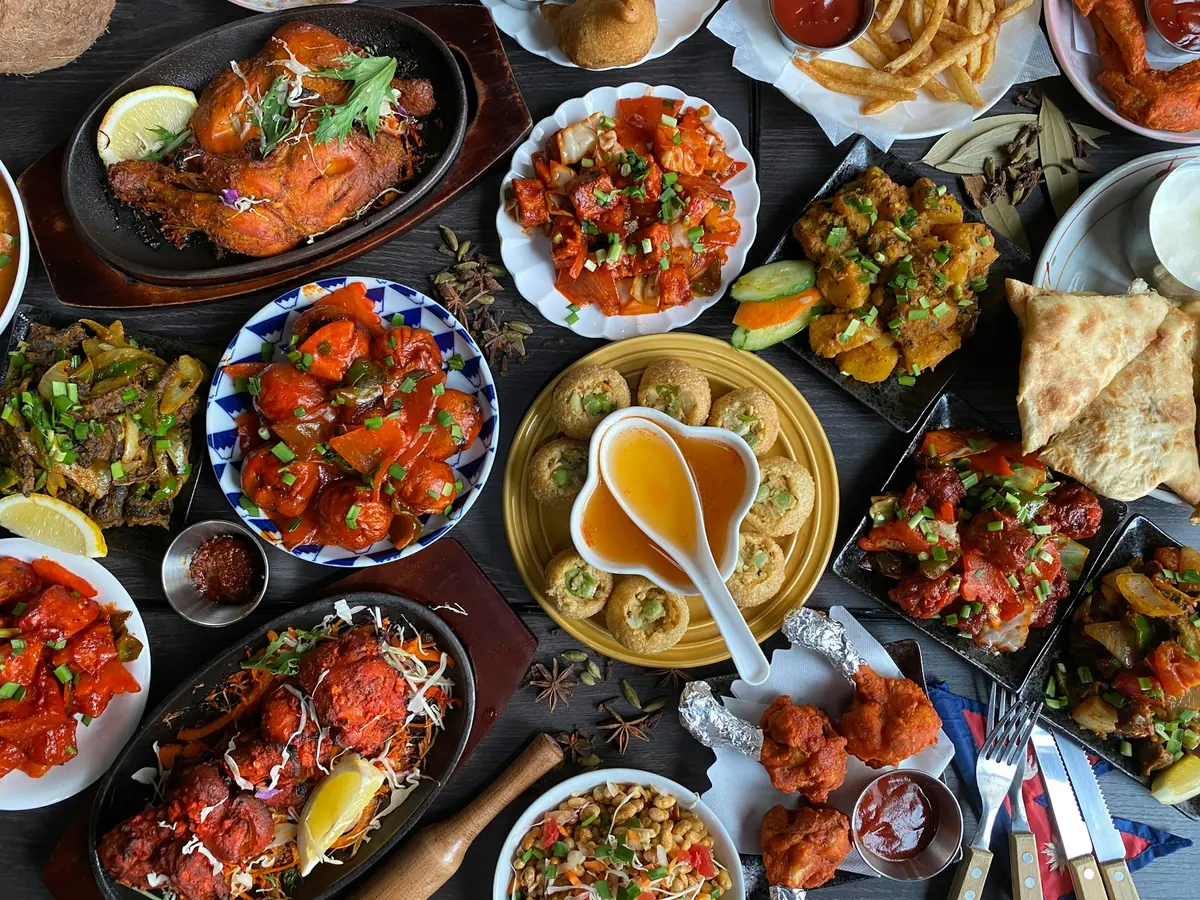
If the halal food you grew up with was Pakistani, Indian or Bangladeshi, a Mediterranean menu can look oddly bare. The spices are familiar in name and unfamiliar in use, there is no curry, and the meat arrives dry rather than in a sauce.
It is a genuinely different cuisine rather than a milder version of the same one. Here is how the two differ, and what to order first if you know one and not the other.
The short answer
South Asian cooking builds flavour into a sauce through layered, ground spice blends and long cooking. Mediterranean cooking puts flavour on the surface — marinade, char, lemon, olive oil, fresh herbs — and serves the components separately. Both use many of the same spices to completely different ends.
Same spices, opposite method
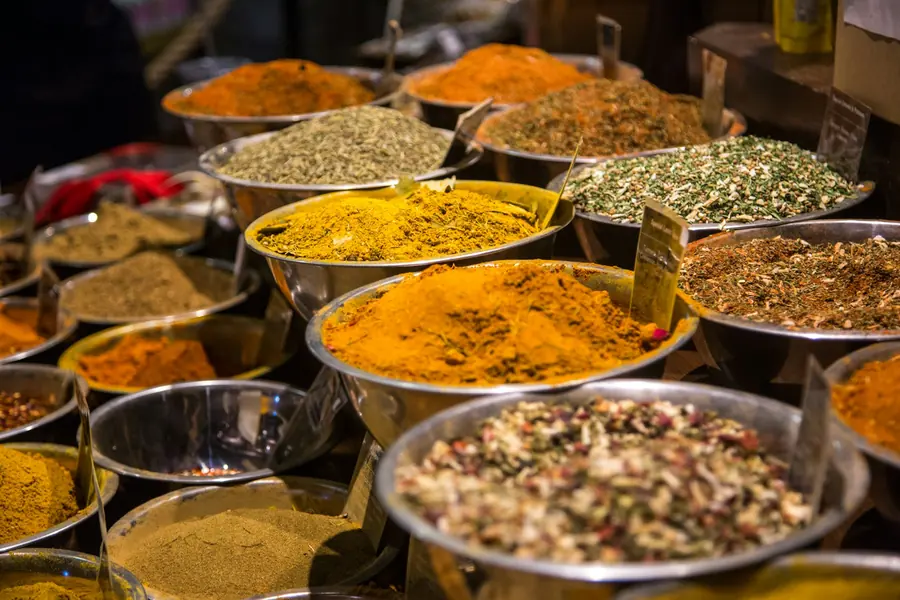
Cumin, coriander, turmeric, cinnamon, cardamom and chilli appear in both kitchens. What differs is what happens to them.
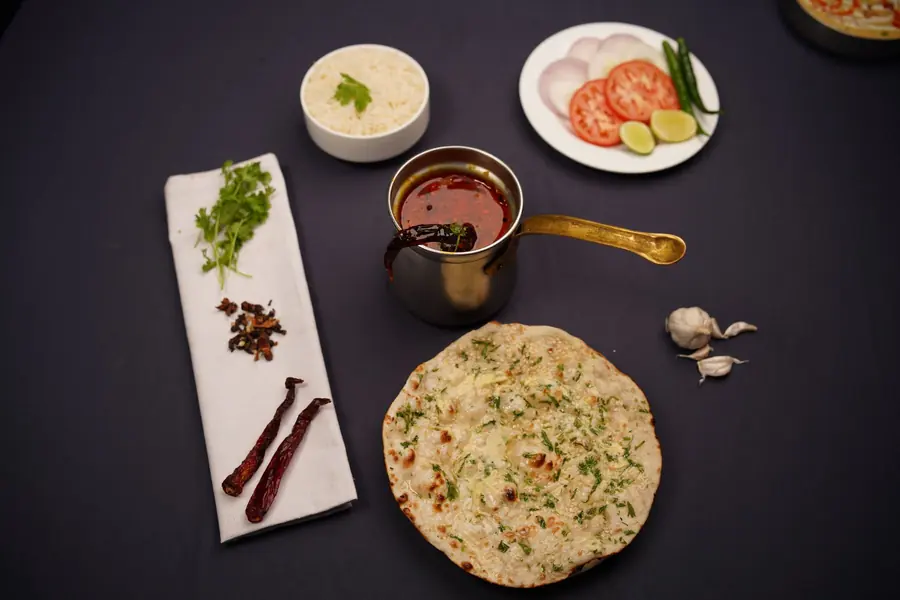
In South Asian cooking, spices are typically bloomed in fat at the start, combined into blends, and cooked into a base of onion, tomato, ginger and garlic over time. Britannica’s overview of Indian cuisine describes the regional range and the centrality of that spice work, which varies enormously from north to south.
In Mediterranean cooking, spices mostly go on the outside. Meat is marinated, grilled and served with something fresh and acidic alongside. The cooking is fast and the flavour sits on the surface rather than being built into a sauce.
Heat is the difference people notice first
Mediterranean food is aromatic rather than hot. There is very little chilli in the core repertoire, and where heat appears it is usually offered separately as a sauce rather than cooked into the dish.
For someone used to South Asian food this reads as under-seasoned on a first visit, which it is not — the seasoning is doing something different. The practical fix is to ask for the hot sauce on the side and to use the garlic sauce generously, which carries far more punch than its colour suggests. Our guide to garlic sauce, tzatziki and tahini covers what each one does.
Side by side
| South Asian | Mediterranean | |
|---|---|---|
| Flavour method | Built into a sauce over time | Applied as marinade and char |
| Typical heat | Often significant | Aromatic, rarely hot |
| Staple starch | Rice and wheat breads | Rice and flatbread |
| Fat | Ghee, oil, cream in some dishes | Olive oil, almost exclusively |
| Cooking time | Often long and slow | Often fast and direct |
| Fresh element | Chutney, raita, salad on the side | Salad and lemon as a core component |
| Plate structure | Sauce and rice, combined | Components kept separate |
Where the two genuinely overlap
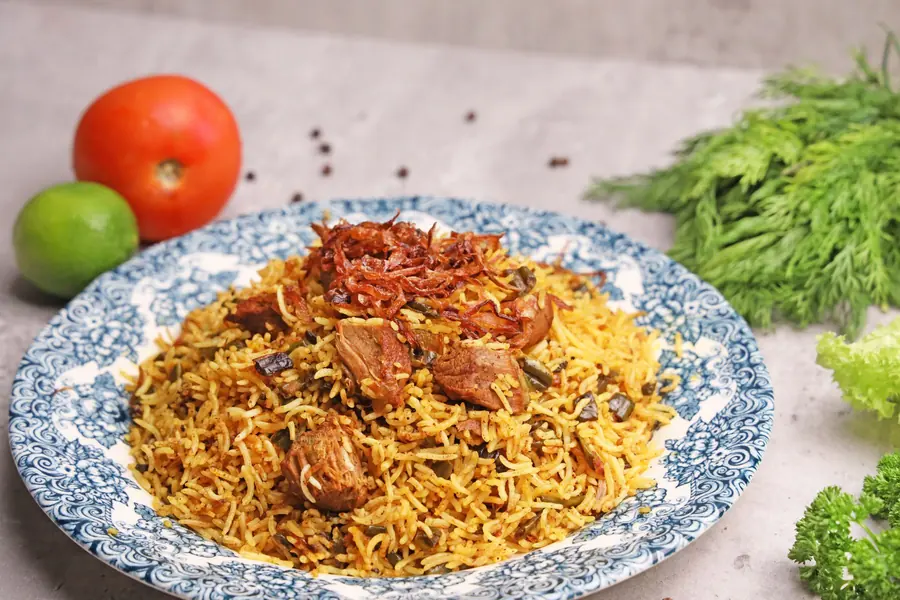
More than the contrast suggests, and mostly through history. Kebabs, biryani and the whole grilled-meat-on-a-skewer tradition travelled between Persia, Central Asia and the subcontinent, which is why a seekh kebab and a kofta are recognisably relatives.
- Grilled meat on skewers exists in both, under different names.
- Yoghurt does similar work in both — raita and tzatziki are cousins in function if not in flavour.
- Flatbread eaten by hand is the normal way to eat in both.
- Pulses are central to both, as dal and as chickpeas.
- Rice as a foundation rather than a side dish.
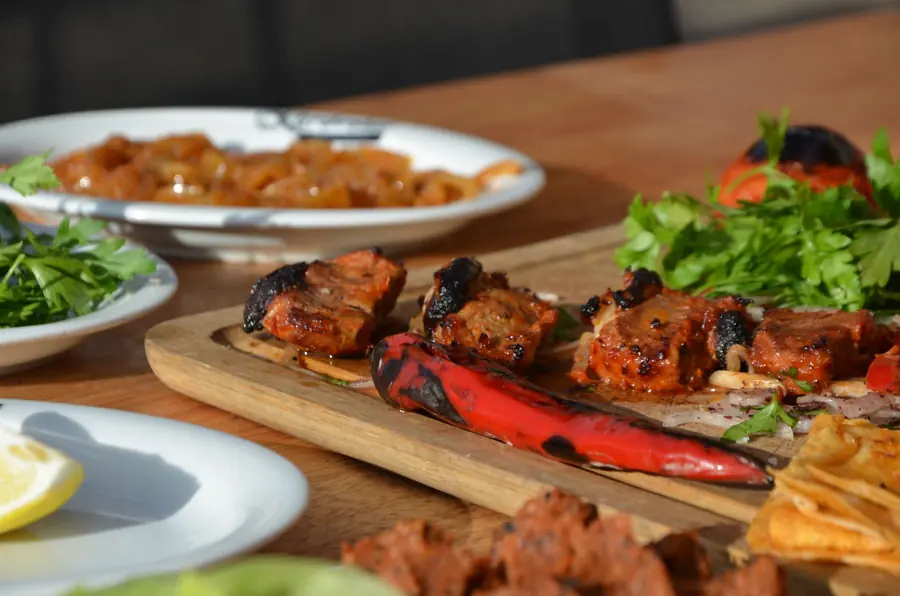
The most useful bridge dish is the kofta, which is ground spiced meat cooked directly over heat — the closest thing on a Mediterranean menu to a seekh kebab. Our guide to shawarma, kebab and kofta explains where each sits.
What to order first, coming from South Asian food
- Kofta. The most familiar thing on the menu — spiced ground meat, grilled, eaten with bread.
- A mixed plate over rice. The structure is closest to a plate of rice with meat, which is a familiar shape even if the flavours differ.
- Garlic sauce, generously. This is the item most likely to convert a sceptic. It is intense in a way the rest of the plate is not.
- Ask for the hot sauce. Most kitchens have one even when it is not on the menu.
- Skip the plain grilled chicken on a first visit. It is excellent and it is also the item least likely to land if you are expecting depth of spice.
And in the other direction
If Mediterranean food is what you know, the thing to understand about South Asian cooking is that the sauce is not a condiment. It is where most of the cooking happened, and eating a curry without enough rice or bread to carry it is the equivalent of eating shawarma meat with no bread, no salad and no sauce.
Both are easy to eat halal, for different reasons
Neither cuisine has a pork tradition to work around, which puts both in a considerably better starting position than most European cooking. South Asian cooking developed across Muslim and Hindu populations with their own dietary rules; Mediterranean cooking in the eastern half of the region developed largely in Muslim-majority societies.
The questions to ask are the same in both cases and are about the kitchen rather than the cuisine. Our overview of what halal food covers sets them out, and how to tell whether a restaurant is really halal covers how to ask.
On our menu
Our kitchen is Levantine in character — grilled chicken, gyro and beef over rice, wraps, kofta with flatbread, falafel, hummus and salads. If you are coming from South Asian food, the kofta and the garlic sauce are the two things to try first. Everything is made with halal ingredients.
The full menu is here, and our guide to what to order at a Mediterranean restaurant is a plainer introduction if the format is new.
The heat question is the one people get wrong most often when they move between the two — our guide to how spicy Mediterranean food really is covers why heavily spiced and hot are not the same thing here.
Frequently asked questions
What is the difference between Mediterranean and Indian food?
They use many of the same spices to opposite ends. South Asian cooking builds flavour into a sauce through ground spice blends and long cooking; Mediterranean cooking applies it as a marinade and a char, cooks fast, and serves the components separately with lemon and olive oil.
Is Mediterranean food spicy?
Aromatic rather than hot. There is very little chilli in the core repertoire, and heat is usually offered separately as a sauce rather than cooked in. If you are used to South Asian heat levels, ask for the hot sauce on the side.
What should I order at a Mediterranean restaurant if I usually eat Pakistani or Indian food?
Kofta is the most familiar starting point, since it is spiced ground meat cooked directly over heat, much like a seekh kebab. A mixed plate over rice is also a recognisable structure, and the garlic sauce is the item most likely to win people over.
Are Indian and Mediterranean food related?
They share history through the kebab and rice traditions that travelled between Persia, Central Asia and the subcontinent, which is why a seekh kebab and a kofta are recognisably relatives. Yoghurt, flatbread and pulses do similar work in both.
Is Mediterranean food easier to eat halal than Indian food?
Neither has a pork tradition to work around, so both start from a better position than most European cooking. In both cases the questions that matter are about the individual kitchen’s sourcing rather than about the cuisine.
Same spice cabinet, opposite technique. One builds flavour into a sauce and one puts it on the surface — and knowing which you are eating is most of enjoying it.
Start with the kofta and be generous with the garlic sauce.