A sign in the window says halal. That is a claim, not a verification, and the gap between the two is wider than most diners realise — not usually because anyone is being dishonest, but because the word covers several different standards and nobody specifies which one they mean.
Here is what the word is and is not backed by in the United States, what to ask, and how to read the answers.
The short answer
Ask three questions: is all the meat halal, is pork served anywhere on the premises, and is alcohol used in cooking. A kitchen that takes halal seriously answers all three immediately and specifically. Hesitation and generality are the signal, not the absence of a certificate on the wall.
In most of the US, the word is not policed
This surprises people. There is no federal halal certification requirement, and no single national body whose approval a restaurant must obtain. In most states, “halal” on a sign is governed only by general truth-in-advertising law, the same as any other claim a business makes about itself.
A handful of states have gone further. Illinois passed a Halal Food Act which makes it a Class B misdemeanour to make any statement that tends to lead a reasonable person to believe non-halal food is halal, and treats the presence of non-halal food on the premises of a business advertising itself as halal-only as presumptive evidence of a violation. New Jersey and several other states have comparable consumer-protection statutes.
Texas is one of them, which matters if you are reading this here. House Bill 470 added Subchapter I to Chapter 17 of the Business & Commerce Code in 2003, making it an offence to knowingly or intentionally sell food at a restaurant that is represented as halal and is not — including where the seller was reckless about determining whether it was. Chapter 17 is the Deceptive Trade Practices Act, so a consumer has a civil remedy as well. We look at what that means for menu wording in what makes a menu halal.
That is the exception rather than the rule. The practical consequence is that in most of the country the reliability of the claim rests on the restaurant, which is precisely why asking is normal rather than rude.
Certification cost is also part of why halal meat is sometimes priced above the conventional equivalent — our guide to whether halal meat is more expensive covers where that premium actually comes from, and why it varies so much by location.
Why plenty of honest kitchens have no certificate
It is tempting to treat a framed certificate as the test. It is good evidence when it is there, but its absence proves considerably less than people assume.
Third-party certification is a recurring cost with audits and paperwork attached, and it is designed largely around manufacturers and supply chains. For a single independent restaurant buying from a certified wholesaler, the certification that matters most is the one held by the supplier further up the chain. Many small halal restaurants therefore hold no certificate of their own while sourcing entirely from certified suppliers.
So a certificate is a strong positive signal, and its absence is not a negative one. What replaces it is the quality of the answers you get.
The questions worth asking
- Is all the meat halal, or only some of it? This is the one that most often produces a surprise. Kitchens that source halal chicken but conventional beef are not rare.
- Is pork served anywhere on the premises? If it is not, most of the cross-contamination question resolves itself.
- Is alcohol used in cooking? Not the bar — the marinades, the braises, the pan sauces and the desserts.
- Who supplies your meat? A specific answer, even just a supplier name, indicates somebody in the building knows.
- Is it zabiha? Ask this only if it matters to you, and name the standard you mean rather than asking whether the food is halal in general.
Those distinctions matter because “halal”, “zabiha” and “we don’t serve pork” are three different claims. Our overview of what halal food actually covers sets out what separates them.
Reading the answers
| You ask | A reassuring answer | An answer worth probing |
|---|---|---|
| Is all the meat halal? | Names which meats and where they come from | “Everything here is halal” with no detail |
| Is pork served here? | A flat no, or a clear account of how it is separated | “We don’t really do pork” |
| Is alcohol used in cooking? | Understands the question includes marinades | Answers only about the bar |
| Who supplies your meat? | Names a supplier or offers to check | Does not know and does not offer to find out |
| Is it zabiha? | Knows the term and answers directly | Treats it as interchangeable with halal |
The pattern matters more than any single answer. Specificity indicates the kitchen thinks about this routinely; generality indicates it does not. Nobody should be offended by the questions, and staff at a halal restaurant field them constantly.
Signals that mean less than they look
- Arabic or Turkish script on the signage. Decorative. It indicates the cuisine, not the sourcing.
- A crescent, or the word in Arabic on the window. Same — it is a claim in a different alphabet.
- “Mediterranean” in the name. A region, not a standard. Our guide to whether Mediterranean food is halal goes into why the two are unrelated.
- No pork on the menu. Necessary but not sufficient. It says nothing about how the beef and chicken were slaughtered.
- Muslim-owned. A reasonable prior, and still not an answer to the sourcing question.
Signals that carry weight
- Staff who answer specifically and quickly. The single most reliable indicator available to a walk-in customer.
- No alcohol served at all. Removes a whole category of question about cooking as well as drinking.
- A supplier they will name. Verifiable, unlike a general assurance.
- Consistency between the website, the menu and the counter. Claims that shift between channels are worth a second question.
- A visible kitchen. Not proof of anything, but a kitchen with nothing to hide is generally happy to be seen.
The menu itself is the first filter, and a lot of it can be read before you arrive. Our guide to what makes a menu halal covers what is absent from one, how the sourcing statement is worded, and what a menu cannot tell you however carefully it is written.
Checking before you go
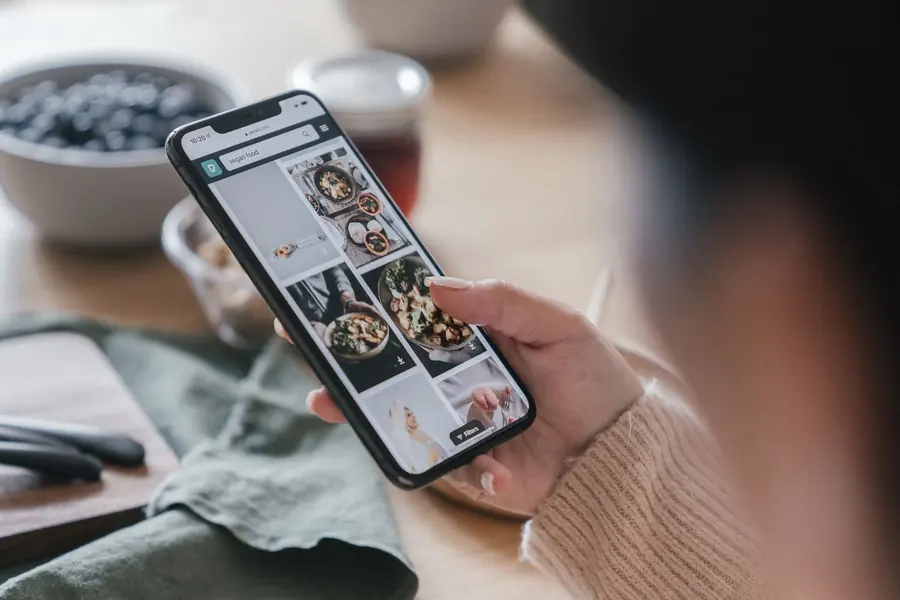
Most of this can be done from a phone in about two minutes. Read the menu on the restaurant’s own website rather than an aggregator, since aggregator listings are frequently out of date. Look for a statement about sourcing rather than just the word halal. If it matters, call and ask — a phone call to a quiet restaurant at three in the afternoon gets you a more considered answer than a question shouted across a counter at seven.
Reviews are worth reading with some caution. Other diners’ assumptions about halal status are exactly as reliable as your own would be without asking, and the useful reviews are the ones quoting something staff actually said.
What we can tell you
Everything on our menu is made with halal ingredients, we do not serve pork, and we do not use alcohol in cooking. That means there is no separate halal section to ask about and no shared-fryer question to work through, because there is nothing on the premises to separate it from.
You can read the full menu or contact us with anything more specific. And if you are comparing options locally, our guide to halal food in San Marcos covers the wider picture.
Two things make those conversations easier. Understanding what zabiha means tells you which questions about slaughter are worth asking, and knowing what a certification mark actually certifies tells you how much weight to put on a logo when you see one.
Frequently asked questions
Is halal certification legally required in the United States?
No. There is no federal certification requirement and no single national body a restaurant must be approved by. A handful of states, including Illinois and New Jersey, have passed halal consumer-protection statutes, but in most of the country the claim is covered only by general truth-in-advertising law.
Does a restaurant without a certificate mean the food is not halal?
Not on its own. Third-party certification is a recurring cost built largely around manufacturers and supply chains, and many small independent restaurants source from certified suppliers without holding a certificate themselves. A certificate is good evidence when present; its absence proves little.
What is the single most useful question to ask?
Whether all the meat is halal, or only some of it. Kitchens that source halal chicken but conventional beef are common enough that the general question misses them, and the specific one does not.
Is it rude to ask a restaurant about halal sourcing?
No. Staff at halal restaurants are asked constantly and expect it. Asking politely and specifically is normal, and a kitchen that finds the question awkward has told you something useful.
Does ‘no pork’ mean a restaurant is halal?
No. It answers the narrowest version of the question and says nothing about how the beef, lamb or chicken was slaughtered, or whether alcohol is used in cooking. It is a necessary condition rather than a sufficient one.
The short version: ask, and listen to how the answer is given rather than whether it is yes. Confidence and detail are the signal. A framed certificate is a bonus, not the test.
Questions about how we source? Ask us directly.