
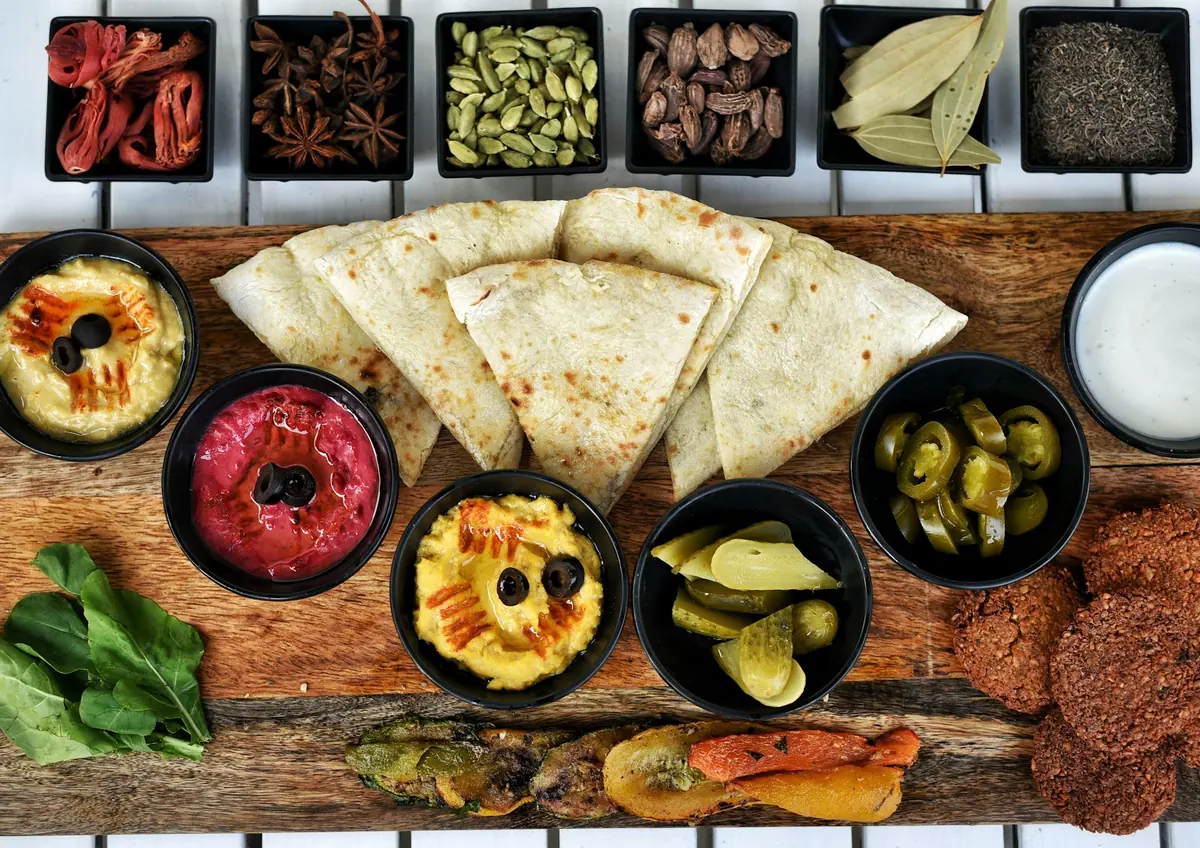
Every Mediterranean menu opens with a row of dips that look broadly alike: smooth, beige-to-brown, served in a shallow bowl with a pool of olive oil and a piece of bread. They are not alike, and which one you want depends on something more specific than “the dip.”
Here is what separates them, how to tell which is which by looking, and which to order with what.
The short answer
Hummus is chickpeas and tahini — thick, mild and filling. Baba ganoush is roasted eggplant and tahini — looser, smokier and lighter. Both are built on the same sesame paste, which is why they taste related; the difference is what was blended into it.
Hummus
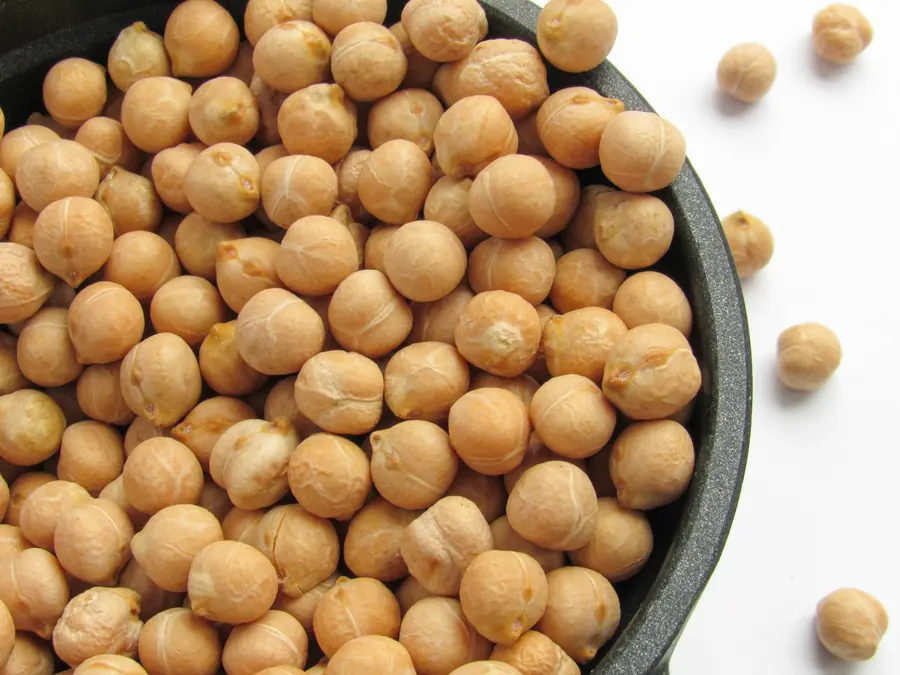
Chickpeas, tahini, lemon, garlic and salt, blended until smooth. The name is simply the Arabic word for chickpea, which tells you where the emphasis sits.
It is the thickest and most substantial of the dips, because chickpeas are a pulse and bring both protein and starch to the bowl. The FAO’s material on pulses and their role in nutrition and food security covers the wider family — chickpeas, beans, lentils and peas — that hummus belongs to.
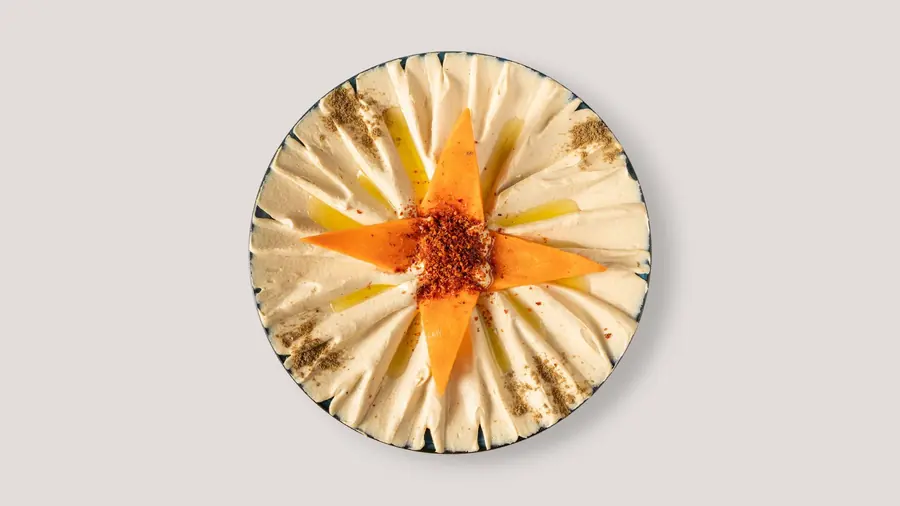
Good hummus is judged on texture more than flavour. It should be smooth rather than grainy, loose enough to fall off bread without running, and finished with enough olive oil that you taste it.
Baba ganoush
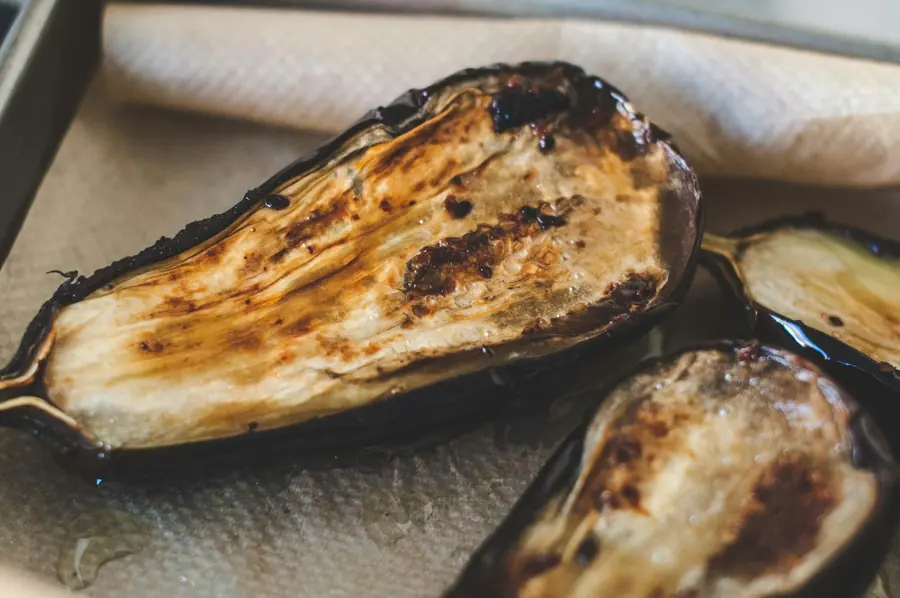
Eggplant, roasted or charred until the flesh collapses, then blended with tahini, lemon and garlic. The eggplant is usually cooked directly over a flame, which is where the smokiness comes from — it is not a spice or an additive, it is burnt skin.
The result is looser, lighter and considerably less filling than hummus, with a savoury, slightly bitter edge. People who find hummus heavy usually prefer it; people who want the dip to be the meal usually do not.
You will also see it spelled baba ghanoush or baba ghanouj, and in some Levantine kitchens a closely related dish called mutabbal, which is broadly the same idea with the proportions shifted toward tahini and yoghurt.
What each one is actually made of
Both dips are very short ingredient lists, which is precisely why the difference between two kitchens is so easy to taste. With five things in a bowl, changing one of them changes the whole dip.
| Ingredient | In hummus | In baba ganoush | What it does |
|---|---|---|---|
| Chickpeas | The base | No | Body, starch and protein — the reason hummus fills you up |
| Eggplant | No | The base | Water and sweetness, and once charred, the smoke |
| Tahini | Yes | Yes | The shared backbone: nutty, faintly bitter, and why the two taste related |
| Lemon | Yes | Yes | Acidity, and the element most often under-used |
| Garlic | Yes | Yes | Sharpness, raw rather than cooked |
| Olive oil | Yes, and poured over | Yes, and poured over | Richness, and the first thing you actually taste |
The full name of the first one gives the game away. Hummus bi tahina means chickpeas with tahini, and hummus on its own is simply the Arabic word for chickpea. A chickpea dip made without tahini is a chickpea dip; the sesame is part of what makes it the thing people mean by the name.
Baba ganoush, by contrast, is defined by a technique rather than by an ingredient. What separates it from any other blended eggplant is that the eggplant is cooked whole over a flame until the skin blackens and the flesh collapses. The smoke is a by-product of that cooking, not something stirred in afterwards, which is why a version roasted in an oven comes out perfectly pleasant and noticeably less interesting.
Neither has a single fixed formula. The proportion of tahini varies a great deal, some kitchens slip the skins off the chickpeas for a smoother result and most do not, and some Levantine versions of the eggplant dip include yogurt — which is the one variation that changes the answer for a vegan diner rather than only the texture.
Both dips are Levantine in origin, which is the corner of the Arabic-speaking world that most American menus draw from — our guide to what Arabic food actually covers sets out how that region differs from the Gulf and North Africa.
The others you will meet
- Muhammara. Roasted red pepper and walnut, sharpened with pomegranate molasses. Sweet, tangy and mildly hot — the outlier of the group, and the one most likely to surprise you.
- Labneh. Strained yoghurt, thick and tart. Dairy rather than vegetable, so it behaves differently on the plate and with the bread.
- Toum. Whipped garlic and oil, emulsified into a stiff white paste. Technically a sauce rather than a dip, and much stronger than it looks.
- Tzatziki. Yoghurt with cucumber and garlic, Greek in origin and cooling rather than rich.
The last two get confused with each other constantly, and both get called “white sauce” on American menus. Our guide to garlic sauce, tzatziki and tahini separates them properly, because the distinction matters more when you are choosing what goes on a wrap than when you are choosing a starter.
Side by side
| Base | Texture | Flavour | Contains tahini? | |
|---|---|---|---|---|
| Hummus | Chickpeas | Thick, dense | Mild, nutty, garlicky | Yes |
| Baba ganoush | Roasted eggplant | Looser, softer | Smoky, savoury | Yes |
| Muhammara | Red pepper and walnut | Coarse, textured | Sweet-sour, mildly hot | No |
| Labneh | Strained yoghurt | Thick, creamy | Tart, dairy | No |
| Toum | Garlic and oil | Stiff, whipped | Intensely garlicky | No |
| Tzatziki | Yoghurt and cucumber | Loose, creamy | Cool, fresh | No |
Tahini is the thread running through it
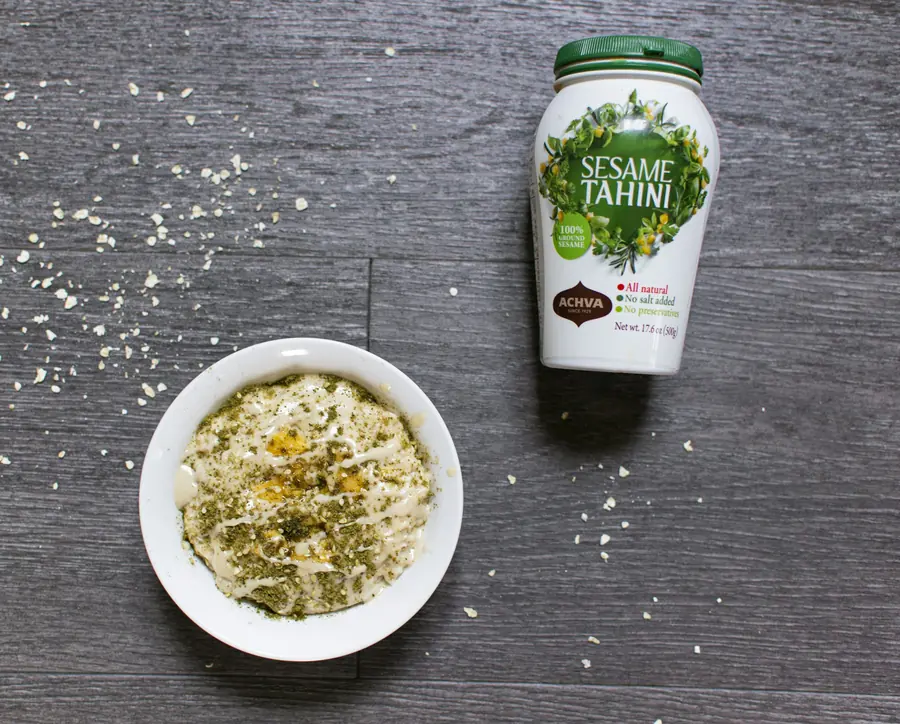
Two of the six are built on tahini, which is simply sesame seeds ground to a paste. It is what gives both hummus and baba ganoush their particular nutty backbone, and it is why the two taste like siblings despite starting from completely different vegetables.
It is also the single most important thing to know about these dips if you have a sesame allergy, because tahini is not always named on a menu — it is assumed inside the word hummus. Our guide to common allergens on a Mediterranean menu covers where sesame hides, and it hides here more than anywhere else on the menu.
How to order them
- One dip per two people is about right as a starter. Three dips for four people is generous rather than mean.
- Pick contrast, not variety. Hummus and baba ganoush together works because one is heavy and one is light. Hummus and labneh less so — both are thick and rich.
- Order the bread separately if you can. The bread that arrives with dips is often less than you want.
- Ask what is made in-house. Most kitchens make at least the hummus themselves, and it is usually the better one.
If the dips are doing the work of a starter for a group, the wider question of quantities is covered in our guide to how much food to order for a group.
Dairy-based dips raise a separate question from the plant-based ones. Our guide to whether cheese is halal covers the enzymes and milk proteins that turn up in cheese and yoghurt products.
Are they vegetarian?
Hummus, baba ganoush, muhammara and toum are all plant-based as normally made, which makes the dip section the most reliably vegetarian part of a Mediterranean menu. Labneh and tzatziki are dairy, so they are vegetarian but not vegan.
The one thing worth asking about is whether anything has been finished with a meat stock, which is uncommon but not unheard of. Our guide to vegetarian options at a Mediterranean restaurant goes through the rest of the menu on the same question.
On our menu
Hummus comes as part of our rice plates rather than as a separate starter — every meat plate arrives with hummus and salad alongside the rice, and the sauce varies with the meat. We do not currently serve the other dips described above, so treat this as a guide to reading a Mediterranean menu generally rather than a description of ours.
You can see the full menu here. Bread is the natural partner for all of this, and our guide to pita, naan and flatbread covers what tends to arrive with what.
Mint tea is the traditional partner for a table of dips, for reasons of lightness rather than tradition alone — our guide to what to drink with this food goes through the pairings.
Frequently asked questions
What is the difference between hummus and baba ganoush?
Hummus is made from chickpeas and baba ganoush from roasted eggplant. Both are blended with tahini, lemon and garlic, which is why they taste related, but hummus is thicker and more filling while baba ganoush is looser, lighter and smoky.
Why does baba ganoush taste smoky?
Because the eggplant is roasted or charred over a flame before it is blended. The smokiness comes from the burnt skin rather than from any added spice or flavouring, which is why the intensity varies between kitchens.
Do all Mediterranean dips contain sesame?
No. Hummus and baba ganoush are both built on tahini, which is sesame paste, but muhammara, labneh, toum and tzatziki are not. If you avoid sesame, the important point is that tahini is rarely named on a menu because it is assumed inside the word hummus, so ask rather than reading.
Which dip should I order first?
Hummus, if you have not had either. It is the most widely available, the most consistent between kitchens, and the easiest reference point for judging the others. Order baba ganoush alongside it if you want contrast rather than more of the same.
Are these dips vegan?
Hummus, baba ganoush, muhammara and toum are normally plant-based and therefore vegan as usually made. Labneh and tzatziki are both yoghurt-based, so they are vegetarian but not vegan.
What is hummus made of?
Chickpeas, tahini, lemon, garlic, olive oil and salt, blended until smooth. The name is the Arabic word for chickpea, and the full name, hummus bi tahina, means chickpeas with tahini — which is why the sesame paste is closer to part of the definition than an optional extra.
What is baba ganoush made of?
Eggplant cooked until the flesh collapses, then blended with tahini, lemon and garlic. The smokiness comes from charring the skin over a flame rather than from anything added, and some Levantine versions also include yoghurt.
If you remember one line: hummus is the chickpea one and it is filling; baba ganoush is the smoky eggplant one and it is not. Everything else is a variation on how much tahini is involved.
Every one of our rice plates comes with hummus and salad.