
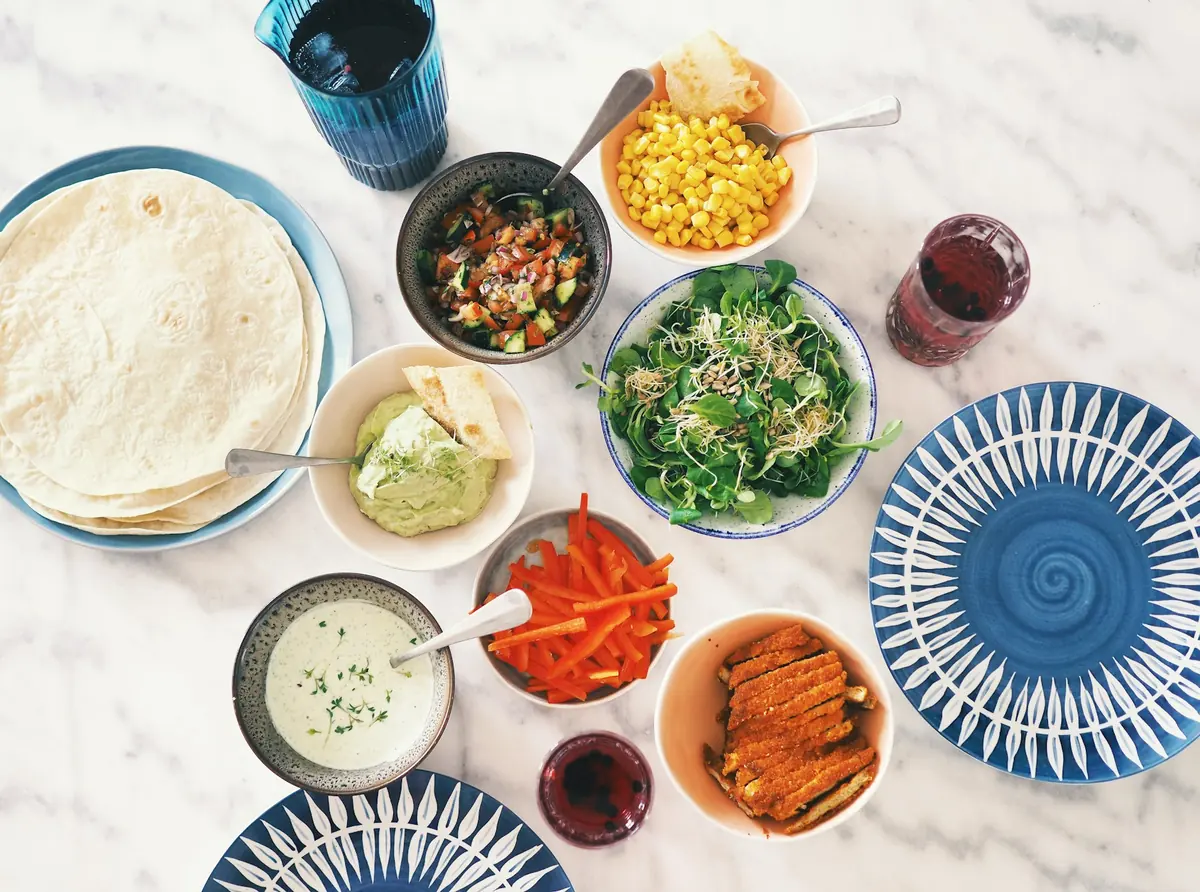
Most Mediterranean menus are organised by format before they are organised by anything else. The same chicken appears three times — on a plate, in a wrap, in a bowl — and the menu rarely explains what changes besides the container.
Quite a lot changes. Here is what actually differs, and how to pick without standing at the counter working it out.
The short answer
The plate gives you the most food and keeps the components separate. The wrap is the most portable and the least of it is meat. The bowl is the plate without the bread, which matters more for travel and for gluten than it does for taste.
The plate
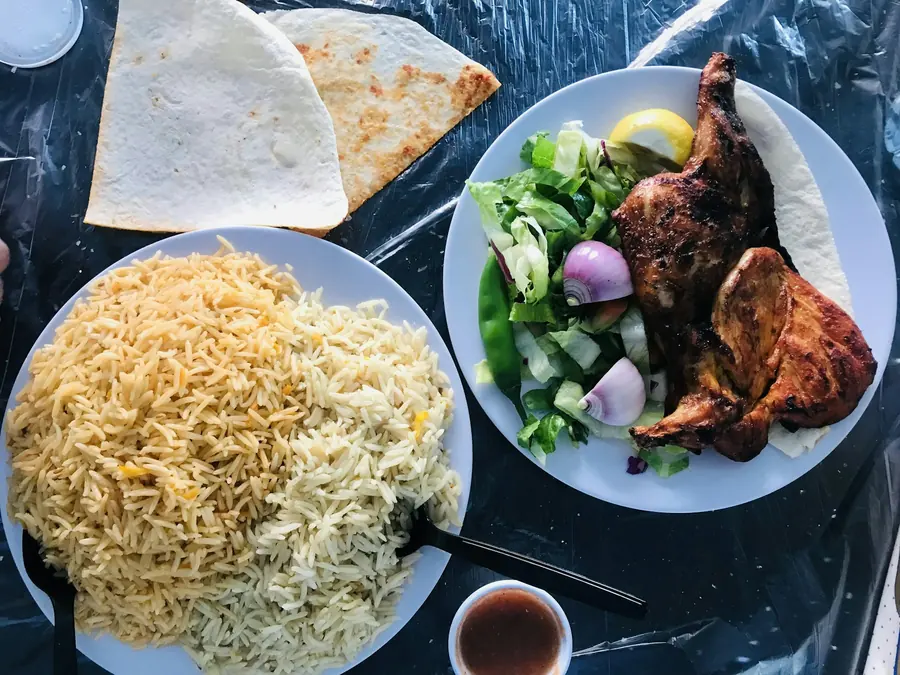
Meat over rice, with salad, a dip and a sauce arranged around it. The defining feature is that everything stays separate, so you control what goes with what in each mouthful.
It is almost always the largest portion and almost always the best value by weight, because the rice and salad are cheap to serve generously and the plate format assumes you are sitting down. It is also the easiest format to eat slowly, which is worth something.
The trade-off is portability. A plate travels poorly — the salad wilts into the rice and the sauce goes everywhere — and it needs a table, a fork and about twenty minutes.
The wrap
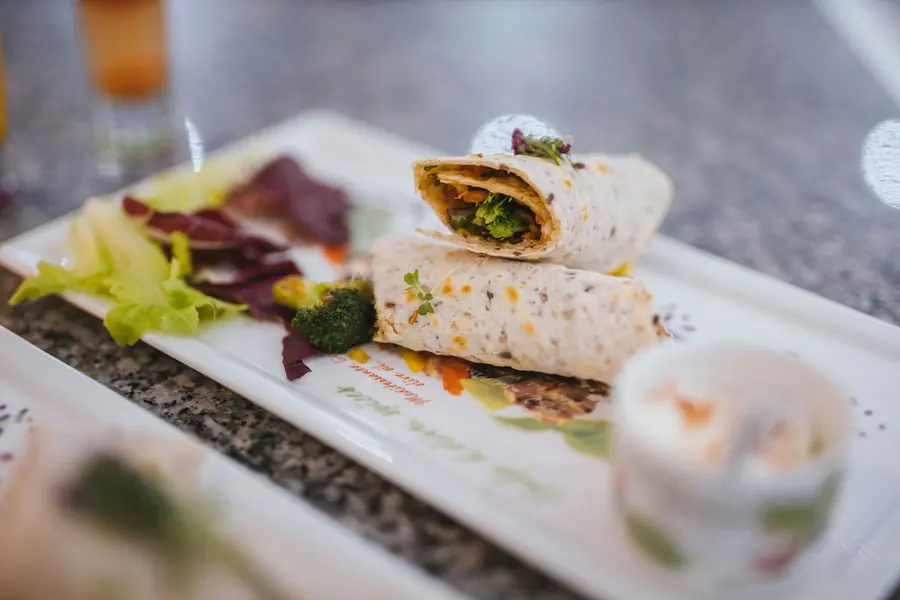
The same meat, rolled into flatbread with salad and sauce. This is the format that built the reputation of the cuisine as street food, and it is engineered for eating while doing something else.
Two things are worth knowing. First, a wrap almost always contains less meat than a plate at a similar price, because the bread and salad do more of the work — that is not a trick, it is what a sandwich is. Second, the sauce is distributed through it rather than sitting on the side, so if you are unsure about a sauce, the wrap is the wrong place to find out.
The bread itself matters here more than in any other format, since it is structural rather than incidental. Our guide to pita, naan and flatbread covers why the pocket exists and which breads hold up when rolled.
The bowl
The plate without the bread, usually built on rice or on salad greens instead. It is the newest of the three formats on American menus and largely a response to how people actually eat now — at a desk, from a container, with a fork.
A rice bowl and a rice plate are frequently the same food in different packaging, which is worth knowing before you assume the bowl is the lighter option. Where it genuinely differs is that a salad-base bowl swaps the grain for greens, and that no bread is involved at any point, which matters if you are avoiding gluten.

Side by side
| Plate | Wrap | Bowl | |
|---|---|---|---|
| Portion of meat | Most | Least | Similar to the plate |
| Components | Separate | Combined | Separate or layered |
| Portability | Poor | Best | Good |
| Needs a table | Yes | No | Not really |
| Contains bread | Usually alongside | Structurally | No |
| Sauce control | Full — it is on the side | None — already inside | Usually full |
| Travels for 20 minutes | Poorly | Softens | Best of the three |
How to choose in about five seconds
- Eating at a table, hungry. Plate. More food, and the separate components are more interesting to eat.
- Eating in a car or walking. Wrap. It is the only one designed for it.
- Eating at a desk in twenty minutes. Bowl. No table needed, no sauce running out of anything.
- Avoiding gluten. Bowl, and confirm nothing is dusted or fried in shared oil.
- Unsure about a sauce. Plate, and ask for it on the side.
- Taking it home for later. Plate or bowl. A wrap that has sat for an hour is a different and sadder object.
Ordering mixed formats for a table
Where this gets genuinely useful is a group order, because the formats behave differently once there is more than one of them on a table. Plates encourage people to stay seated and eat slowly; wraps let people drift; bowls sit somewhere between the two.
For a group that is eating together, plates work best and are easiest to share from, since the components are already separate and a spare piece of bread turns any plate into something the table can pick at. For a group collecting food and scattering — a work lunch, a car, a group with different arrival times — wraps and bowls are far less trouble, because nothing needs assembling and nothing needs a table.
The mistake is ordering plates for a group that is not going to sit down. They are the best format when eaten properly and the worst when carried around, and the gap between those two is wider than for either of the other options.
The balance question
Format also changes the proportions of what you eat, which is easy to miss. A plate lets you see how much salad there is relative to the rice and the meat; a wrap hides those proportions inside bread.
Harvard’s Healthy Eating Plate is a useful reference point here, describing a meal as roughly half vegetables and fruit, a quarter whole grains and a quarter protein. That is a shape you can actually assemble on a Mediterranean plate, and much harder to judge in a wrap. Our guide to eating out on the Mediterranean diet goes further into ordering that way.
What does not change
The meat is the same across all three, which is the thing people most often assume differs. If you liked the chicken in a wrap you will like it on a plate; the choice of format is about how you are eating, not what.
The genuinely flavour-relevant decision is the protein rather than the container — our guide to choosing between chicken, beef and lamb covers that, and gyro versus shawarma covers the two spit-roasted versions.
On our menu
Our menu is organised exactly this way. The meat plates come over rice with hummus and salad, and the wraps take the same meats into flatbread with salad and sauce. Chicken, gyro and beef appear in both, and there is a combination plate if you want two of them.
You can compare the two sections on the menu directly, or order ahead online. If you are taking food home for later, our guide to storing and reheating Mediterranean food covers which formats survive the night.
The choice changes again if the food is going in a bag: wraps steam and soften, while rice plates are the most forgiving thing on the menu. Our guide to Mediterranean takeout covers the difference.
Frequently asked questions
Is a gyro plate bigger than a gyro wrap?
Almost always, yes. A plate typically carries more meat than a wrap at a similar price, because in a wrap the bread and salad make up more of the volume. If you are hungry, the plate is usually the better value.
What is the difference between a rice bowl and a rice plate?
Frequently nothing but the packaging. Both are meat over rice with salad and sauce; the bowl is designed to be eaten from a container without a table. The real difference appears when the bowl is built on salad greens instead of rice, or when no bread is served with it.
Which format is best for takeaway?
A bowl or a plate. Both keep their components separate, so nothing softens into anything else on the way home. A wrap is best eaten within a few minutes, because the bread absorbs the sauce and loses its structure.
Which format works if I am avoiding gluten?
A bowl, since no bread is involved at any stage. It is still worth confirming with the kitchen that nothing in it is dusted with flour or fried in shared oil, because cross-contact is a kitchen-by-kitchen question that no menu can answer.
Does the meat taste different between formats?
No. The same meat goes into all three. What changes is the ratio of meat to bread, rice and salad, and whether the sauce is mixed through or served on the side, both of which affect how the meal tastes overall without changing the meat itself.
Plate for sitting down, wrap for moving, bowl for a desk. The meat is identical in all three, so choose on how you are eating rather than on what you feel like tasting.
Plates over rice, or the same meats in a wrap.