
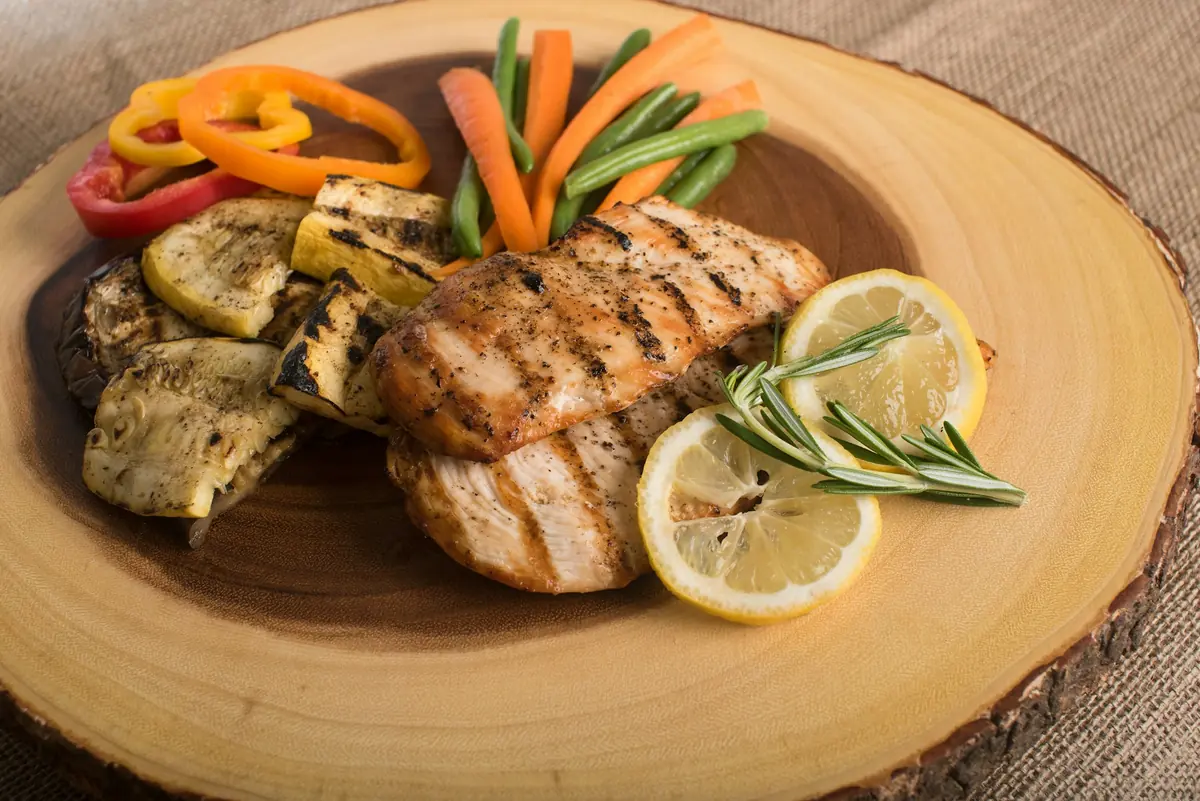
The Mediterranean diet is one of the most widely recommended eating patterns in the world, and it is unusually easy to follow at a Mediterranean restaurant — which sounds obvious, and is only about half true. Restaurant portions, fryers and sauces can move a meal a long way from the pattern the name refers to.
This is a practical guide to ordering within it: what the pattern actually describes, which parts of a menu already fit, and the four adjustments that do most of the work.
The short answer
Order grilled rather than fried, take the salad as a real component rather than a garnish, get dressings and sauces on the side, and treat meat as one part of the plate rather than the point of it. That is most of the pattern, and it can be done from almost any Mediterranean menu without a special request.
What the pattern actually is
The Mediterranean diet is not a diet in the weight-loss sense and there is no single official version of it. It is a description of how people have traditionally eaten around the Mediterranean basin: vegetables, legumes, whole grains, fruit, nuts and olive oil in quantity, fish and poultry moderately, red meat and sweets occasionally.
It lines up closely with general public-health advice on eating. The World Health Organization’s fact sheet on healthy diet recommends at least 400 grams of fruit and vegetables a day for anyone over ten, keeping total fat to 30 per cent or less of daily energy, free sugars under 10 per cent, and salt under 5 grams a day — and the Mediterranean pattern is one well-documented way of arriving somewhere near that.
Two caveats worth stating plainly. This article describes an eating pattern and how to order within it; it is not dietary advice for any individual, and if you have a medical condition the person to ask is a doctor or a dietitian, not a restaurant. And nothing here is a health claim about any particular dish on any particular menu, ours included.
What already fits, without asking for anything
This is the useful part. A great deal of a Mediterranean menu sits inside the pattern as it is normally served.
- Grilled meat and fish. Cooked over direct heat with olive oil, lemon and herbs rather than breaded or battered.
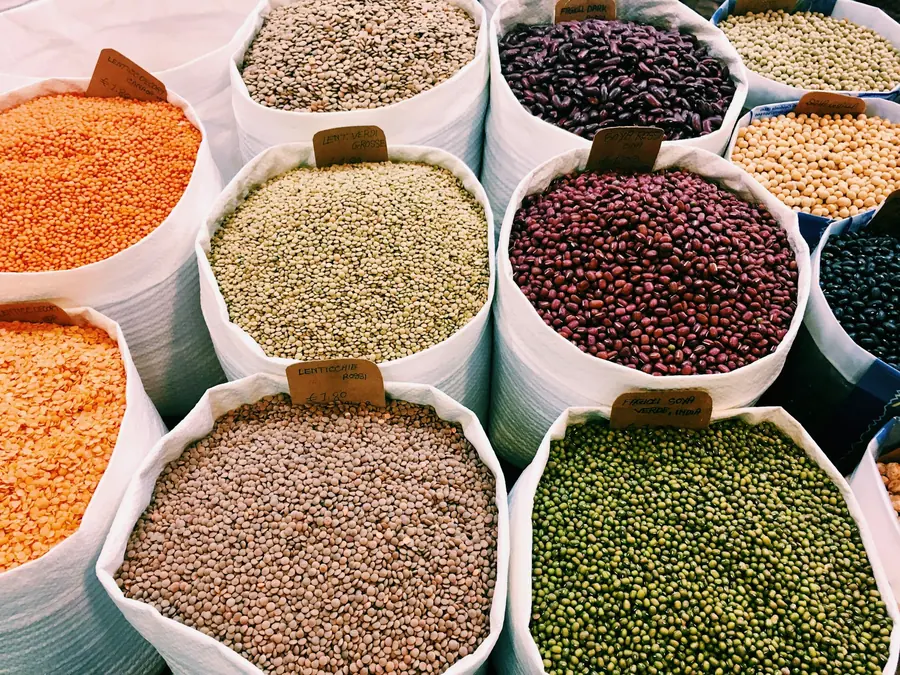
- Chickpeas and lentils. Hummus, falafel and lentil dishes are all pulses, which sit near the centre of the pattern.
- Vegetable salads. Not a side garnish but a genuine component, which is how they are treated across the region.
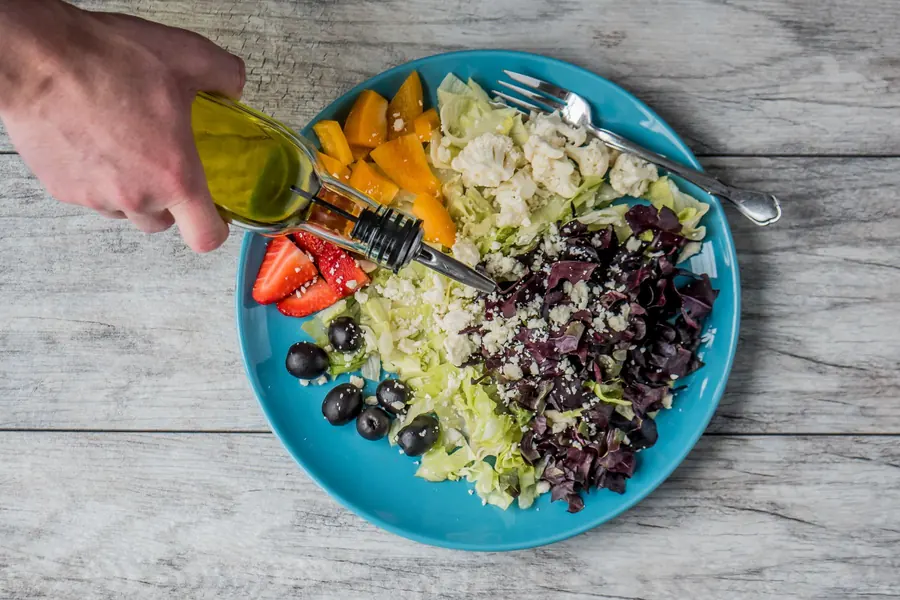
- Olive oil as the fat. Used for dressing and cooking rather than butter or cream.
- Bread as an accompaniment. Eaten with the meal rather than as a vehicle for butter.
The four adjustments that matter
| Instead of | Ask for | Why |
|---|---|---|
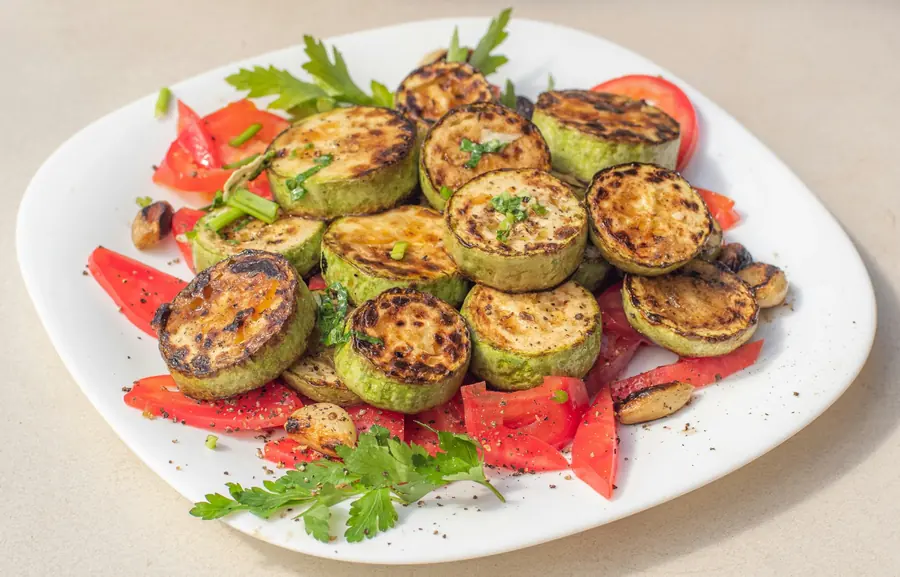
| Fried side | Grilled vegetables, salad or rice | The fryer is where a Mediterranean plate most often leaves the pattern |
| Sauce poured over | Sauce on the side | You will use less, and you can taste the food underneath |
| Meat as the whole plate | A plate where salad and grains carry equal weight | The pattern treats meat as one component rather than the centre |
| Soft drink | Water | Free sugars are the easiest single reduction on any restaurant order |
None of these is an unusual request and none of them requires the kitchen to do anything special. Sauce on the side in particular is so common that most counters will not blink.
Where the traps are
Three things move a Mediterranean meal furthest from the pattern, and none of them is obvious from a menu description.
- The fryer. Falafel is chickpeas, which is ideal; deep-fried falafel with fried potatoes alongside is a different plate. The ingredient is not the problem, the volume of fried items on one plate is.
- Creamy dressings. A salad dressed with a mayonnaise or sour-cream base is not doing what a lemon-and-olive-oil dressing does. Ask what the dressing is, not just whether there is one.
- Portion size. American restaurant portions are large by the standards of the region the pattern comes from. Sharing a plate, or taking half home, is a bigger adjustment than any ingredient swap.
Building a plate that works
A practical way to think about it, borrowed from the way nutritionists describe meal composition rather than from any restaurant: roughly half the plate vegetables and salad, a quarter grains, a quarter protein, with olive oil as the fat and water to drink.
On a Mediterranean menu that maps almost directly onto a rice plate with a generous salad, which is convenient. Our guide to choosing between a plate, a wrap and a bowl covers how the formats differ, and the plate is generally the easiest one to balance because the components arrive separately.
Salads deserve more attention than they usually get in this conversation. Our guide to Mediterranean salads explained covers the difference between the herb-heavy ones and the lettuce-based ones, which is a meaningful difference here.

If you are eating out often
The pattern is about consistency rather than any single meal, so the useful habits are the repeatable ones: look at the menu before you go, decide before you are hungry and standing at a counter, and pick a default order you are happy with so that the decision is made once rather than every time.
It also helps to stop treating one meal as a verdict. A fried side on a Friday is not a failure of anything; the pattern is a description of what you eat mostly, not a test you pass or fail per meal.
Ordering from us
Our menu is built around grilled meat over rice with hummus and salad, which is close to the shape described above before you change anything. Sauces come with the plates and can be asked for on the side, the salads are available in full size rather than only as a garnish, and there are vegetarian options if you want to move the protein toward pulses.
The full menu is here, and if the format is new to you our guide to what to order at a Mediterranean restaurant is the place to start.
Reading the board is half the battle, and American halal menus use a vocabulary nobody explains — over rice, platter, combo, loaded and the rest.
Frequently asked questions
Is Mediterranean restaurant food the same as the Mediterranean diet?
Not automatically. The diet describes a pattern of eating built on vegetables, pulses, whole grains and olive oil with meat in moderation. A Mediterranean restaurant serves food from that region, which includes fried items and large portions. A great deal of the menu fits the pattern, but the fryer and the portion size are where it drifts.
What should I order to stay closest to the pattern?
A grilled protein with rice or another grain, a proper salad rather than a garnish, sauce on the side, and water. That combination is available on almost every Mediterranean menu and needs no special request.
Is falafel a good choice?
The ingredient is excellent, since falafel is chickpeas and herbs. It is deep-fried, though, so it works best as one component alongside salad and grains rather than as the whole plate with fried sides as well.
Does the Mediterranean diet allow bread?
Bread is central to it, which surprises people. The pattern favours whole grains and treats bread as an accompaniment eaten with the meal rather than as a vehicle for butter. Flatbread with a meal is entirely consistent with it.
Do I need to ask the kitchen for anything special?
Usually not. Sauce or dressing on the side is the only common request, and it is so ordinary that most kitchens expect it. Everything else is a matter of which items you choose rather than how they are made.
Grilled not fried, sauce on the side, salad as a real component, water to drink. Four decisions, made once, and the rest of the menu takes care of itself.
Grilled plates, hummus and salad — order ahead and collect.