
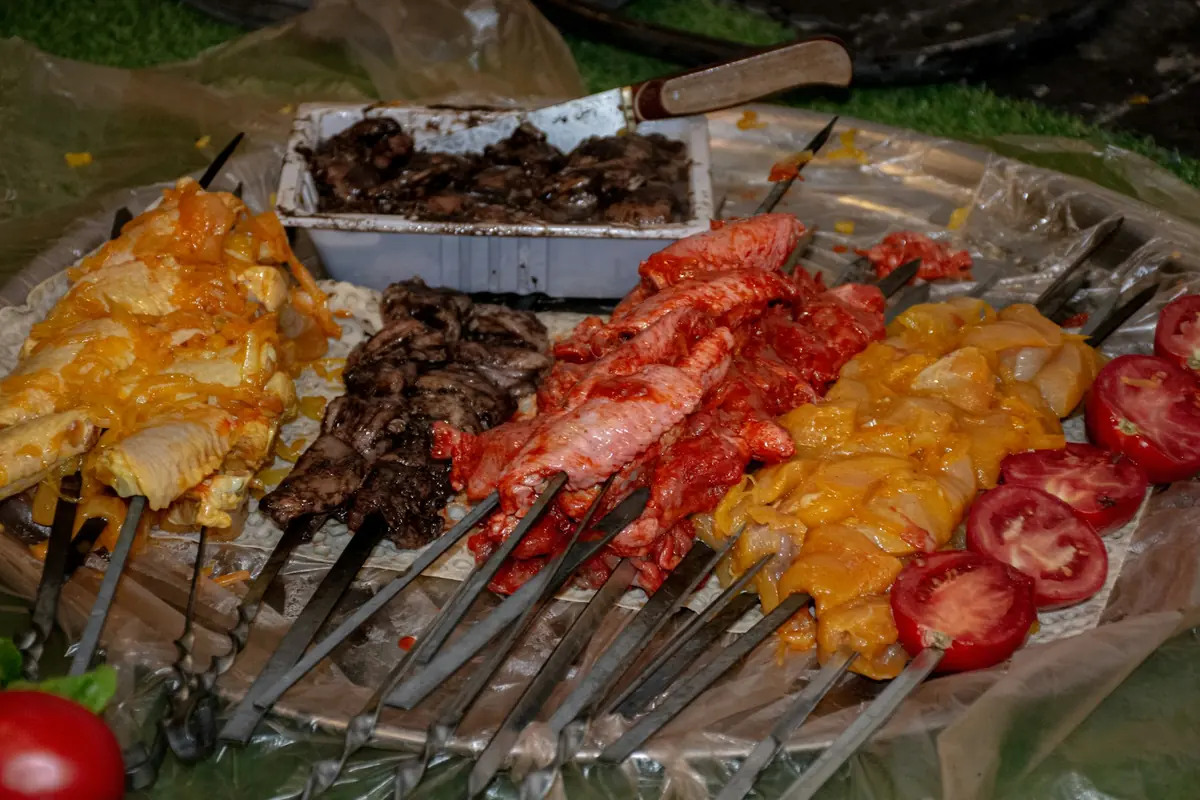
Most Mediterranean menus ask you the same question three or four times: chicken, beef or lamb? The dish is otherwise identical, the price difference is small, and there is rarely anything on the menu explaining what actually changes.
What changes is fat content, flavour intensity and how forgiving the meat is when it is cooked hard. Here is how to choose deliberately.
The short answer
Chicken is the lightest and the most neutral, and it takes on whatever it is marinated in. Beef is richer and firmer with a savoury depth. Lamb is the most distinctive by a wide margin — it has a flavour the other two simply do not have, which people tend to either seek out or avoid.
Why lamb tastes like lamb
This is the one with an actual answer, and it explains why lamb divides people in a way that chicken and beef do not.
Lamb fat contains branched-chain fatty acids produced by bacteria in the animal’s rumen. They make up a small share of the total fat, but they are volatile and detectable at very low concentrations, which is why the flavour reads as distinctly “lamb” rather than simply as red meat. America’s Test Kitchen explains why lamb tastes like lamb in more detail, including the point that beef contains no meaningful quantity of the same compounds.
Two practical consequences follow. Younger lamb is milder, because the concentration builds with age — which is why mutton is stronger than lamb. And because the compounds live in the fat, a leaner cut or a well-trimmed preparation tastes milder than a fatty one.
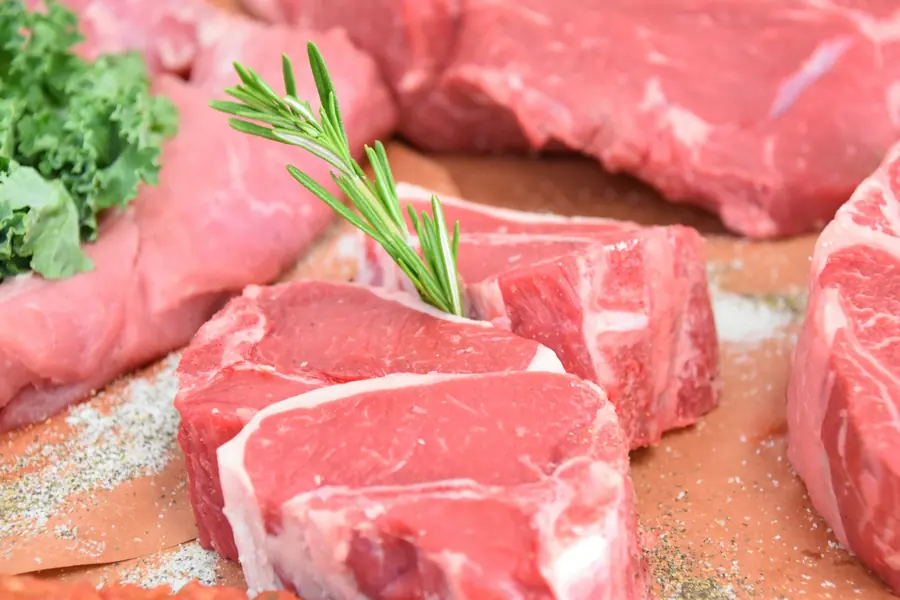
Chicken
The default for a reason. Chicken thigh, which is what most Mediterranean kitchens use rather than breast, has enough fat to survive a hot grill or a long turn on a vertical spit without drying out, and it carries garlic, lemon and warm spice better than either of the others.
It is the safe choice for a first visit, for children, and for anyone who does not want the meat to be the loudest thing on the plate. It is also usually the least expensive, which is why it dominates most menus.
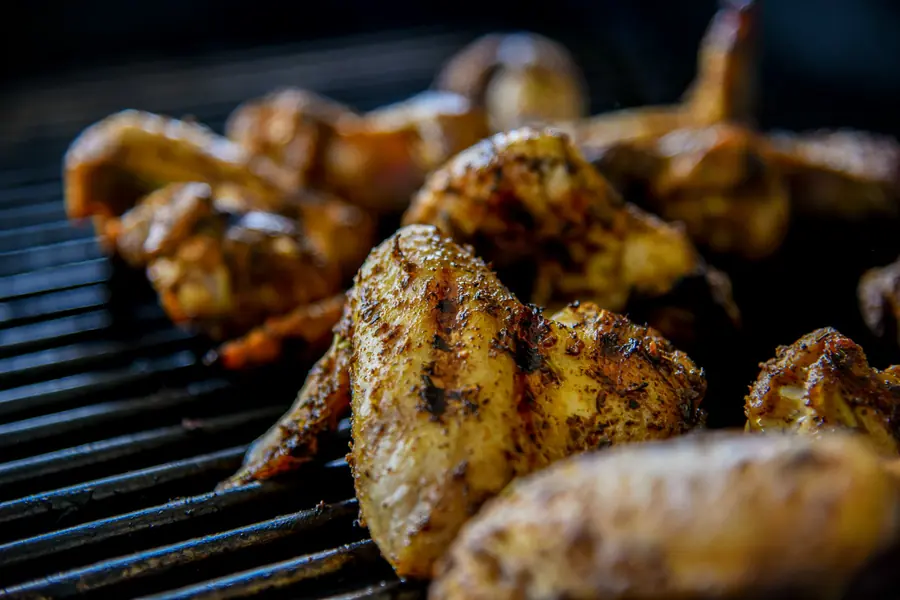
Beef
Firmer, richer and more savoury than chicken without being assertive. Beef sits in the middle of the range and is the one people order when chicken feels too light and lamb feels like a commitment.
It responds well to being sliced thin off a spit, which is how it usually appears on a Mediterranean menu, and it pairs naturally with the sharper, nuttier sauces rather than the cooling ones. Our guide to garlic sauce, tzatziki and tahini covers which sauce belongs with which meat.
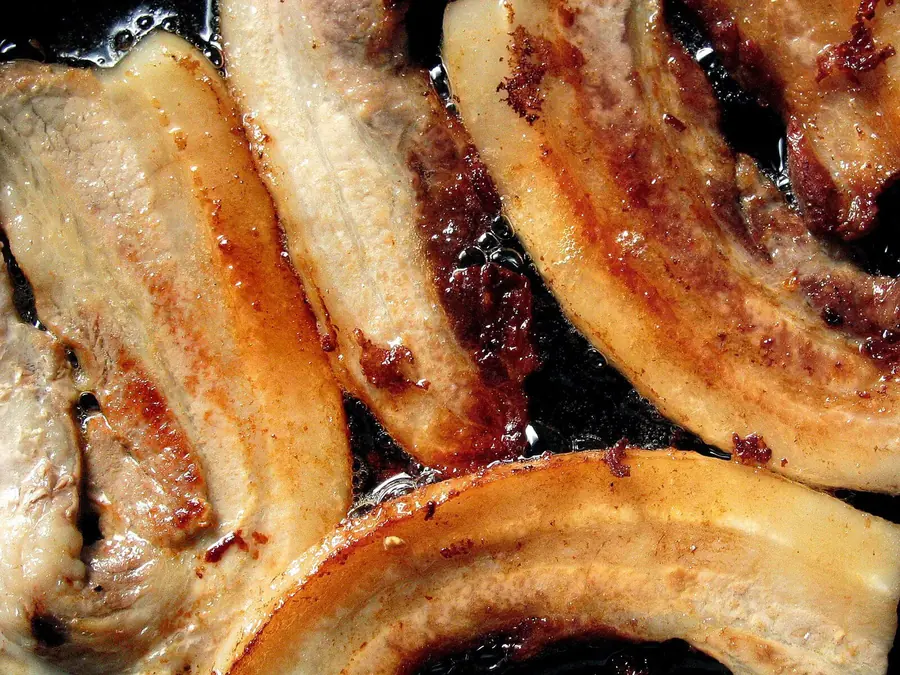
Lamb
The traditional choice across most of the region and the most divisive on an American menu. Lamb is fattier than the other two, which makes it richer and more forgiving of a hard sear, and it carries the strongest flavour of its own.
In the United States lamb often appears blended with beef rather than on its own, particularly in gyro cones, where the blend moderates the flavour and the cost. That is worth knowing if you have tried gyro meat and concluded you like lamb, or that you do not.
The marinade does more work than people expect
It is worth saying plainly, because it changes how much the protein choice actually matters: on most Mediterranean menus the seasoning is doing at least as much as the meat. Garlic, lemon, cumin, coriander, paprika and sumac go on all three, and a kitchen’s particular blend is usually more recognisable than the difference between its chicken and its beef.
That cuts both ways. If you disliked the chicken at one restaurant, you may well like it at another, because you were probably reacting to the spicing rather than to the bird. And if you loved the beef somewhere, ordering the chicken next time is a smaller change than it sounds — the thing you liked is likely still there.
The exception is lamb, for the reason set out above: its own flavour is strong enough that the marinade sits alongside it rather than defining it. Lamb is the one place where the choice of animal really is the dominant variable.
Side by side
| Chicken | Beef | Lamb | |
|---|---|---|---|
| Flavour intensity | Mild and neutral | Savoury, moderate | Strong and distinctive |
| Fat content | Lowest, especially breast | Moderate | Highest of the three |
| Takes on marinade | Very well | Well | Less — its own flavour dominates |
| Best for a first visit | Yes | Yes | Only if you already like lamb |
| Typical with children | Usually the easiest | Sometimes | Rarely the first choice |
| Common preparation | Thigh, grilled or on a spit | Sliced thin off a spit | Ground, skewered or blended into gyro |
Preparation changes the answer
The same animal tastes different depending on how the kitchen handles it, which is why the protein question and the dish question are tangled together.
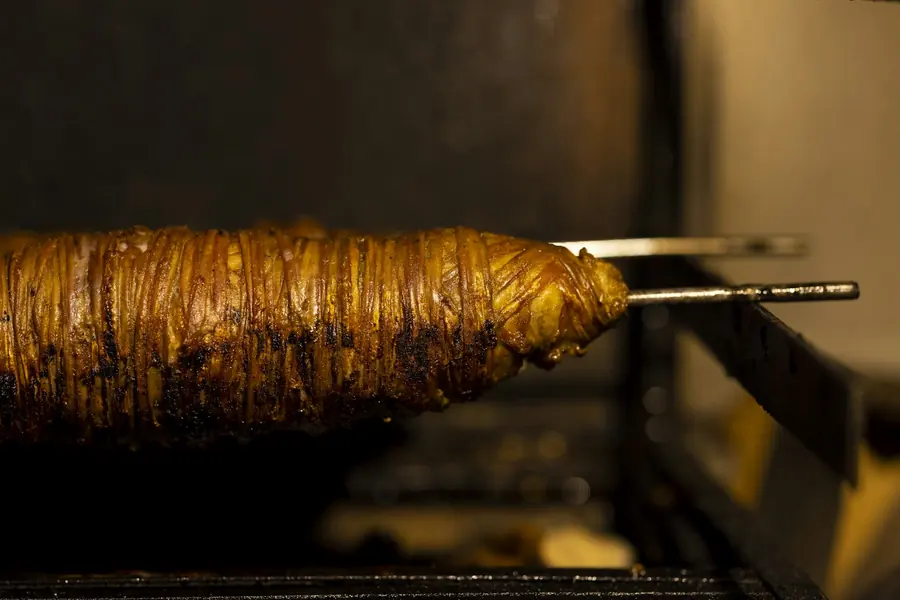
- On a vertical spit. Stacked, pressed and shaved as it cooks. The outer edges caramelise, so you get crisp and tender in the same portion.
- On a skewer. Cubes over direct heat, cooked fast. Cleaner flavour, firmer texture, and the marinade matters more.
- Ground and shaped. Mixed with onion, parsley and spice before cooking, which mutes the differences between the meats considerably.
That last point is the useful one: if you are unsure about lamb, a ground preparation is a gentler introduction than a lamb skewer. Our guide to shawarma, kebab and kofta explains how the three methods differ, and gyro versus shawarma covers the two spit-roasted versions specifically.
The other axis is the format rather than the meat. Our guide to choosing between a plate, a wrap and a bowl covers how the same protein behaves differently depending on what it arrives in.
Picking by situation
- First time at a Mediterranean restaurant. Chicken. You can work outward from there once you know how the kitchen seasons things.
- Ordering for a table. Get two proteins rather than three and share. Chicken and beef covers most preferences.
- Ordering for children. Chicken, and ask for sauces on the side. Our guide to Mediterranean food for kids goes further on this.
- You want the most traditional version. Lamb, and preferably on a skewer where nothing is muting it.
- You are hungry. Beef or lamb. The higher fat content is more satisfying over a large portion.
What we serve
Our rice plates come with chicken, gyro or beef, and there is a combination plate if you cannot decide between chicken and gyro. The wraps follow the same three, and lamb appears as one of the meat choices on our pizza.
The full menu is here, and our guide to what to order at a Mediterranean restaurant covers how the plates, wraps and sides fit together if you are new to this style of menu. Everything we serve is made with halal ingredients.
Whichever you choose, the labels stacked on the package are answering different questions from the one you are asking. Halal, organic and grass-fed sets out which of the three actually speaks to slaughter.
Frequently asked questions
Which is the mildest, chicken, beef or lamb?
Chicken, comfortably. It has the least flavour of its own and takes on whatever it is marinated in, which makes it the usual recommendation for a first visit or for children. Lamb sits at the opposite end of the range.
Why does lamb taste so different from beef?
Lamb fat contains branched-chain fatty acids produced by bacteria in the animal’s rumen. They are present in small quantities but are detectable at very low concentrations, and beef contains no meaningful amount of them, which is why the difference is so noticeable.
Is gyro meat lamb or beef?
It varies by kitchen. In the United States gyro cones are commonly a blend of beef and lamb, which moderates both the flavour and the cost. Some kitchens use beef alone and some use chicken, so it is worth asking if it matters to you.
Which protein is best for a group order?
Two rather than three. Chicken and beef between them cover most preferences, and ordering two proteins in larger quantities usually works out better than three in small ones. Add lamb only if you know the group likes it.
Does the protein change whether a dish is halal?
No. Halal depends on sourcing and preparation rather than on the animal, provided the animal is a permitted one. Chicken, beef and lamb can all be halal or not, which is a question about the supplier rather than about the meat.
If you take one thing from this: the choice is about flavour intensity, and it runs chicken, beef, lamb from mildest to strongest. Everything else is detail.
Chicken, beef or lamb — order whichever you have talked yourself into.