
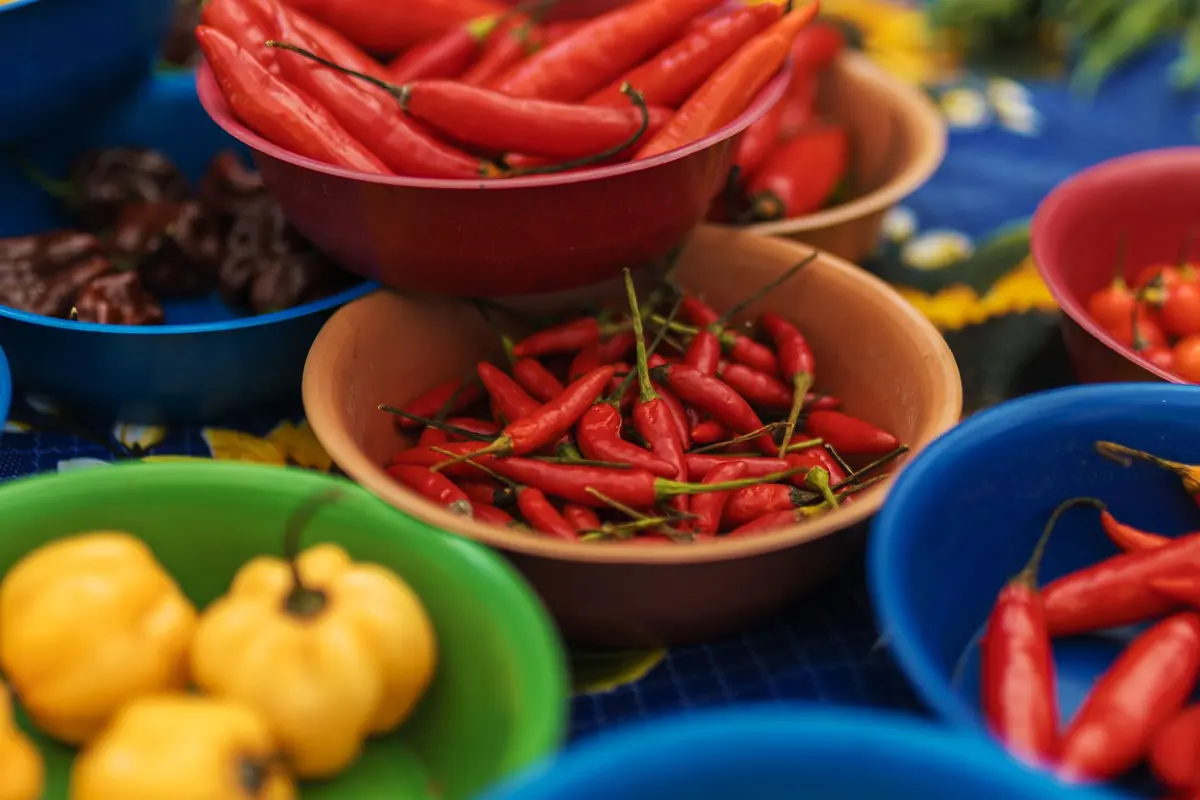
It is one of the most common questions at the counter, and it is really two questions wearing one word. Spicy can mean heavily seasoned or it can mean hot. Mediterranean food is emphatically the first and mostly not the second.
The short answer
Mostly not hot. The cuisine is heavily spiced — cumin, coriander, cinnamon, sumac, black pepper — and only lightly chillied. Where heat appears it is usually offered on the side as a sauce rather than cooked into the dish. North African cooking is the exception.
Spiced is not the same as hot
This distinction does all the work. A shawarma marinade might contain seven or eight spices and no chilli at all. What you taste is warmth, depth and aroma — cumin and coriander doing the heavy lifting, cinnamon and allspice underneath, sumac cutting through with sourness rather than heat.
If you have eaten mostly South Asian or Thai food, the calibration will feel off at first: the flavour is strong and the heat is absent, which reads as incomplete until you stop waiting for the burn. Our comparison of Mediterranean and Indian cooking goes into why two cuisines drawing on an overlapping spice cabinet end up in such different places.
Where the heat does come from
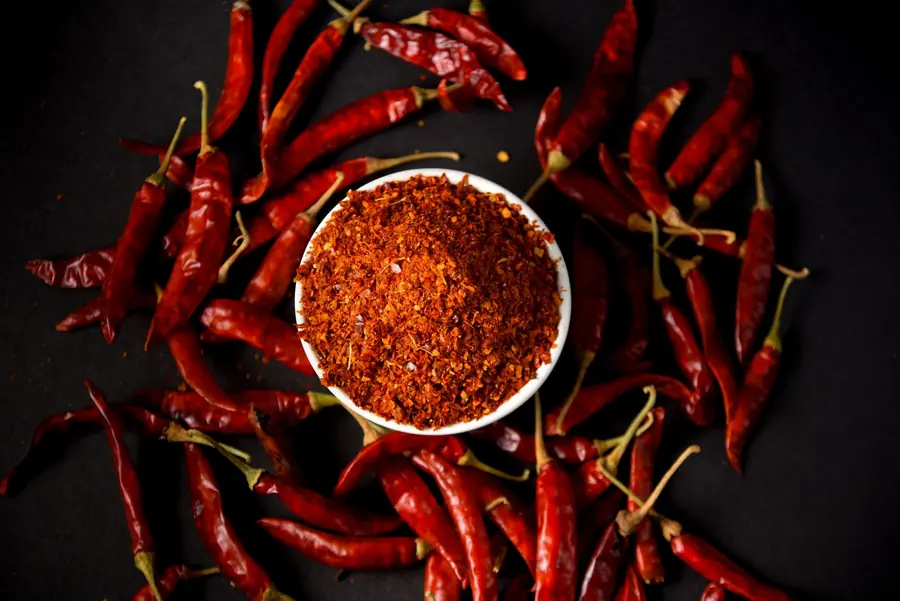
When a Mediterranean or Levantine dish is hot, it is nearly always one of a short list of chilli preparations. All of them are the same botanical species — Capsicum annuum, the family that also gives us bell peppers, paprika and cayenne. What differs between them is cultivar, drying and preparation, not the plant.
| What it is | Where it is from | What it is like | How it is served |
|---|---|---|---|
| Aleppo pepper | Syria and southern Turkey | Mild, fruity, slow-building, slightly salty | Sprinkled over |
| Pul biber / red pepper flakes | Turkey | Mild to moderate, straightforwardly warm | On the table |
| Shatta | The Levant | Moderate and sharp, often with garlic | A side sauce |
| Harissa | North Africa | Moderate to genuinely hot, smoky, with caraway and garlic | Stirred in, or alongside |
| Black pepper and warm spice | Everywhere | Warmth and depth rather than heat | Cooked into the dish |
Aleppo pepper is the one worth knowing by name. It is mild enough to use generously, and it contributes fruitiness and a little salt as much as heat — which is why it turns up on dishes that are not trying to be hot at all.
It is also worth knowing that none of these is standardised. Harissa in particular varies enormously between makers, because it is built from whichever dried chillies a region has: one jar is smoky and gentle, another is genuinely fierce, and the label rarely distinguishes them. If a kitchen makes its own, ask before you commit a whole plate to it.
Why heat is a condiment here
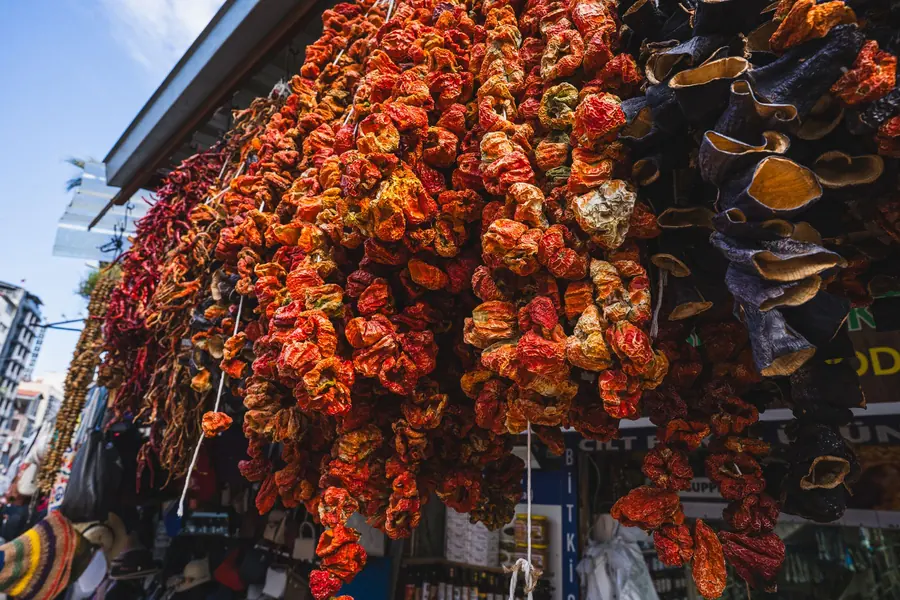
There is a practical logic to keeping the chilli on the table rather than in the pot, and it is the same logic that shapes the rest of the cuisine. This is food built for sharing from communal dishes. A single dish that suits one person’s tolerance fails everyone else’s.
Put the heat in a bowl on the side and the same plate works for a table of six with six different thresholds. That is also why the sauces matter so much here — our guide to garlic sauce, tzatziki and tahini covers the three you will meet most, none of which is hot.
North Africa is the exception
Moroccan, Tunisian and Algerian cooking use chilli far more freely, and harissa is a genuine heat source rather than a token one. If a menu leans North African — tagines, couscous, merguez — the calibration shifts and it is worth asking rather than assuming.
Most American restaurants labelled Mediterranean are serving Levantine food instead, which sits at the mild end. Our guide to what Arabic food covers sets out the regional split and why the Levant is the part you are most likely to be eating.
Sourness is the other axis
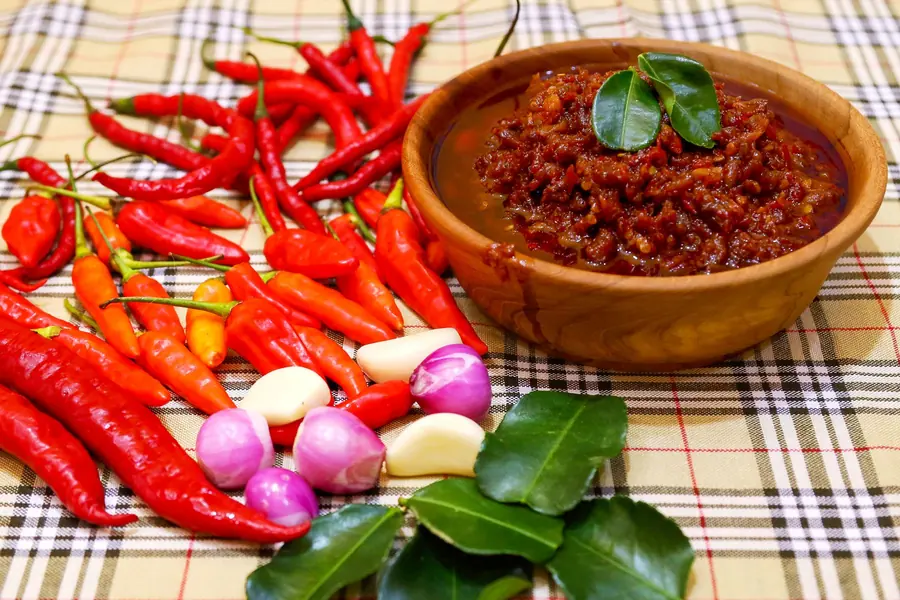
Part of why this food reads as vivid without being hot is that it reaches for acidity where other cuisines reach for chilli. Lemon goes on almost everything. Sumac delivers the same sharpness as a dry ingredient that can be scattered at the last moment. Pickles and pickled turnip arrive alongside grilled meat for the same reason.
If a dish tastes flat to you, the missing element is far more often acid than heat — which is why a squeeze of lemon fixes more Mediterranean plates than a chilli sauce does. Our guide to what Arabic food covers goes through sumac, za’atar and the warm blends in more detail.
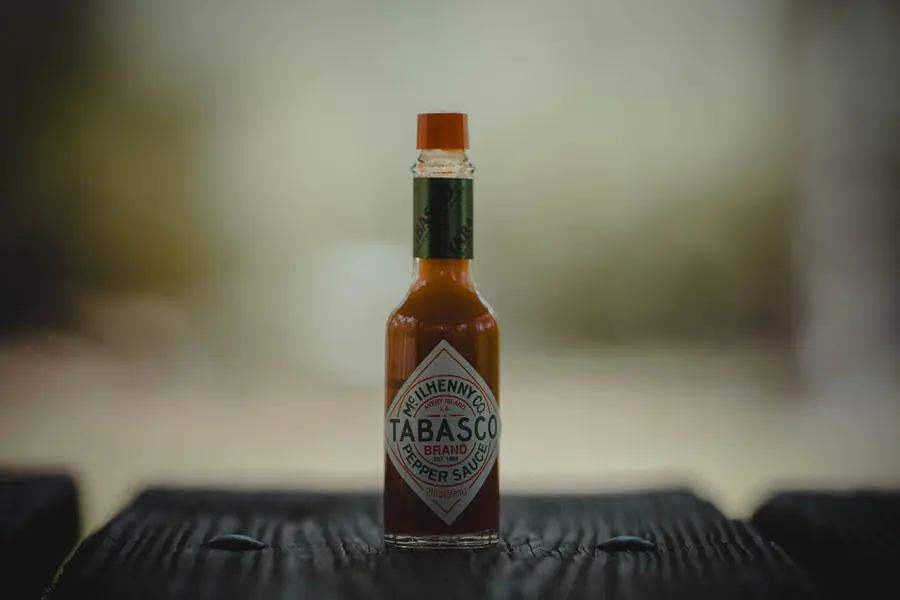
How to order more heat, or less
- Ask for chilli sauce on the side. Almost every kitchen has something, even when it is not on the menu, and on the side means you control the dose.
- Ask what is already in it. If a dish is described as spicy, find out whether that means seasoned or hot — they are answered differently and the word will not tell you.
- Order the sauces separately if you are heat-averse. Garlic sauce and tahini are not hot, but a house chilli sauce spread through a wrap cannot be removed.
- Do not assume the meat carries the heat. It rarely does. Marinades here are warm-spiced rather than fiery — see our guide to the three meats.
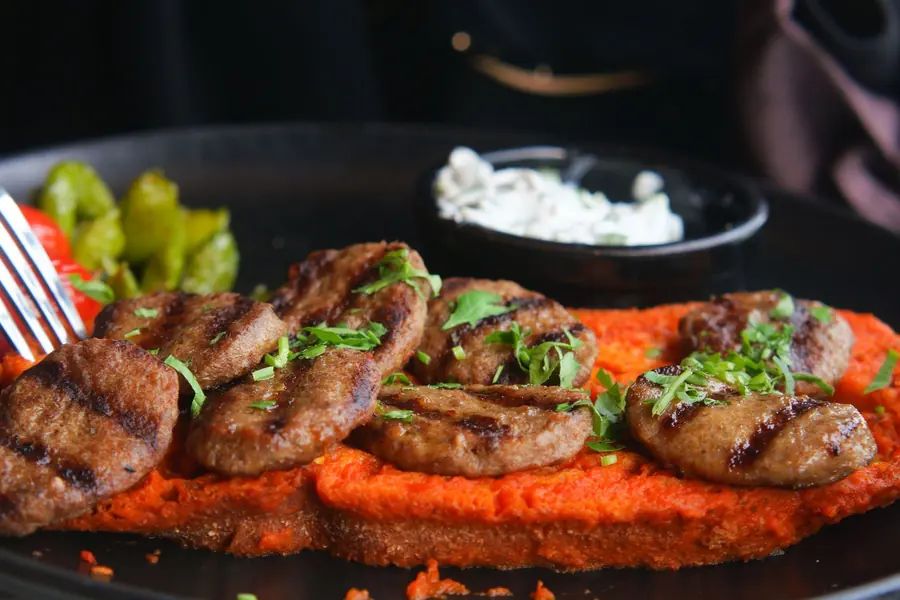
On our menu
One item on our menu is named for heat: the spicy fired skillet-roasted potatoes. The three sauces that come with the plates — garlic, tzatziki and tahini — are not hot, and the meats are marinated rather than chillied.
If you want more heat than that, or less, say so when you order. It is a completely ordinary request and it is much easier to handle before the food is made than after. Our general ordering guide covers how the rest of the menu fits together.
“Spicy” is one of several menu words that repay a moment’s clarification — our guide to what the menu words actually mean covers the rest of the vocabulary.
Frequently asked questions
Is Mediterranean food spicy?
It is heavily spiced but rarely hot. The cuisine leans on cumin, coriander, cinnamon, sumac and black pepper for depth rather than on chilli for heat, and where chilli appears it is usually offered as a sauce on the side rather than cooked into the dish.
What is the spiciest thing on a Mediterranean menu?
Usually a chilli condiment rather than a dish — shatta in Levantine cooking or harissa in North African. Harissa is the hotter of the two and can be genuinely fiery depending on the chillies used.
What is Aleppo pepper?
A mild chilli from Syria and southern Turkey, coarsely flaked and slightly oily-looking. It is fruity and a little salty with slow, gentle heat, which is why it is used generously on dishes that are not meant to be hot.
Is Mediterranean food less spicy than Indian food?
Generally much less hot, though not less seasoned. Both draw on an overlapping spice cabinet, but Mediterranean cooking uses those spices for warmth and aroma while chilli heat plays a far smaller role than it does across most of South Asia.
Can I ask for my food to be made spicier?
Yes, and asking for chilli sauce on the side is the most reliable version of the request. Most kitchens have something even when it is not listed, and serving it separately means you control how much goes in.
If you were worried it would be too hot, it will not be. If you were hoping it would be, ask for the chilli sauce.
Warm-spiced rather than hot, with the sauces on the side.