
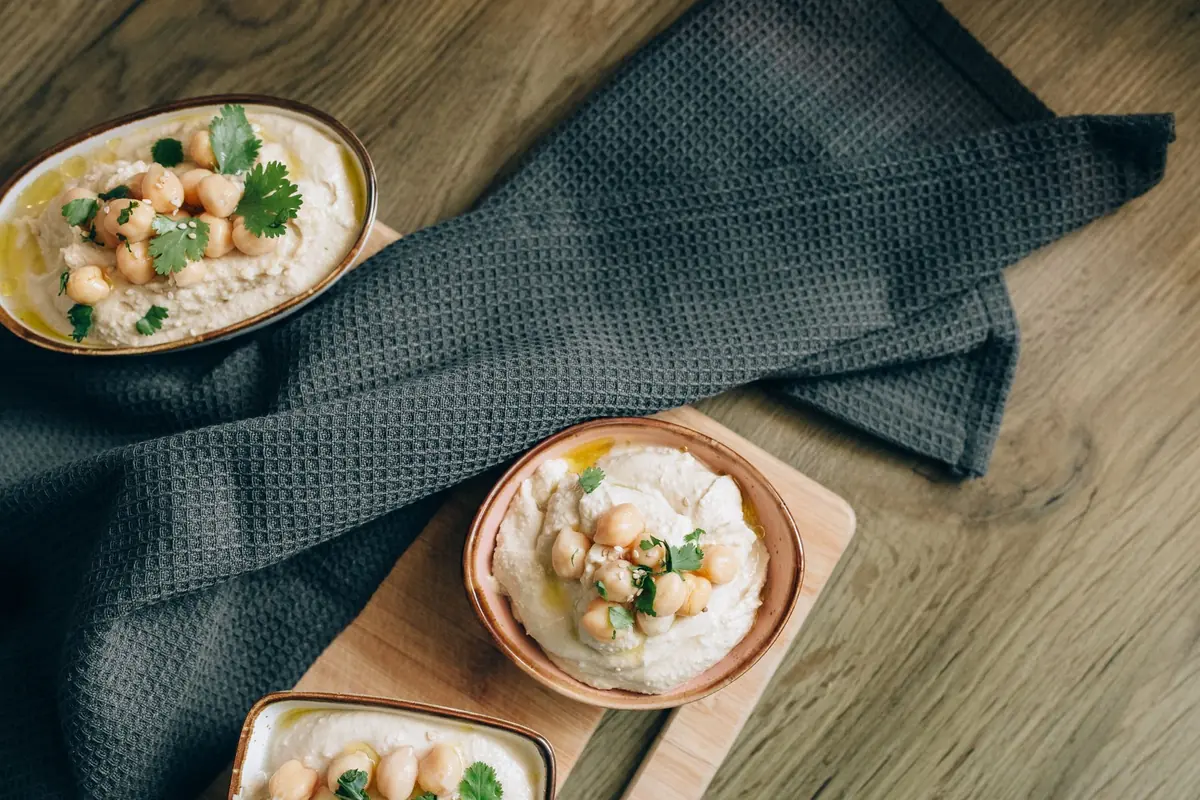
Order a plate at a Mediterranean restaurant and it arrives with a sauce you did not choose. Order a wrap and you may be asked which one you want, with no explanation of the difference.
There are really only three you need to know, and they are easy to tell apart once you know what is in them.
The short answer
Garlic sauce is a whipped emulsion of garlic and oil — intensely garlicky and usually dairy-free. Tzatziki is a yogurt sauce with cucumber and herbs, cool and tangy. Tahini is a sesame paste, nutty and slightly bitter. Garlic sauce goes with chicken, tzatziki with gyro, tahini with beef and falafel.
Garlic sauce
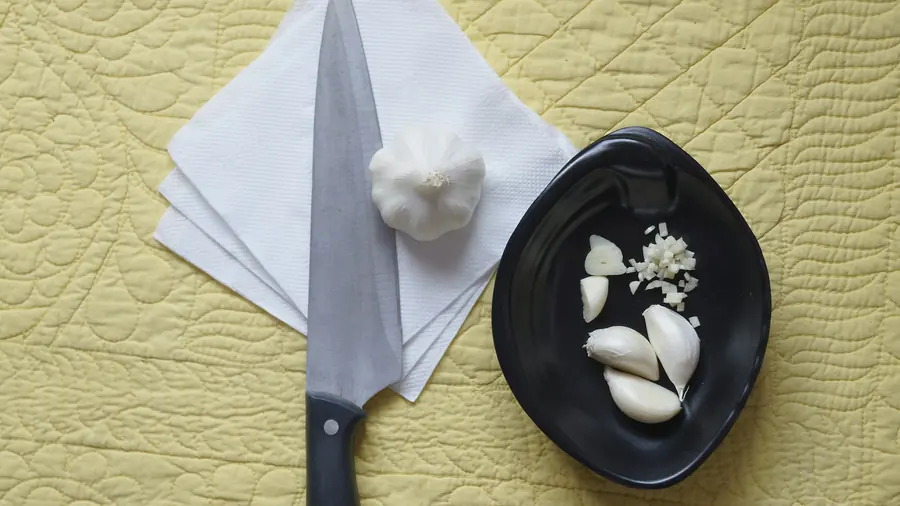
The Levantine version, often called toum, is made by slowly emulsifying garlic with oil and lemon into something pale and fluffy. There is no dairy in the traditional recipe, which surprises people given how creamy it looks.
It is the strongest of the three by a distance. A small amount goes a long way, and it is the default partner for chicken because it cuts through the marinade without competing with it.
Tzatziki
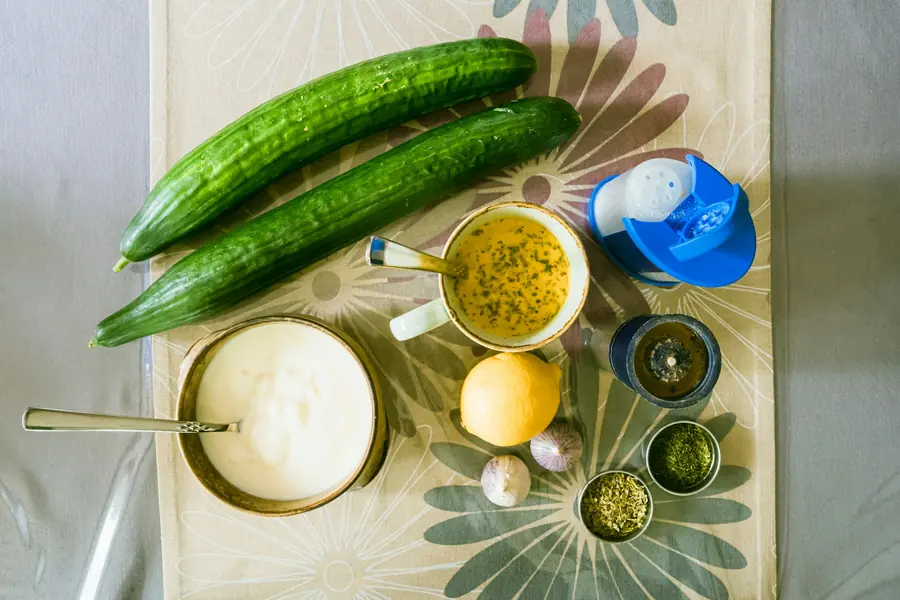
Greek in origin, tzatziki is thick yogurt with grated cucumber, garlic, lemon and usually dill or mint. The cucumber is what makes it cooling rather than rich, and the yogurt keeps it tangy.
It exists to balance fatty grilled meat, which is why it is served with gyro almost universally. On a hot day it is the most refreshing of the three.
Tahini
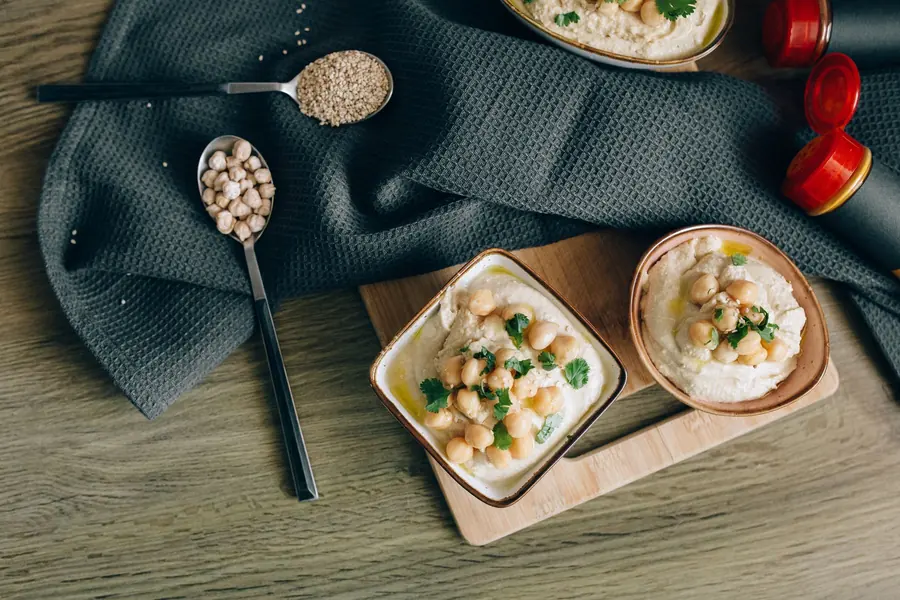
Tahini is ground sesame seeds — a paste rather than a sauce until it is loosened with lemon juice and water, at which point it becomes pourable and pale. It is nutty, faintly bitter, and plant-based.
It is also the base of a lot of other things on the menu: hummus and baba ganoush both depend on it. BBC Good Food’s entry on tahini is a useful primer if you want to know more about the ingredient itself.
The three compared
| Garlic sauce | Tzatziki | Tahini | |
|---|---|---|---|
| Base | Garlic emulsified with oil | Yogurt | Ground sesame seeds |
| Contains dairy? | Traditionally no | Yes | No |
| Flavour | Sharp, intensely garlicky | Cool, tangy, herby | Nutty, slightly bitter |
| Texture | Light and whipped | Thick and creamy | Smooth and pourable |
| Classic pairing | Chicken | Gyro and lamb | Beef and falafel |
| Also found in | Marinades | Greek salads and dips | Hummus and baba ganoush |
One practical note: if you are avoiding dairy, tzatziki is the one to ask about. And if you have a sesame allergy, tahini is present in more dishes than its name appears on — always ask rather than assuming.
Why the textures are so different
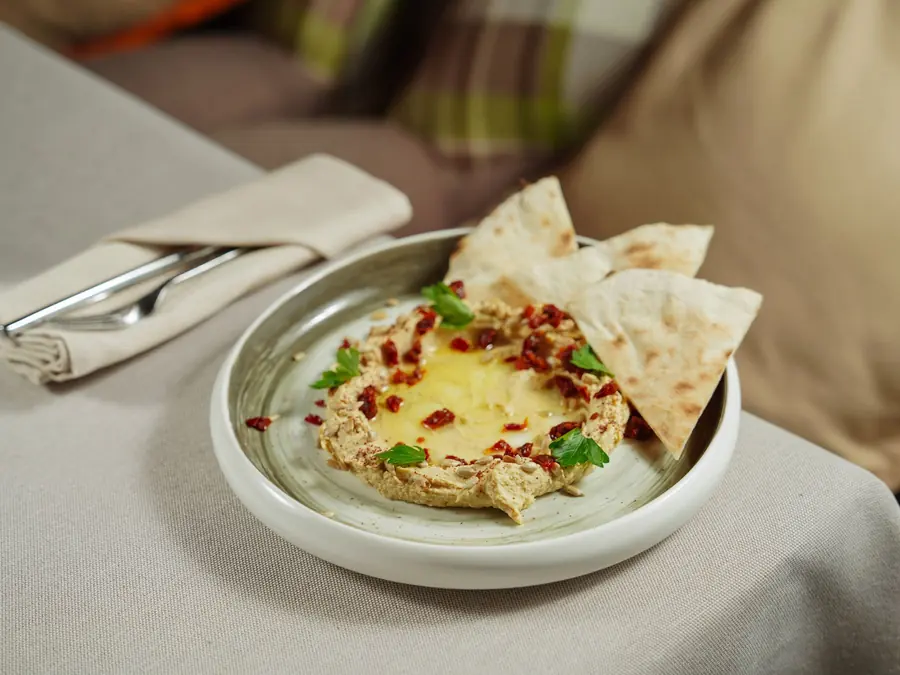
The three sauces behave differently on a plate because they are built on completely different chemistry, and it is worth knowing which will hold up.
Garlic sauce is an emulsion, so it stays light and holds its shape in a spoon. Tzatziki is yogurt-set and loosens as it warms, which is why it is best added just before eating. Tahini thickens as it sits and thins again with lemon juice or water — a jar that has gone stiff is not spoiled, just concentrated.
For takeout, this matters. Tahini and garlic sauce travel well. Tzatziki on hot food for twenty minutes will separate slightly, which is the main argument for asking for sauces on the side.
What people mean by “white sauce”
You will hear this constantly, and it is not one thing. On a halal cart menu it usually means a creamy, tangy, mildly garlicky sauce closer to a seasoned yogurt or mayonnaise dressing than to any of the three above.
At a Greek restaurant the same phrase often means tzatziki. At a Levantine one it may mean garlic sauce. If it matters to you, ask what is in it rather than going by the colour.
Dips are the neighbouring category, and the line between a dip and a sauce is thinner than it looks — our guide to hummus, baba ganoush and the other dips covers the ones that arrive in a bowl rather than on the plate.
Other sauces you may meet
Beyond the main three, a few others turn up often enough to be worth recognising on a menu.
- Hot sauce on a Mediterranean menu is often a chilli and garlic paste rather than a vinegar-based sauce — hotter and less sharp than you might expect.
- Harissa is a North African chilli paste, smoky and warm rather than purely hot.
- Amba is a tangy pickled mango sauce found in Iraqi and Israeli cooking, often served alongside shawarma.
- Zhoug is a fresh green chilli and coriander sauce, sharp and herbal.
None of these replaces the main three; they are additions. If a menu offers one you do not recognise, ask for it on the side the first time.
How to order them
- First time? Take whatever comes with the dish. The pairings exist for a reason.
- Want to compare? Order a plate and ask for a second sauce on the side. It is a normal request.
- Ordering for a group? Get sauces on the side rather than on the food, so nobody is stuck with one they dislike.
- Not sure about garlic? Start with tzatziki. Garlic sauce is the most assertive of the three.
On our menu
Our plates come paired the traditional way: chicken over rice with garlic sauce, gyro over rice with tzatziki, beef over rice with tahini. The gyro and chicken combination comes with both garlic and tzatziki. Every plate also comes with hummus and salad.
Our guide to ordering at a Mediterranean restaurant covers how the rest of the menu is organised, or you can see which sauce comes with which plate.
If you only remember one thing
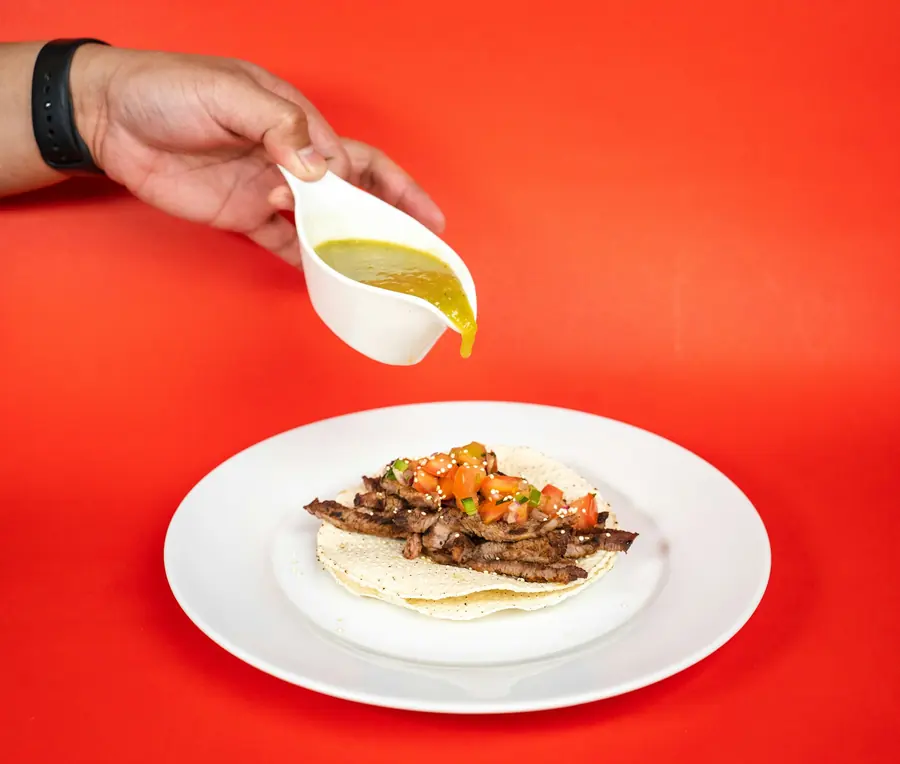
Match the sauce to the fat in the dish. Rich, fatty meat like gyro wants something cooling, which is tzatziki. Leaner grilled chicken can take the sharpness of garlic sauce. Beef and fried chickpeas suit the nuttiness of tahini. That single rule gets you to a sensible order almost every time.
None of the three is hot, which is deliberate: heat is a separate condiment in this cuisine rather than something built into the sauce. Our guide to how spicy this food is covers where the chilli actually lives.
Frequently asked questions
Is tzatziki the same as raita?
They are close cousins rather than the same thing. Both are yogurt and cucumber sauces, but tzatziki is Greek and leans on garlic, dill and lemon, while raita is South Asian and typically uses cumin, mint or coriander.
What is the difference between garlic sauce and tzatziki?
Garlic sauce is garlic emulsified with oil and lemon, with no dairy in the traditional recipe, and it is very strongly flavoured. Tzatziki is yogurt-based with cucumber and herbs, so it is creamier, cooler and much milder.
Is tahini the same as hummus?
No. Tahini is ground sesame paste and is one of the ingredients in hummus. Hummus is made from blended chickpeas with tahini, lemon and garlic added.
Does garlic sauce contain dairy?
Traditional Levantine garlic sauce is made from garlic, oil, lemon and salt, with no dairy, despite its creamy appearance. Some versions do add yogurt or mayonnaise, so ask if it matters to you.
Which sauce goes with which meat?
Garlic sauce is the usual partner for chicken, tzatziki for gyro and lamb, and tahini for beef and for falafel. These pairings are conventional rather than fixed, and most kitchens will happily swap them.
Three sauces, three completely different bases: oil, yogurt and sesame. Once you can place them, ordering gets a lot easier.
And if you are still unsure at the counter, asking for the sauce on the side costs nothing and lets you decide how much you actually want.
Every plate on our menu comes with the sauce it was built for.