
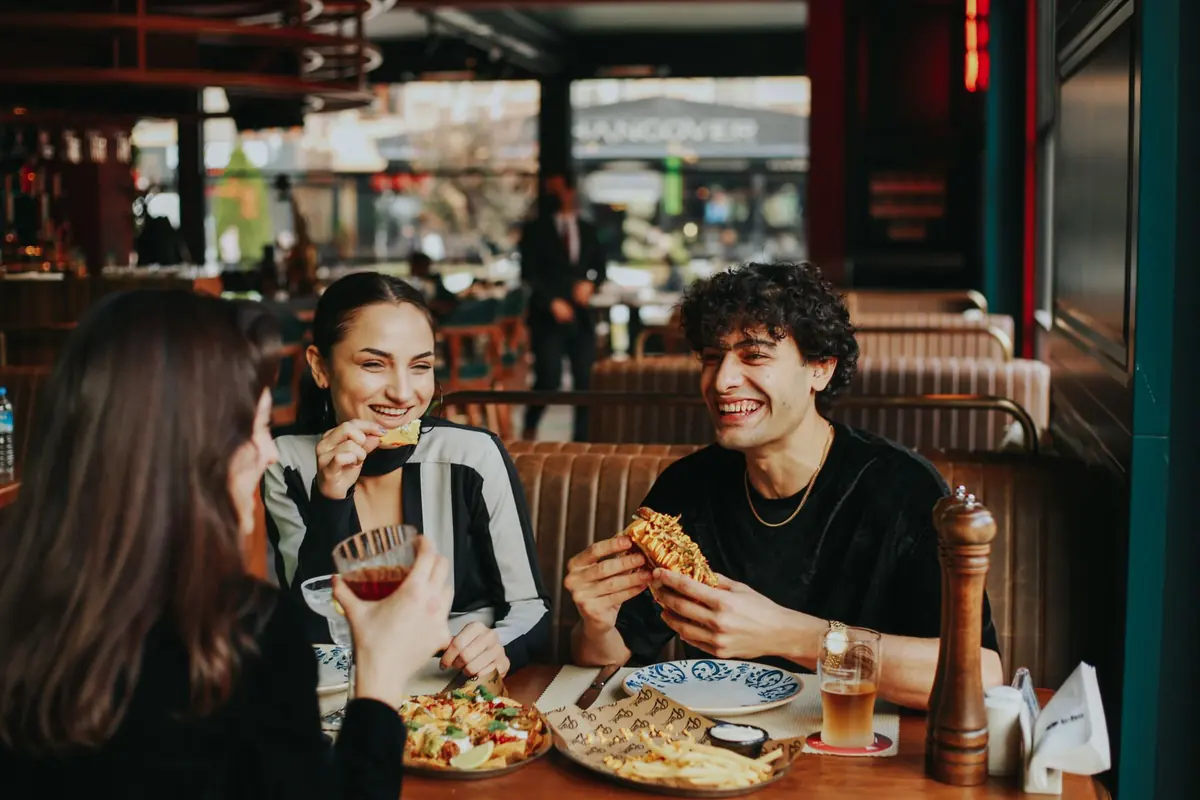
It gets asked quietly, usually by someone who does not want to cause offence by asking. It is a completely reasonable question and the answer is short, so here it is first: yes, of course.
The longer answer is about what halal actually changes on a plate, which is less than most people assume, and what it does not change at all.
The short answer
Yes. Halal describes how food is sourced and prepared, not who is permitted to eat it. There is no restriction on anyone eating halal food, and at most halal restaurants in the United States a large share of the customers are not Muslim. You do not need to do or say anything differently.
What halal actually changes
Three things, in practice, and that is close to the whole list.
- No pork. Not on the menu, and in a kitchen like ours not on the premises at all.
- No alcohol. Not served, and not used in the cooking. There is no bar and no wine list.
- Meat from a particular slaughter method. Sourced from suppliers who slaughter to halal requirements — the subject of our guide to halal and zabiha.
That is what the word covers. Our overview of what halal food means goes through the rules in more detail, but the short version is that it is a standard about sourcing and preparation.
What it does not change
Halal is not a cuisine. It is not a flavour, a spice level, or a style of cooking. There is halal Mediterranean food, halal Indian food, halal burgers and halal fried chicken, and they taste like Mediterranean food, Indian food, burgers and fried chicken.
Nothing is added to the food and nothing is done to it at the table. The difference is entirely upstream of the kitchen — in which supplier the meat came from — plus the two absences above.
It is also not a health claim, an organic claim or a quality grade, and we are not going to pretend otherwise. Our guide to how halal, organic and grass-fed differ sets out why those three get confused and why none of them implies the others.
Is it rude to eat here if I am not Muslim?
No, and this is the part of the question people are usually really asking. A halal restaurant is a restaurant. There is no observance expected of you, nothing to opt into, and no dress code beyond whatever the place would normally expect.
The food is cooked to a standard that matters to some of the people eating it and is simply invisible to everyone else. Nobody will ask, and nobody minds.
It is the easiest option for a mixed table
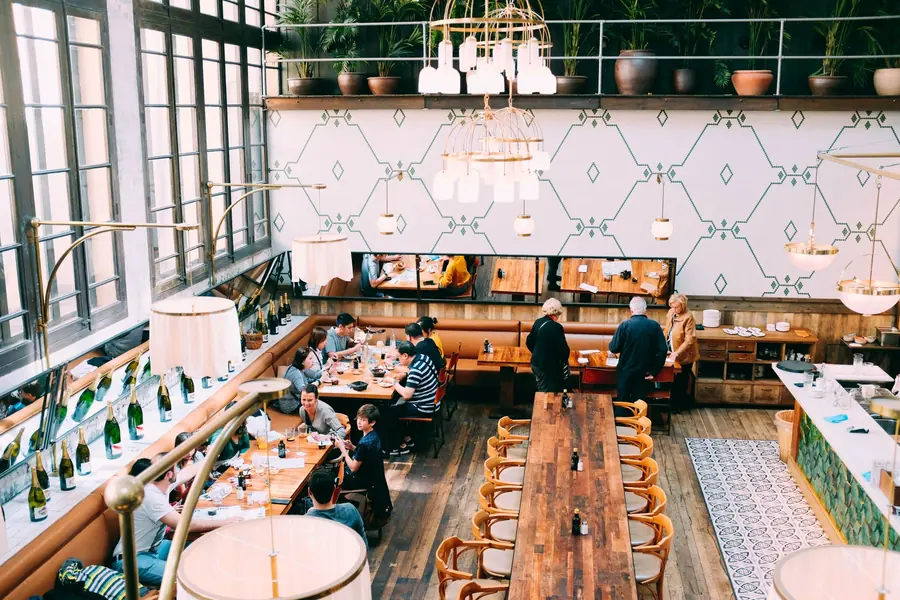
This is the genuinely practical reason non-Muslims end up at halal restaurants, and it is worth saying out loud: a halal kitchen is the lowest-friction choice for a group where people eat differently.
| If someone at the table… | How a halal menu handles it |
|---|---|
| Eats only halal | The whole menu is available to them |
| Avoids pork for any reason | There is none on the menu |
| Does not drink | Nothing on the table assumes they will |
| Is vegetarian | Dips, falafel, salads and vegetable dishes are core to this cuisine, not an afterthought |
| Has no restrictions at all | Orders whatever they like |
Compare that with the usual alternative, which is finding somewhere that works for one person and then hoping the rest of the table is happy. Our guide to how much food to order for a group covers quantities once you have settled on the place.

What to order if it is all new
Order the way you would at any restaurant serving food you have not had before: one thing you are confident about, one thing you have never tried, and something for the middle of the table.
In practice that means a rice plate with chicken, a wrap to compare it against, and hummus for everyone. Our guide to what to order at a Mediterranean restaurant goes through the formats properly, and whether Mediterranean food is halal covers why the two things overlap so often in the first place.
The questions people actually ask
Collected from the counter, more or less in order of frequency.
- “Is this like kosher?” Related but not the same. Both are religious dietary standards with rules about permitted animals and slaughter, and they agree on a fair amount — but they are separate systems with separate authorities, as our comparison of the two sets out.
- “Is the meat different?” It is the same animals — chicken, beef, lamb. What differs is the supplier and the slaughter method, not the cut or the species.
- “Can I bring my own drink?” Alcohol is the one to check before assuming, at any halal restaurant. It is not served and not used in the cooking.
- “Do you have anything without meat?” Yes, and it is a strong part of this cuisine rather than an afterthought — see our guide to the vegetarian side of the menu.
Hosting people at a halal restaurant
If you are the one booking, there is nothing special to arrange and nothing to warn anybody about. The one thing worth mentioning to guests in advance is that there is no alcohol, simply because people plan around it — not because it needs explaining.
For larger groups the ordering pattern matters more than the venue does. How much food to order covers quantities, and if you are feeding a group somewhere else entirely, the same logic applies to catering for a mixed team.
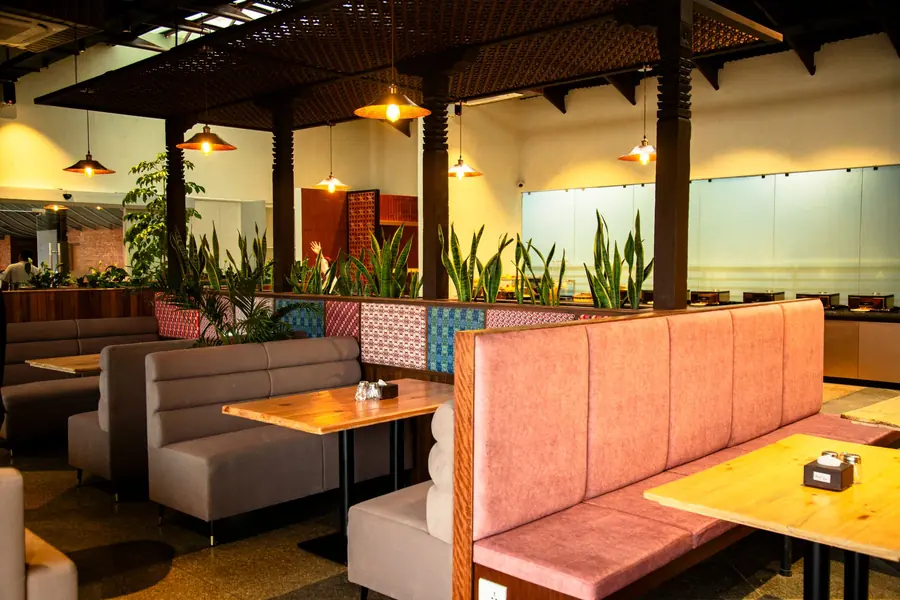
Who actually eats here
A mix, which is the usual answer for a halal restaurant in an American college town. Some people come because it is halal and that matters to them. Most come because they want a gyro.
Both are entirely welcome, and there is no version of this where one group is the real customer and the other is visiting. If you have a question about the food, ask us — that goes for everyone.
The question people ask next is usually the practical one about feeding somebody rather than joining them — our guide to hosting a Muslim guest for dinner covers what to cook and the one question to ask first.
Frequently asked questions
Can non-Muslims eat halal food?
Yes. Halal describes how food is sourced and prepared, not who is permitted to eat it. There is no restriction of any kind on non-Muslims eating halal food, and at most halal restaurants in the United States a large share of customers are not Muslim.
Does halal food taste different?
No. Halal is not a cuisine, a flavour or a spice level — it is a standard about sourcing and preparation. Halal Mediterranean food tastes like Mediterranean food. Nothing is added to the food and nothing is done to it at the table.
Is it disrespectful to eat at a halal restaurant if I am not Muslim?
Not at all. A halal restaurant is a restaurant. There is nothing you are expected to observe, nothing to opt into, and nobody will ask. The standard matters to some of the people eating there and is simply invisible to everyone else.
Is alcohol served at a halal restaurant?
No, and it is not used in the cooking either. That is one of the few practical differences you will notice as a diner, along with there being no pork on the menu.
Is halal food healthier or better quality?
That is not a claim we make. Halal is a religious standard concerning permissibility and the method of slaughter, not a nutritional standard or a quality grade, and it is separate from organic and grass-fed claims as well.
If you were hesitating over whether the question was allowed: it was, and the answer is that the door is the same door for everybody.
Rice plates, wraps, salads and pizza in San Marcos. Everyone welcome.