
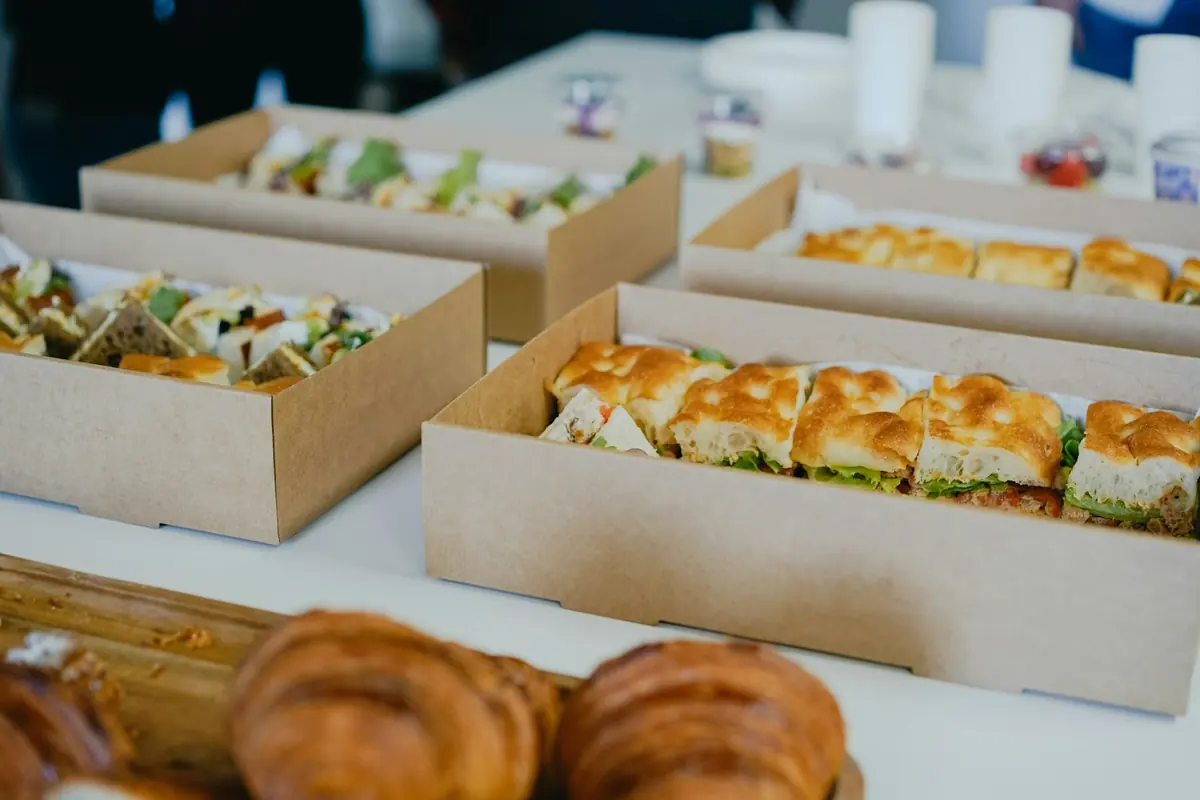
You are organising lunch for the team and someone has mentioned they eat halal. You want to get it right, you do not want to make a fuss about it, and you are not sure whether the question you need to ask is about the menu, the caterer, or the person.
It is mostly about the caterer. Here is what actually matters, what to ask, and the two mistakes that turn a well-meant lunch into one where somebody quietly eats nothing.
The short answer
Order the whole meal from a kitchen that is halal throughout, rather than adding a halal dish to a non-halal spread. It costs the same, removes every cross-contamination question, and means nobody has to inspect the table before they eat. Label the dishes, and check the date against Ramadan.
Why a single halal option is the weaker answer
The instinct is to order what everyone else is having and add one halal tray alongside. It seems considerate, and it is better than nothing, but it creates three problems at once.
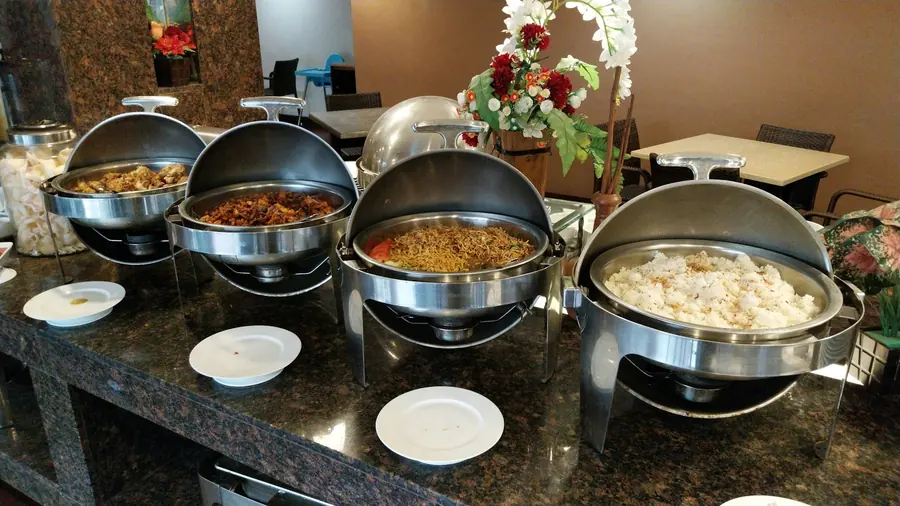
- Serving utensils migrate. On a buffet, the spoon from the pork dish ends up in the rice within about ten minutes. Nobody does it deliberately.
- It singles people out. One labelled tray at the end of a long table makes a private dietary practice into a visible one.
- It is usually the worst dish on the table. The single halal option tends to be an afterthought — a plain chicken breast, or the vegetarian tray relabelled.
Ordering the whole spread from a halal kitchen solves all three and costs no more. Everyone eats the same food, the utensil question disappears, and the people who do not eat halal will not notice anything except that lunch was good.

What halal rules out, briefly
You do not need to become an expert, but knowing the shape of it makes the conversation with a caterer much shorter. Halal governs which animals may be eaten, how they are slaughtered, and whether alcohol or cross-contamination has entered the process. Our overview of what halal food actually covers goes through the whole picture if you want the detail.
Two things catch people out. Alcohol counts even when it is cooked off, so wine in a sauce or a brandy reduction is a problem. And gelatin is an animal product, which puts a surprising number of desserts and sweets in scope.
Three approaches that work
These are ranked by how much thinking they leave you to do afterwards, not by cost — in practice the difference between them is small.
| Approach | How it works | Worth knowing |
|---|---|---|
| Order everything from a halal kitchen | One caterer, one order, no separation needed | Simplest and safest; the whole team eats the same food |
| Halal caterer plus separate dietary trays | Halal base menu, add vegan or gluten-free items | Fine, provided the additions come from the same kitchen |
| Two caterers, physically separated | Halal food on its own table with its own utensils | Workable but needs someone to police it during service |
| One halal tray on a non-halal buffet | A single dish added to the usual order | The common approach, and the one most likely to fail in practice |
What to ask the caterer
Four questions, and any halal kitchen will answer them without hesitating. Vagueness on these is itself informative.
- Is all the meat halal, or only some of it? Some kitchens source halal chicken but conventional beef.
- Is pork served anywhere on the premises? If it is not, the cross-contamination question largely resolves itself.
- Is alcohol used anywhere in cooking? Marinades, braises and desserts, not just the bar.
- Can you label the dishes for us? Most will. It saves you writing cards on the morning.
If allergies are also in play, raise them in the same conversation rather than separately — our guide to common allergens on a Mediterranean menu covers where sesame, nuts and dairy usually turn up, which is not always where people expect.

Label the table
This is the highest-value five minutes of the whole exercise. A small card in front of each dish naming what it is and flagging the obvious allergens means nobody has to interrogate a stranger about the food before they eat.
It also quietly solves the halal question. If the whole table is halal, one card saying so at the start of the line is enough, and the person who needed to know can stop wondering.
Check the date before you book
The most common failure is not a menu failure. Ramadan moves roughly eleven days earlier each year against the Gregorian calendar, and during it observant colleagues fast from dawn to sunset. A celebratory team lunch that week is an event they cannot join.
The fix is easy: check the dates when you pick the day, and if it falls in Ramadan, either move the lunch or make it a non-food gathering. Our guide to ordering for Ramadan and Eid covers the timing in more detail, including the evening meals that do work during that month.
Is any of this a legal requirement?
Not directly, and it is worth being precise about that. US employers do have a duty to reasonably accommodate employees’ religious practices under Title VII, and the EEOC’s guidance on religious discrimination sets out that framework, including the point at which an accommodation becomes an undue hardship.
That guidance centres on scheduling, leave and dress codes rather than on catering, so ordering halal food is best understood as good practice rather than a legal obligation. The practical case stands on its own: it costs the same and more people eat.
How much to order
Office lunches are consistently over-ordered, usually because the headcount comes from the invite list rather than the acceptances. Our guide to how much food to order for a group works through portions per head and which dishes hold their quality on a warming tray for an hour.
The related question is when to place the order, which matters more than most people expect for a weekday booking — see our catering planning timeline.

Ordering from Halal Basket
Our whole menu is halal, so a workplace order does not need any separation, labelling for cross-contamination, or a second caterer. Rice plates, wraps and salads all travel well and serve easily from trays, and the vegetarian items cover most of the other dietary requirements likely to be around a team table.
You can see our catering options or get in touch with your date and headcount. For a small team a straightforward online order is often quicker than a formal catering booking.
If you would rather cook for the team yourself than order in, the meat is the part that needs sourcing — buying from a halal butcher covers what to ask and what to buy.
Frequently asked questions
Do I need to ask my colleague whether they eat halal?
Better to ask the group generally whether anyone has dietary requirements when you send the invitation, rather than asking one person directly. It gets you the same information without singling anyone out, and it catches allergies and vegetarians at the same time.
Is vegetarian food automatically halal?
Usually but not always. Vegetarian dishes avoid the meat question entirely, but alcohol in a sauce, gelatin in a dessert and a shared fryer are all still possible. It is a good default rather than a guarantee.
Can I just order from a normal caterer and ask for no pork?
That answers the narrowest version of the question. It says nothing about how the beef or chicken was slaughtered, whether alcohol is used in cooking, or whether the same grill handles both. For a workplace order it is simpler to use a kitchen that is halal throughout.
What should I do if the lunch falls during Ramadan?
Move it, or make it a non-food gathering. Observant colleagues fast from dawn to sunset during Ramadan, so a midday meal is one they cannot take part in. Evening events work, and the dates shift about eleven days earlier each year.
Does halal catering cost more?
Generally no. Halal sourcing is standard for the kitchens that do it, so the price reflects the food rather than the certification. Ordering the whole spread from one halal kitchen is usually cheaper than running two caterers for one event.
The whole thing reduces to one decision made early: order from a kitchen that is halal throughout, and check the date. Everything after that is ordinary lunch logistics.
Planning a team lunch or an office event in San Marcos?