
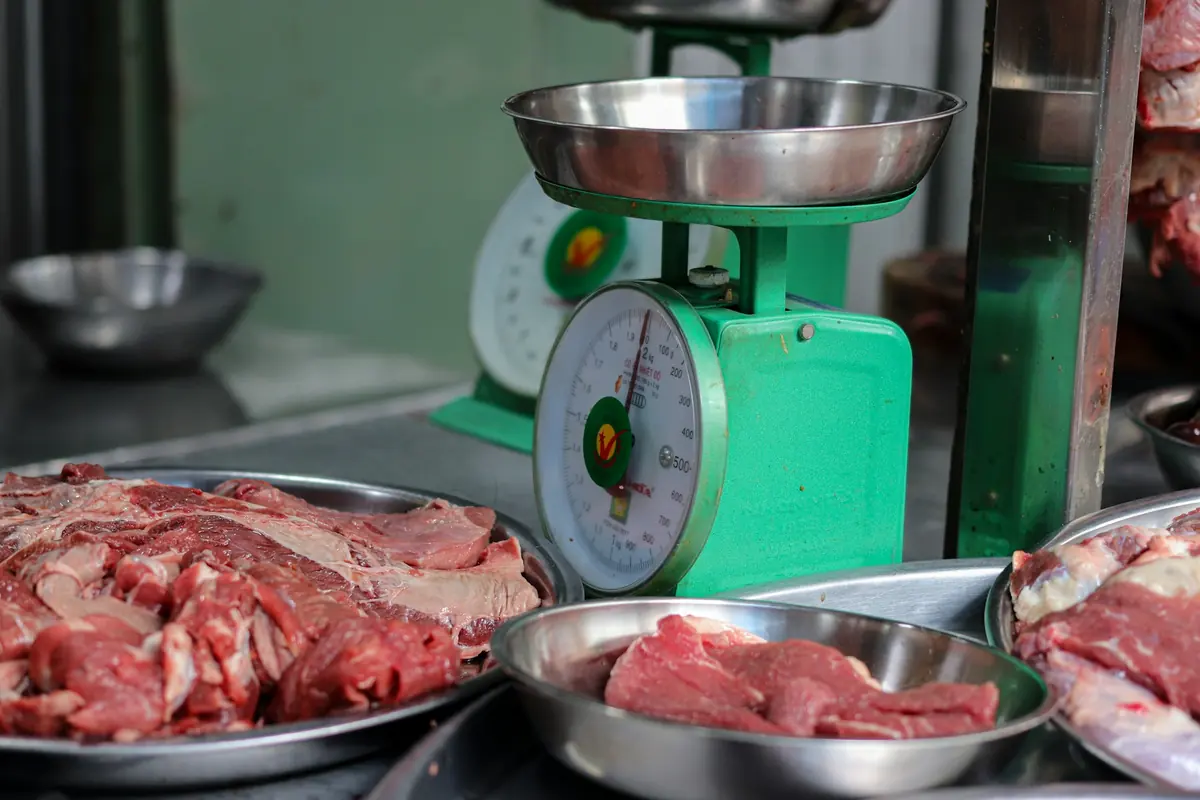
It is a fair question and it gets asked more often than restaurants like to admit. Halal meat sometimes costs more than the equivalent conventional cut, sometimes costs the same, and occasionally costs less.
The reasons have almost nothing to do with the slaughter itself and almost everything to do with scale. Here is what actually drives the difference.
The short answer
Where halal meat costs more, it is usually because it is produced at smaller scale, travels further, and carries certification overhead — not because the method of slaughter is expensive. In areas with established Muslim populations and local supply, the price gap tends to close or disappear.
The slaughter itself is not the expensive part
This is the assumption worth clearing first. Halal slaughter requires a trained person, a swift cut and the blood drained. It is a labour requirement, not an equipment or ingredient one, and on a per-animal basis it is a small component of what meat costs.
What is expensive is everything around it: the size of the plant, how far the product travels, how much of the animal can be sold into the halal market, and who audits it.
Scale is the real driver
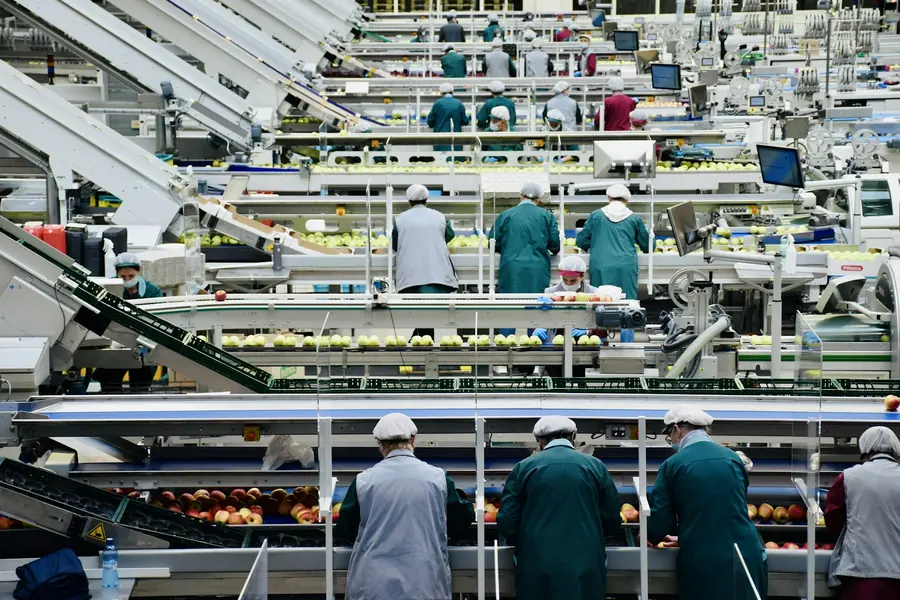
The US meat industry is built around very large facilities running at very high volume, which is what makes conventional meat cheap. The USDA Economic Research Service’s overview of the cattle and beef sector describes an industry organised around feedlots and concentrated processing, and that structure is what per-unit costs depend on.
Halal-certified processing is a much smaller slice of that system. Fewer facilities, shorter production runs and more frequent changeovers all raise the cost of each pound produced, in exactly the way they would for any speciality product. None of it is unique to halal — organic and grass-fed lines face the same arithmetic.
The four things that actually move the price
| Factor | Effect | Why |
|---|---|---|
| Production scale | Largest single factor | Smaller runs mean higher cost per pound |
| Distance to supply | Significant | Fewer plants means longer, costlier freight |
| Certification overhead | Moderate | Audits, paperwork and periodic inspection are recurring costs |
| Whole-animal utilisation | Underappreciated | If only part of the carcass sells into the halal market, the rest subsidises less |
| Local demand | Can eliminate the gap | Established Muslim populations support local supply and volume |
That fourth row is the one people rarely think about. A processor that can sell every part of an animal into a market gets a better return per animal than one selling only the popular cuts, and thinner markets are worse at absorbing the whole carcass.
Why the gap varies so much by location
This is why two people can have completely opposite experiences of the same question. In a city with a large Muslim population, several halal butchers and local supply, halal meat is an ordinary commodity priced accordingly. In a town with one halal restaurant and no halal butcher, the same product arrives from further away in smaller quantities and costs more to get there.
Texas sits somewhere in the middle, with established supply around the larger metros and thinner coverage between them. That is a geography question rather than a religious one.
Does certification cost the consumer?
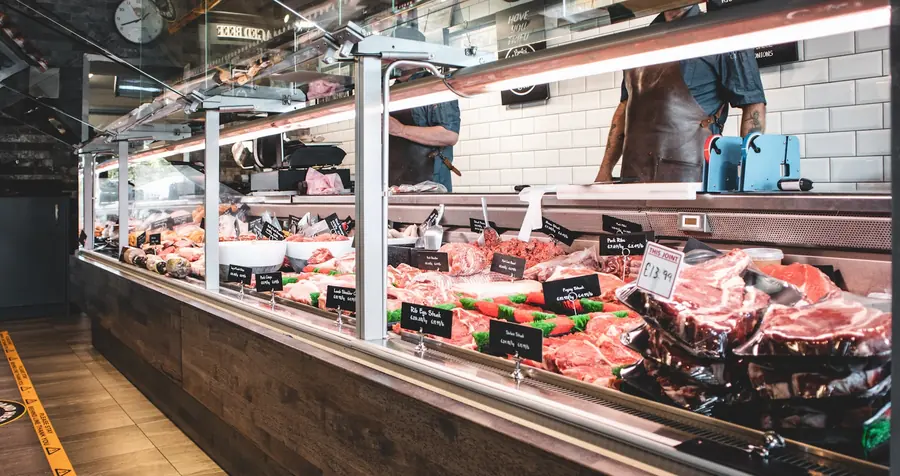
Some, but less than people assume, and it depends heavily on where in the chain the certification sits. Certifying a processing plant spreads its cost across an enormous volume of product, so the per-pound effect is small. Certifying a single restaurant spreads the same kind of cost across a much smaller output.
That is part of why many independent halal restaurants do not hold their own certificate while buying from certified suppliers — the certification that does the most work sits further up the chain. Our guide to telling whether a restaurant is really halal covers what that means when you are assessing a place that has no certificate on the wall.
What this means for a menu
For a restaurant, meat is only one input among rent, labour, energy and everything else, so a difference in wholesale meat cost is diluted considerably by the time it reaches a menu price. A halal restaurant is not systematically more expensive than a comparable non-halal one, and where prices differ between two restaurants the explanation is usually portion size, location and service model rather than sourcing.
It is also worth saying plainly that cheaper is not automatically better value here. A kitchen buying from a certified supplier is buying a documented supply chain, and that is part of what the price reflects.
The gap has been narrowing
It is worth ending on the direction of travel rather than the snapshot. As demand has grown, more processors have added halal lines, more distributors carry the product, and the volume that makes conventional meat cheap has started to apply to halal meat as well.
That is why the answer to this question has changed over the last twenty years and why it differs so much between an established market and a thin one. The premium, where it exists, is a function of a supply chain still catching up to demand rather than a permanent feature of halal food.
If you are buying it yourself
- Buy from a dedicated halal butcher where one exists. Volume and specialisation usually beat a supermarket’s small halal section on price.
- Buy less popular cuts. Shoulder, shank and mince carry far less of a premium than steaks, and suit Mediterranean cooking better anyway.
- Buy in larger quantities and freeze. The freight component is the same whether you buy a pound or ten.
- Consider chicken. The halal price gap is consistently narrowest on poultry, because production runs are shorter and turnover is faster.
If you are cooking for a crowd rather than a household, our guide to how much food to order for a group covers quantities, and the arithmetic of ordering out versus cooking at scale is often closer than people expect.
Some of the price difference people attribute to halal is really other labels stacked alongside it. Halal, organic and grass-fed are three different standards, each with its own certification and its own cost, and none of them implies the others.
Frequently asked questions
Is halal meat more expensive than regular meat?
Sometimes, and where it is, the difference is driven by scale rather than by the slaughter method. Fewer processing facilities, smaller production runs, longer freight and certification overhead all raise the per-pound cost. In areas with established local supply the gap often closes entirely.
Does halal slaughter itself cost more?
Not significantly. It requires a trained person and a specific method, which is a labour requirement rather than an equipment or ingredient one. On a per-animal basis it is a small share of what meat costs to produce.
Why does the price gap vary so much between cities?
Because it is largely a logistics question. A city with a large Muslim population supports several halal butchers and local supply, which brings volume and competition. A town with neither pays for the product to travel further in smaller quantities.
Does halal certification make restaurant food more expensive?
Less than people assume. Certifying a processing plant spreads the cost across a very large volume, so the per-pound effect is small. Meat is also only one of a restaurant’s costs, so a wholesale difference is heavily diluted by the time it reaches a menu price.
What is the cheapest way to buy halal meat?
A dedicated halal butcher usually beats a supermarket’s halal section on price, because of volume. Less popular cuts such as shoulder, shank and mince carry far less premium than steaks, and chicken generally shows the narrowest gap of any protein.
Where halal meat costs more, it is a scale and logistics story rather than a religious one — and it is a gap that closes wherever local supply exists.
Mediterranean plates made with halal ingredients, in San Marcos.