
Search for a list of animal-derived food additives and you will find a table of E numbers — E441, E471, E120, E631. Then you turn over an American packet and there is not an E number on it.
Here are the names those ingredients actually go by in the United States, what each one is, and which of them a label is required to explain.
The short answer
A US ingredient list gives the common name of a substance, not what it was made from. About a dozen names are genuinely source-ambiguous — they can be plant, synthetic or animal depending on the manufacturer. Carmine is the exception: the FDA requires it to be declared by name.
Why the E number lists do not travel
E numbers are the European numbering system for approved additives. American labels do not use them; under US rules ingredients are listed by their common or usual name instead. So the additive a European list calls E471 appears on a US pack as “mono- and diglycerides”, and E441 simply as “gelatin”.
This is why so much of the advice circulating on this subject is hard to apply in an American supermarket. The underlying chemistry is identical; only the naming convention differs.
The names worth recognising
Each of these can be animal-derived and none of them says so. The Halal Monitoring Authority, a Canadian certifier, flags gelatin, emulsifiers, monoglycerides, enzymes and flavourings as the categories to treat as uncertain, which matches what turns up in practice.
| On the label | What it is | What it can be made from |
|---|---|---|
| Gelatin | Setting agent | Cattle or swine collagen; sometimes fish |
| Mono- and diglycerides | Emulsifier | Vegetable oils or animal fat |
| Glycerin / glycerol | Humectant, sweetener | Vegetable oils, animal fat or synthetic |
| Lecithin | Emulsifier | Usually soy or sunflower; sometimes egg |
| Stearic acid, magnesium stearate | Anti-caking, tabletting | Vegetable or animal fat |
| Enzymes | Processing aid | Microbial, plant or animal |
| Natural flavors | Flavouring | Includes meat, seafood, poultry, egg and dairy sources |
| L-cysteine | Dough conditioner | Synthetic, fermentation or keratin |
| Whey, casein, caseinate | Dairy protein | Dairy — but the cheese behind it may have used animal rennet |
| Shortening | Fat | Vegetable or animal, unless specified |
Two of these have their own guides, because they account for most of the real cases: gelatin, and the “natural flavor” category, which our article on french fries works through using the federal definition.
Carmine is the one you can actually see
There is a single animal-derived additive that American labels are required to name outright, and it is the red one. 21 CFR 73.100 covers cochineal extract and carmine, both derived from the cochineal insect — Dactylopius coccus costa — and requires that foods containing them “shall specifically declare the presence of the color additive by listing its respective common or usual name, ‘cochineal extract’ or ‘carmine’, in the statement of ingredients”.
That requirement exists because of allergic reactions rather than for dietary reasons, but the effect is the same: on this one ingredient the label does the work for you. It is worth knowing precisely because it is the exception — nothing else in the table above gets the same treatment.
Where these actually turn up
- Confectionery and desserts — gelatin above all, plus carmine for red and pink colouring.
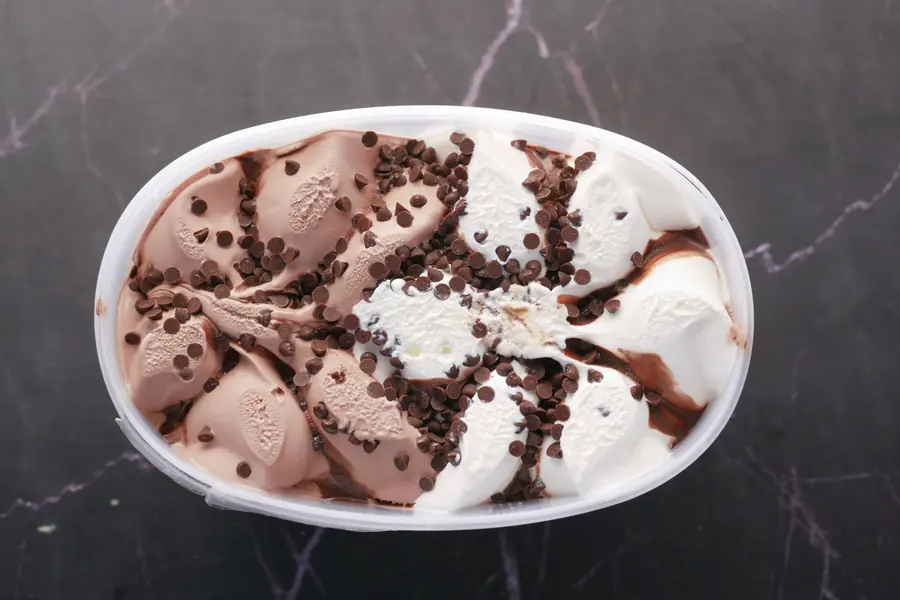
- Ice cream and frozen desserts — emulsifiers and stabilisers, and dairy proteins.
- Baked goods — mono- and diglycerides, enzymes and dough conditioners, covered in our guide to bread.
- Snacks and seasoned crisps — natural flavors, whey and cheese powders.
- Soft drinks and juices — colourings, and glycerin as a carrier.
- Supplements and medicines — gelatin capsules and magnesium stearate, which is a conversation for a pharmacist rather than this article.
Why manufacturers do not simply say
It is tempting to read the silence as evasion. Mostly it is not. A large manufacturer buys an ingredient like glycerin or mono- and diglycerides on commodity terms from whichever supplier is cheapest that quarter, and those suppliers do not all use the same feedstock.
Printing the origin on the pack would mean re-plating artwork every time procurement changed hands. Since no rule requires it, almost nobody does it — which is precisely the gap that certification exists to fill, because a certified line has to hold its sourcing constant and be audited on it.
It also explains why the answer for a given product can change without any announcement, and why the same brand can have different answers in different countries.
Three things that actually help
Given that the label will not answer the question directly, there are three workable moves, in ascending order of reliability.
- Read for the named exceptions. Carmine, lard, tallow, gelatin and any ingredient identified as an extract are visible when present.
- Use a vegetarian or vegan claim as a partial answer. It rules out the animal-derived versions of everything in that table, though not alcohol — we go through exactly what it covers.
- Look for certification. A certifier audits the whole formulation, which is the only approach that addresses source rather than name — see what those marks actually certify.
What a kosher symbol tells you here
Kosher certification covers a lot of the same ground, and the symbols are far more common on American packaging, so people reasonably use them as a stand-in. On this specific problem they are genuinely informative: a kosher mark means the additives were traced, which is exactly the audit a halal mark performs.
Where it stops is on the two points the systems do not share. Kosher certification permits alcohol, and it assesses meat against a different slaughter standard than any halal certifier applies. So on a product with no meat and no alcohol, a kosher symbol answers most of the additive question; on anything else it does not.
Our comparison of halal and kosher sets out where the two agree and where they part company.
In a restaurant
Almost none of this is visible when you are ordering a meal, which is why the restaurant version of the question is a different one: not what is in the packet, but where the kitchen sources from. What makes a menu halal covers that, and everything on our own menu is made with halal ingredients.
There is a name for the category all of these ingredients fall into when the label will not say: mashbooh, meaning doubtful — and it describes missing information rather than the food itself.
Frequently asked questions
Which food additives can be animal-derived?
The ones worth recognising are gelatin, mono- and diglycerides, glycerin, lecithin, stearic acid and magnesium stearate, enzymes, natural flavors, L-cysteine, whey and casein, and shortening. Each can be plant, synthetic or animal depending on the manufacturer, and a US label does not distinguish.
Why are there no E numbers on American food labels?
E numbers are the European numbering system. US rules require ingredients to be listed by their common or usual name instead, so the additive Europe calls E471 appears as mono- and diglycerides and E441 appears simply as gelatin.
Does a label have to say whether an ingredient is animal-derived?
Generally no. Ingredients are declared by common or usual name and there is no broad requirement to state the origin. Carmine is the notable exception: FDA rules require cochineal extract and carmine to be declared by name in the ingredient statement.
What is carmine made from?
It is a red colouring derived from the cochineal insect, Dactylopius coccus costa. Because foods containing it must name it in the ingredient list, it is the one animal-derived additive you can reliably spot by reading the label.
Are enzymes in food halal?
It depends on the enzyme and its source. Enzymes used in food processing can be microbial, plant or animal derived, and the label typically says only “enzymes”. Animal rennet in cheese is the best known case.
The habit worth building is recognising the dozen names above on sight, and knowing that seeing them is a prompt to check rather than a verdict.
No label-reading required. Everything we serve is made with halal ingredients.