
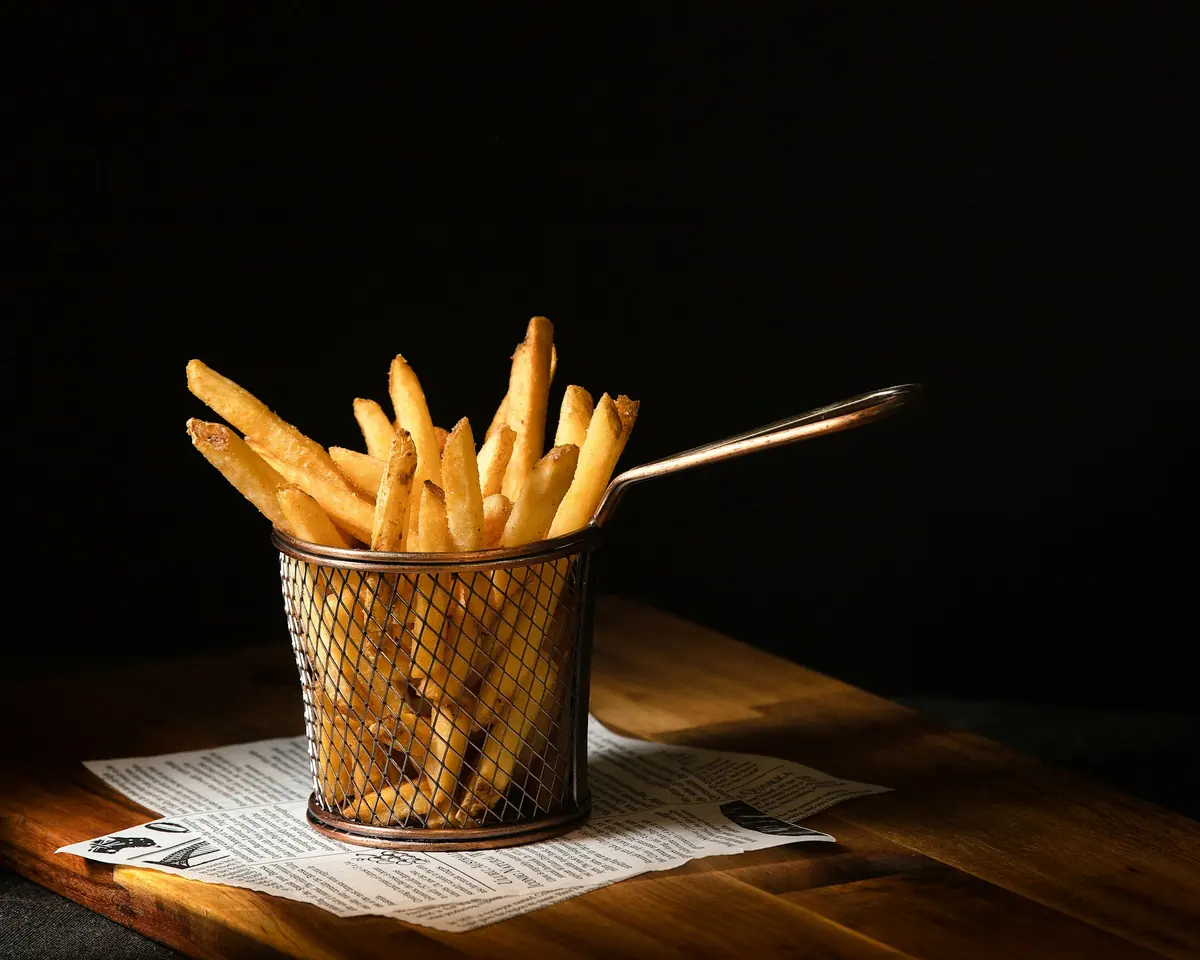
Potatoes, oil, salt. It is difficult to think of a food that ought to be more straightforward, and difficult to think of one that generates more halal uncertainty in practice.
There are two reasons for that, and neither is the potato. One is what gets added for flavour, and the other is what else is in the oil.
The short answer
Plain fries are potatoes and oil, which raises no issue. The two things that do are flavourings that may be animal-derived without saying so, and a fryer shared with non-halal items. In a kitchen that serves no pork and fries nothing questionable, neither applies.
The fryer is the bigger issue
Start here, because it affects more restaurants than the flavouring question and is the one people ask about least.
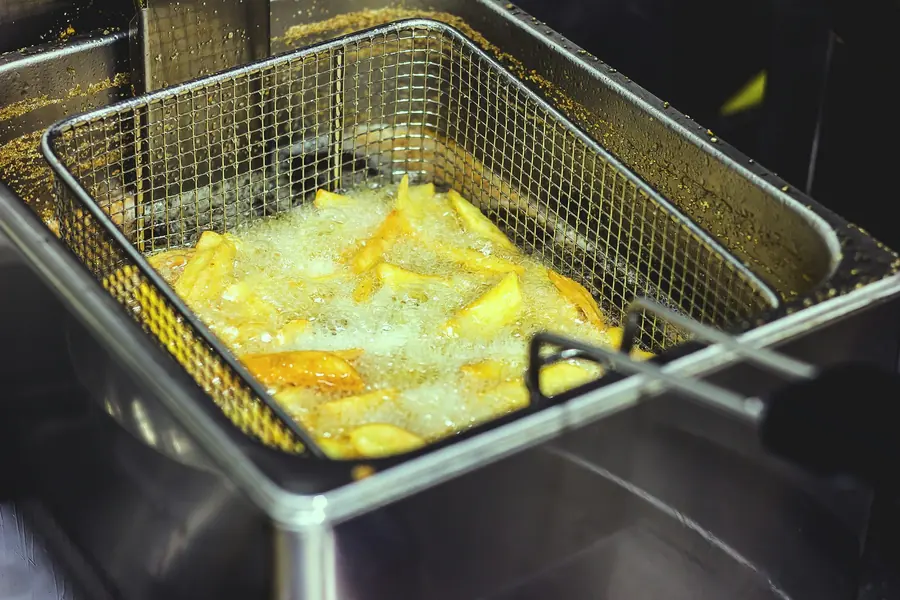
A commercial kitchen typically runs one or two fryers for everything that gets fried. If breaded chicken, battered fish, bacon-topped anything and the fries all pass through the same oil, then the oil carries traces of all of it. This is the same mechanism that makes shared fryers an allergen problem, and it is equally invisible from the dining room.
The question that resolves it is simple and worth asking directly: is anything non-halal fried in the same oil? In a kitchen with no pork on the premises the answer is usually straightforward, which is one of the practical advantages of a fully halal kitchen over a partly halal one.
“Natural flavor” does not mean plant-derived
This is the part that surprises people, and it is worth quoting the regulation because the plain-English reading of the phrase is misleading.
Under 21 CFR 101.22, a natural flavor is defined as an essential oil, oleoresin, essence, extractive, protein hydrolysate, distillate or product of roasting, heating or enzymolysis containing flavouring constituents derived from — among other things — meat, seafood, poultry, eggs or dairy products, whose significant function in food is flavouring rather than nutrition.
In other words, “natural flavor” on an ingredients list is legally compatible with an animal-derived flavouring, and the label is not required to say which. That is why frozen and processed potato products are worth more attention than fresh-cut ones, and why some famous fast-food fries have been the subject of long-running argument.
We are not going to tell you the status of any particular chain’s fries: formulations differ by country and change over time, and a claim like that would be out of date before it was useful. The point is the category of question, not a verdict on a brand.
Beef tallow, and why it still comes up
Frying in animal fat was once standard practice and has never entirely gone away. Most large operations moved to vegetable oil decades ago on cost and dietary grounds, but tallow has had something of a revival among restaurants selling on flavour and tradition.
For halal purposes the relevant question is not whether the fat is animal but whether the animal was slaughtered appropriately — halal-sourced tallow exists, it is simply uncommon in general-market restaurants. If a menu makes a feature of tallow-fried fries, that is a prompt to ask rather than an answer.
What to check, in order
| Question | Why it matters | How to resolve it |
|---|---|---|
| Is anything non-halal fried in the same oil? | The most common issue by far | Ask. A kitchen with no pork usually answers easily |
| What is the frying medium? | Vegetable oil is the norm; tallow exists | Ask if the menu draws attention to it |
| Are the fries coated or seasoned? | Coatings and seasonings carry flavourings | Ask whether they arrive plain or pre-seasoned |
| Are they fresh-cut or frozen? | Frozen products are formulated; potatoes are not | Usually visible from the fries themselves |
| Any added natural flavor? | Legally may be animal-derived | Relevant mainly to packaged and frozen products |
The rest of the fried menu
Everything in this article applies equally to the other fried items on a Mediterranean menu, and the fryer question is the one that scales. Falafel is chickpeas and herbs and raises no ingredient question at all; it is fried in whatever the kitchen fries everything else in.
The same is true of breaded chicken on a children’s menu, battered fish, and fried potato products of any shape. Asking about the fryer once covers all of them, which makes it a considerably more efficient question than asking about each item in turn.
Loaded fries are a separate question
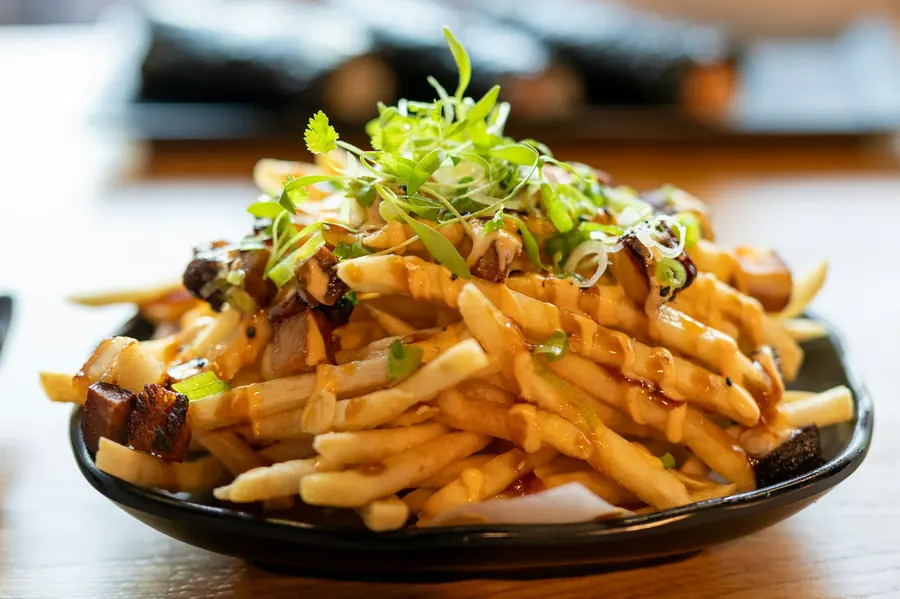
Once anything goes on top, the fries stop being the question. Cheese sauces, meat toppings and dressings all bring their own sourcing considerations, and on many menus the loaded version is where a pork product appears on an otherwise unremarkable side dish.
Cheese in particular is worth understanding, because it turns on an enzyme rather than on anything you can see — our guide to whether cheese is halal covers rennet and what to look for.
Buying frozen fries
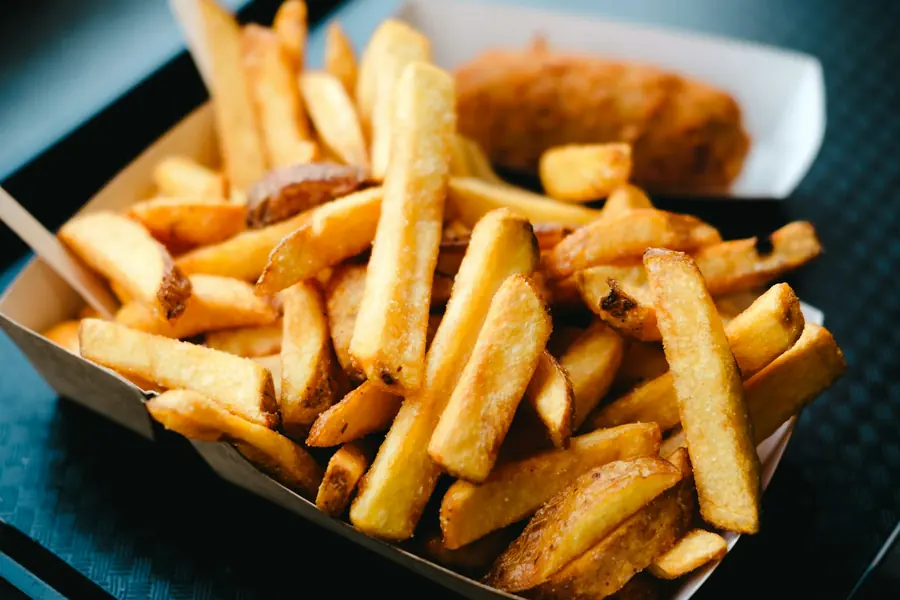
At home the label does most of the work, and plain frozen fries are usually just potato, oil and sometimes dextrose or a stabiliser. The ones to read carefully are seasoned, battered and coated varieties, where the coating is a formulated product in its own right.
The same reading applies to any fried item you bring home, and it is worth noting that reheating fried food in shared oil at home reproduces the restaurant problem in your own kitchen. Our guide to storing and reheating Mediterranean leftovers covers the practical side of that.
On our menu
We serve plain fries, loaded fries and falafel, all of which are fried. We do not serve pork in any form, so the most common cross-contamination scenario — bacon or pork products through the same oil — does not arise here. Everything on our menu is made with halal ingredients.
If you want detail on how any specific item is prepared, ask us directly rather than working it out from the menu. You can also see the full menu.
“Natural flavor” is one of about a dozen ingredient names that hide their origin on an American label. Here is the rest of the list, and why European E number guides do not help in a US supermarket.
Frequently asked questions
Are french fries halal?
Plain fries are potatoes, oil and salt, which raises no issue in itself. The two things that can make them a problem are a fryer shared with non-halal items and flavourings that may be animal-derived. Both are questions about the kitchen rather than about the potato.
Can ‘natural flavor’ be animal-derived?
Yes. Under 21 CFR 101.22 a natural flavor may contain flavouring constituents derived from meat, seafood, poultry, eggs or dairy, and the label is not required to specify which. That is why processed and frozen potato products deserve more attention than fresh-cut fries.
Why does a shared fryer matter?
Because oil carries traces of everything cooked in it. If breaded chicken, battered fish or pork products pass through the same fryer as the fries, the oil is no longer neutral. It is the same mechanism that makes shared fryers an allergen concern.
Are fries fried in beef tallow halal?
Only if the tallow itself came from an animal slaughtered according to Islamic requirements. Halal-sourced tallow exists but is uncommon in general-market restaurants, so tallow-fried fries are a prompt to ask rather than an answer either way.
Are frozen supermarket fries halal?
Plain frozen fries are usually just potato, oil and sometimes a stabiliser, which is straightforward. Seasoned, battered and coated varieties are formulated products and worth reading carefully, particularly for any unspecified natural flavouring.
Potatoes are never the problem. The oil they share and the flavourings they carry are — and both are questions you can only settle by asking.
No pork on the premises, so the shared-fryer question is a short one.