

Chicken over rice with white sauce is not a dish from Lebanon, Turkey, Greece or Egypt. You will not find it on a menu in any of them. It was invented on the streets of New York, and it is now the default shape of halal food across the United States — including, in its own way, ours.
The short answer
Halal carts appeared in New York in the 1990s, serving a Muslim population that had grown sharply through the 1970s and 80s. They began with ordinary American street food prepared halal, then shifted toward Middle Eastern and Mediterranean dishes as demand grew. Chicken over rice with white sauce is what that shift produced.
How it started
The Food Atlas of New York project at CUNY records the sequence: Muslim and Middle Eastern immigration to the city “began in the 70’s and dramatically increased in the 80’s”, and halal carts “first made their way to the streets of New York City in the 90’s with the famous Halal Guys cart”.
What they sold at first is the detail that explains everything afterwards. “They started off by selling typical NYC street food — their menu included hot dogs, fries, and pretzels — but prepared halal.” The innovation was not the food. It was making the ordinary food of the city available to people who could not eat the ordinary version.
Then, as the same account puts it, “as muslim immigration continued to rise in the late 90’s and early 2000’s, the original Halal Guys transformed their menu to include more middle eastern and mediterranean dishes.” The customer base changed and the menu followed it.

Why the format is shaped the way it is
Every element of the cart plate solves a problem that a cart has and a restaurant does not.
| Component | What it is doing |
|---|---|
| Rice as the base | Cheap, filling, holds heat in a steam tray for hours, and stretches a portion of meat a long way |
| Meat off a griddle or vertical spit | Cooked continuously and served instantly — no order-to-order cooking time in a queue |
| Shredded salad | Freshness and crunch with no cooking, no equipment and no waste |
| White sauce | Cooling, creamy, and the thing that ties an otherwise plain plate together |
| Hot sauce on request | One plate serves every heat tolerance in the queue |
| A foil container | Eaten standing up, in a car, or at a desk |
That last row matters more than it looks. The format had to survive being carried and eaten anywhere, which is the same constraint that shapes good takeout today — our guide to what travels well covers why rice plates remain the most forgiving thing on any menu.
The white sauce question
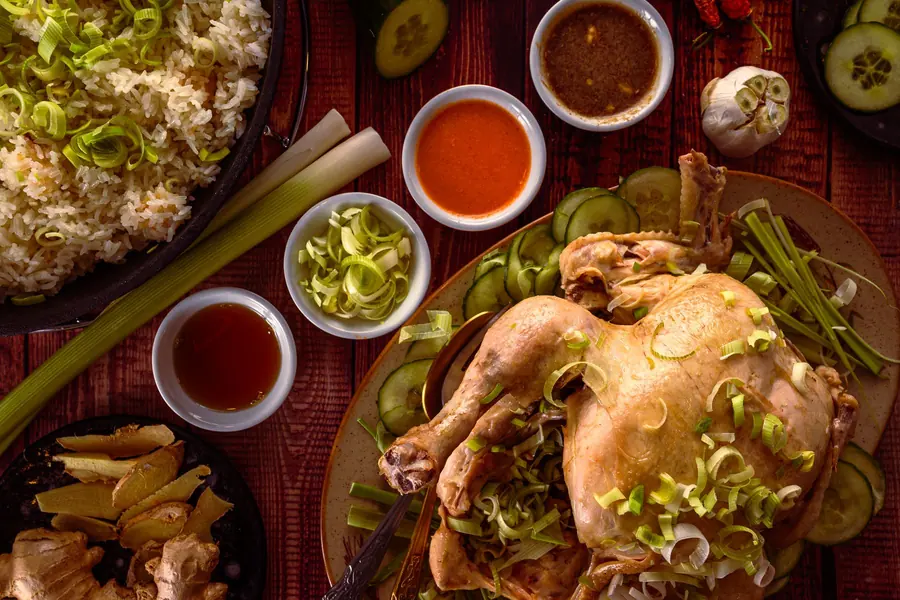
Nobody agrees, and the carts have not told anyone. It is generally a cooling white sauce built on a dairy or mayonnaise base with lemon and seasoning, and it resembles the yoghurt-and-garlic sauces of the eastern Mediterranean without being any of them exactly.
What it is not is a traditional dish component that travelled from anywhere. It belongs to the cart. Our guide to garlic sauce, tzatziki and tahini separates the sauces that do have a lineage, and explains why so many of them end up called “white sauce” on an American menu.
Why it spread
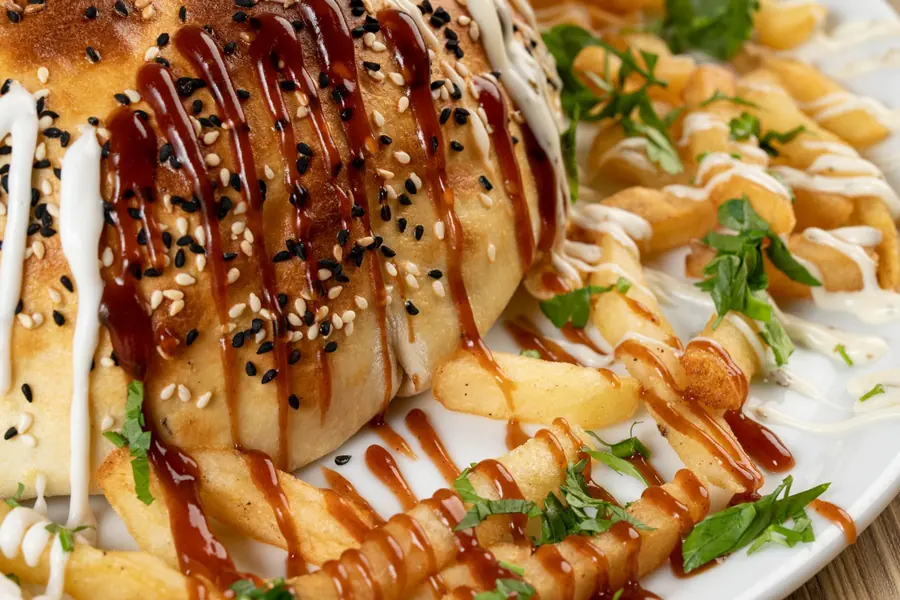
Because it worked for everybody at once. For Muslim customers it was food they could eat, served quickly, in a city where that was hard to find. For everyone else it was a large hot meal at street-food prices with a flavour profile nothing else in the queue had.
A cart is also a low-capital business, which mattered enormously to immigrant operators. The format was replicable: a griddle, a steam tray, a squeeze bottle. It multiplied across the city and then out of it.
How it left New York
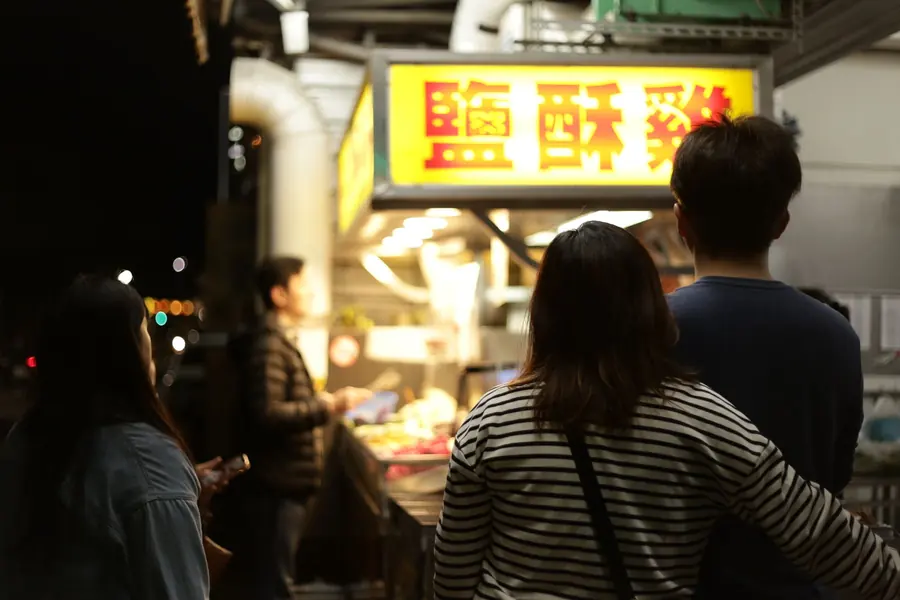
Two routes, running at the same time. The first was straightforward imitation: the format is cheap to set up and easy to read, so carts and small storefronts opened in other cities doing recognisably the same thing under their own names.
The second was students. American college towns acquired sizeable international and Muslim student populations over the same decades, and they arrived wanting food they could eat, in quantity, cheaply, late. That is precisely the problem the cart plate was designed to solve, and it travelled into towns that had never had a halal cart on a corner.
San Marcos is one of those towns, which is a fair part of why a menu like this one exists here at all — something our guide to halal food in San Marcos goes into.
What it means for a menu like ours
American halal restaurants inherited the cart’s vocabulary even when they are cooking Levantine food. The over-rice plate, the choice between chicken, gyro or a combination, the sauces on the side, the wrap version of the same thing — that is the cart’s grammar, adapted indoors.
It is why our own menu reads the way it does, and why the format is instantly legible to anyone who has eaten from a cart in any American city. Our guide to what to order at a Mediterranean restaurant covers the formats, and plate, wrap or bowl covers choosing between them.
One thing this article deliberately is not: a recipe. The cart operators have not published theirs, the white sauce is genuinely unresolved, and there are enough approximations online already. This is where the format came from, not how to make it.
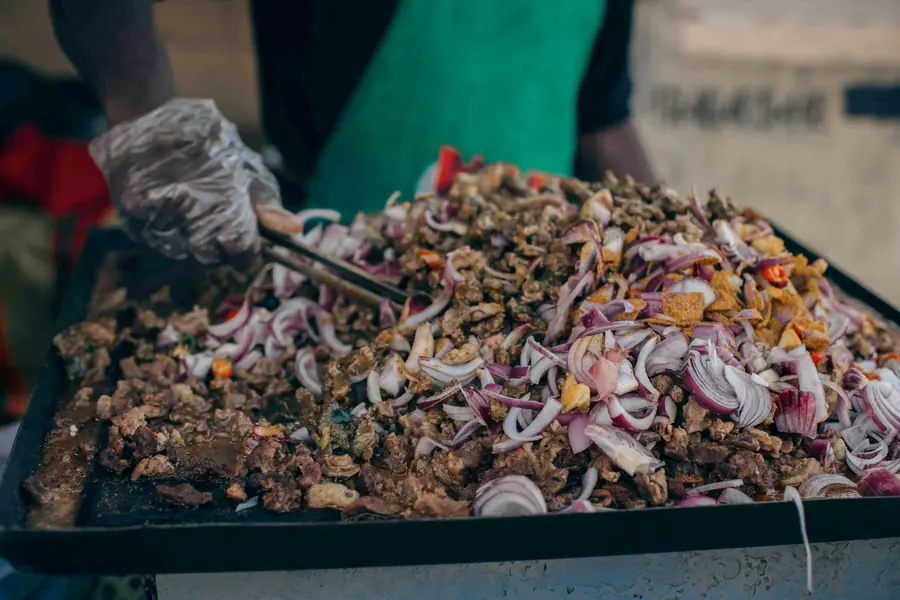
The cart also left behind a vocabulary that every American halal menu still uses. Over rice, combo, loaded and white sauce are its words, and they mean the same things in every city.
Frequently asked questions
Where did chicken over rice come from?
New York City street carts in the 1990s. Halal carts appeared serving a Muslim population that had grown sharply through the 1970s and 80s, starting with ordinary American street food prepared halal and shifting toward Middle Eastern and Mediterranean dishes as demand grew.
Is chicken over rice a traditional Middle Eastern dish?
No. It is an American street food. Rice with grilled meat exists across the region in many forms, but the specific cart plate — chopped griddled meat over yellow rice with shredded salad and white sauce in a foil container — was assembled in New York.
What is the white sauce on halal cart food?
There is no agreed answer and the carts have not said. It is generally a cooling white sauce on a dairy or mayonnaise base with lemon and seasoning, resembling the yoghurt-and-garlic sauces of the eastern Mediterranean without being any of them exactly. It belongs to the cart rather than to a tradition.
Why is halal cart food served over rice?
Because rice solves a cart’s problems. It is cheap, filling, holds heat in a steam tray for hours, and stretches a portion of meat a long way, all while surviving being carried and eaten standing up.
Do halal restaurants serve the same thing as halal carts?
Often a version of it. American halal restaurants inherited the cart’s vocabulary — the over-rice plate, the choice of meats, the sauces on the side — even when the kitchen is cooking Levantine food, because that is the format American diners recognise.
The short version: an American street food, invented by immigrants for a city that did not yet have it, and now the default shape of halal food nationally.
Rice plates, wraps and combinations, in San Marcos.