
Cheese looks like it should be simple. It is milk, and milk is not a question. The complication is an enzyme, and it is one of the few halal issues that is genuinely invisible — you cannot taste it, see it, or usually read it on a label.
Here is what rennet actually is, why most modern cheese is not made with the animal version, and what to check.
The short answer
Cheese is set using an enzyme called rennet. Traditional rennet comes from the stomach lining of young calves, lambs or goats; most cheese made at scale today uses a fermentation-produced version instead, which contains no animal material. Whether a cheese is halal depends on which was used.
What rennet is, precisely
This is worth being exact about, because the vagueness is where the confusion comes from. The US regulation governing it, 21 CFR 184.1685, defines rennet as the aqueous extract prepared from the cleaned fourth stomachs of calves, kids or lambs. That is animal-derived by definition.
The same regulation covers the modern alternative. Chymosin preparation is described as fermentation-derived, produced from a non-pathogenic strain of Aspergillus niger carrying the prochymosin gene, with the enzyme recovered from the fermentation broth. It performs the identical job with no animal involved at any stage.
So the two things share a purpose and nothing else. Where the distinction matters is that both are frequently labelled with the same word.
Why the animal version is a halal question
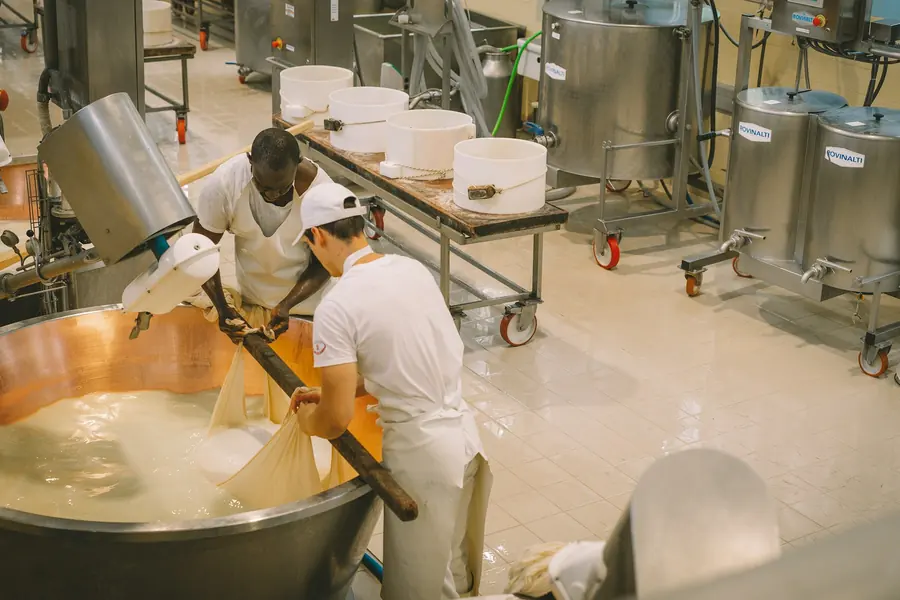
Animal rennet comes from an animal. If that animal was not slaughtered according to Islamic requirements, the enzyme derived from it inherits the problem — the same logic that applies to gelatin, which is the other invisible animal-derived ingredient people run into.
There is genuine scholarly discussion about rennet specifically, since it is an enzyme rather than flesh and is present in minute quantities. As with other areas where views differ, that is a question for your own scholarship rather than for us. What we can usefully do is explain what is in the product.
The good news about modern cheese
Fermentation-produced chymosin has been in commercial use since the 1990s and now accounts for the large majority of cheese made at industrial scale, for reasons that have nothing to do with religion: it is cheaper, more consistent, and not dependent on a by-product of veal production.
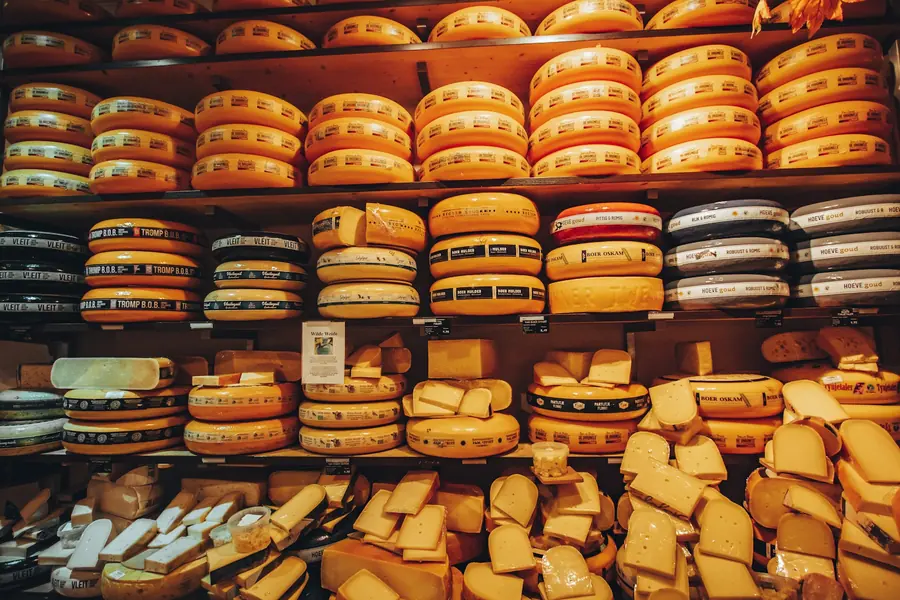
The practical effect is that most supermarket mozzarella, cheddar and processed cheese in the United States is set with a non-animal coagulant. The cheeses most likely to use traditional animal rennet are the opposite end of the market: artisan, imported, and protected-designation European cheeses whose production rules specify it.
Cheese by cheese
| Cheese | Typical situation | Worth checking |
|---|---|---|
| Mozzarella (mass-market) | Usually microbial or fermentation-derived | Imported buffalo mozzarella |
| Cheddar | Usually fermentation-derived at scale | Artisan and farmhouse versions |
| Feta | Varies by producer | Traditional Greek PDO feta |
| Processed and sliced cheese | Usually non-animal coagulant | Any added gelatin in the formulation |
| Parmigiano Reggiano | Animal rennet, by its own rules | No practical variation — it is specified |
| Halloumi | Varies widely | Producer-by-producer |
| Cream cheese and mascarpone | Often acid-set, no rennet at all | Formulation varies |
The generalisation to take from that table is that scale predicts the answer better than the type does. A mass-produced cheese is more likely to be microbial; a traditional, regionally protected one is more likely not to be.
The other dairy ingredients
Rennet is the main event, but two related ingredients turn up on labels and cause the same kind of uncertainty. Whey and casein are both milk proteins, and whey in particular is a by-product of cheesemaking — which means whey produced from a cheese set with animal rennet carries the question forward into whatever it is used in, including protein powders and processed snacks.
Cultures, by contrast, are bacterial and raise no animal question at all. Lipase, an enzyme used in some Italian cheeses to sharpen flavour, is animal-derived more often than not and is worth noting if it appears on a label.
How to check a label
- Look for “microbial rennet”, “vegetarian rennet” or “non-animal enzymes”. Any of these means no animal material.
- “Suitable for vegetarians” is a reliable shortcut. A cheese cannot carry that claim if it uses animal rennet, so it answers the enzyme question even though it is not a halal claim.
- “Enzymes” alone is ambiguous. It is a legitimate label term that covers both, so it tells you nothing on its own.
- Check for gelatin separately. Some processed and spreadable cheeses contain it as a stabiliser, which is a different question from rennet.
That second point is the single most useful thing in this article for a supermarket. The vegetarian mark is not designed for halal consumers, but on this specific question it answers exactly what you need to know.
Eating out
In a restaurant you cannot read a label, so the question changes shape. A kitchen that has thought about halal sourcing has usually thought about its cheese, and a kitchen that has not will not know the answer — which is itself informative. Our guide to telling whether a restaurant is really halal covers how to read that kind of answer.
Pizza is where this comes up most, because cheese is the largest single ingredient on it and the meat question tends to absorb all the attention. Our guide to whether pizza is halal works through the whole pizza component by component, cheese included.
On our menu
Cheese appears on our pizzas, in the Greek salad and in one of the wraps. Everything on our menu is made with halal ingredients, and if you want detail on any particular item the fastest route is to ask us rather than to infer it.
You can see the menu here or get in touch. Our guide to what makes a menu halal covers the wider question of what a menu can and cannot tell you.
The same problem turns up in a less visible form with gelatin, where the label names the ingredient but never the animal — our guide to whether gelatin is halal works through what the federal definition actually says.
Frequently asked questions
Is cheese halal?
It depends on the coagulant. Cheese is set using rennet, which traditionally comes from the stomach lining of calves, kids or lambs. Most cheese made at industrial scale now uses a fermentation-produced chymosin instead, which involves no animal material, but artisan and traditional cheeses often still use the animal version.
What is the difference between animal rennet and microbial rennet?
Animal rennet is an extract from the fourth stomach of young calves, kids or lambs. Microbial and fermentation-derived coagulants perform the same job but are produced by micro-organisms, with no animal involved. US regulation defines both under 21 CFR 184.1685.
Is mozzarella halal?
Mass-market mozzarella in the United States is usually made with a non-animal coagulant, which removes the rennet question. Imported and traditional buffalo mozzarella is more likely to use animal rennet, so it is worth checking the label on anything artisan or imported.
Does ‘suitable for vegetarians’ mean a cheese is halal?
It answers the rennet question but not every halal question. A cheese cannot carry that claim if it uses animal rennet, so it is a reliable shortcut for that specific issue. It says nothing about other ingredients such as gelatin, or about alcohol in any added flavouring.
Why is Parmigiano Reggiano different?
Because its protected designation specifies traditional production, which includes animal rennet. It is one of the cheeses where the answer does not vary between producers, since the production rules do not allow it to.
Rennet is the whole question, most modern cheese does not use the animal kind, and “suitable for vegetarians” is the fastest way to confirm it in a shop.
Everything we serve is made with halal ingredients.