There are two separate systems operating on the same piece of meat, and almost everybody conflates them. One is federal food-safety inspection. The other is religious certification. They run in the same building, on the same day, and they answer completely different questions.
The short answer
Yes. Halal meat sold commercially in the United States is slaughtered in federally inspected establishments and carries the USDA mark of inspection like any other meat. What the USDA does not do is verify the religious side of it — that is a third-party certifier’s job, and federal rules require one before the word can go on a label.
What federal inspection actually covers
Meat and poultry sold across state lines must come from an establishment under federal inspection. Inspectors are present during slaughter and processing, and what they are there for is public health: sanitation, disease, contamination, accurate labelling, and the humane handling of animals before slaughter.
That last one is set out in some detail. Under 9 CFR 313.2, livestock in an official establishment must be driven “with a minimum of excitement and discomfort” and cannot be moved faster than a normal walking pace; electric prods are limited to 50 volts and are to be used as little as possible; animals must have access to water in the holding pens and to feed if they are held more than 24 hours; and dragging conscious disabled animals is prohibited.
None of that is specific to halal plants. It applies to every federally inspected establishment, which is the point: a halal slaughterhouse is a regulated meat plant first, operating under the same rules as any other.
What federal inspection does not cover
Everything religious. An inspector does not check whether the name of God was pronounced, whether the person performing the cut was Muslim, or whether the certifier’s position on stunning was respected. Those are the questions our guide to halal and zabiha goes through, and the government does not answer any of them.
Instead the rules push the question outward. As a compliance analysis of US halal labelling sets out, FSIS requires that “any use of the terms ‘Halal’ or ‘Zabiah Halal’ on labeling must be certified by an appropriate third-party authority”. The USDA does not perform halal certification itself; it requires that somebody qualified has, and polices whether the claim is substantiated.
The FDA goes further and declines to define the word at all, on the grounds that a government agency establishing the content of a religious standard raises constitutional problems. That is not bureaucratic reluctance — it is the same reason the Texas statute described in our guide to halal certification defines halal by deferring to “a recognized Islamic authority” rather than writing a standard of its own.
Who answers which question
| The question | Who answers it |
|---|---|
| Is the meat safe to eat? | USDA FSIS inspection |
| Was the establishment sanitary? | USDA FSIS |
| Were the animals handled humanely before slaughter? | USDA FSIS, under federal regulation |
| Was the slaughter performed to halal requirements? | A third-party halal certifier |
| Can the label say “halal”? | Only with third-party certification, which FSIS requires |
| What counts as halal in the first place? | The certifier’s standard — no US government body defines it |
Why this matters more than it sounds
Two practical consequences fall out of the split, and both come up constantly.
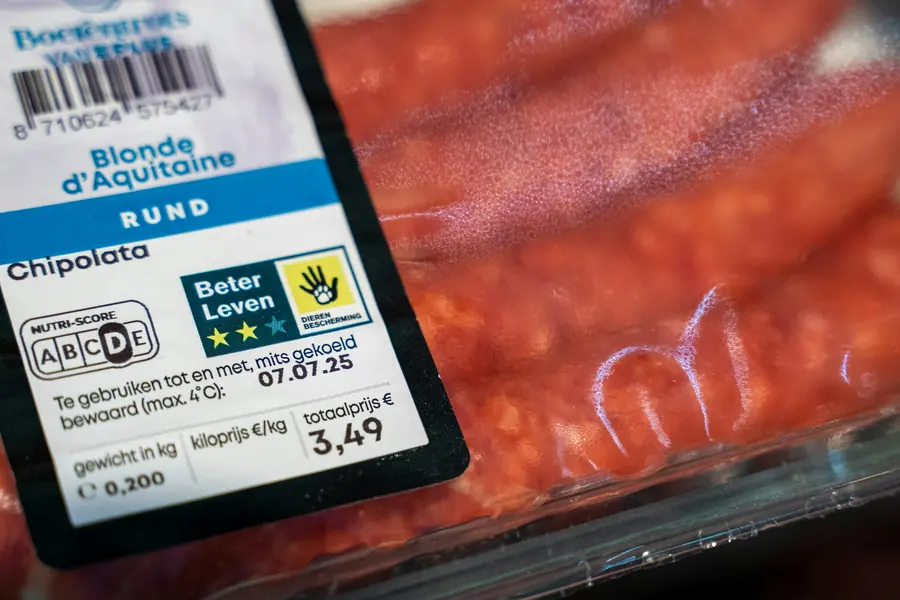
- A USDA mark is not a halal signal. Every commercially sold meat carries one. Seeing it tells you nothing whatever about the religious question.
- A halal certificate is not a food-safety signal either. It means a certifier audited the religious side. The safety side was handled separately, by inspectors who were not consulted about it.
People routinely read each as evidence for the other, and each is evidence only for itself. It is the same category error as reading an organic label as a halal one, which our guide to halal, organic and grass-fed works through.
Why people assume the two are connected
The assumption is reasonable and worth naming rather than dismissing. There is a federal inspector physically present in the plant while halal slaughter is taking place. It is natural to conclude that whatever is happening has been signed off, because somebody official was standing there watching it.
What is actually happening is that two parties are in the room attending to different things. The inspector is watching for contamination, disease and handling. The certifier’s representative, where there is one, is watching the method. Neither is checking the other’s work, and neither is qualified to.
Imported meat, and the same question abroad
Imported meat has to come from a foreign establishment operating under a system the US has determined to be equivalent, and it is re-inspected at the point of entry. The religious side travels the same way it does domestically: with a certifier rather than with a government.
Which is why a certificate issued in one country does not automatically satisfy a standard held in another — the subject of why the same product can be halal in one country and not another.
What this means when you are ordering
Very little, honestly, and that is the useful takeaway. Federal inspection is a floor that applies to everything on every menu in the country, so it is not a point of difference between restaurants and not worth asking about.
The questions that do distinguish one kitchen from another are the ones about sourcing and certification, and our guide to telling whether a restaurant is really halal covers how to ask them.
Reading a USDA stamp as a halal signal is one of the more common misunderstandings about this food, and not the only one — nine things people get wrong about halal goes through the rest.
Frequently asked questions
Is halal meat USDA inspected?
Yes. Halal meat sold commercially in the United States comes from federally inspected establishments and carries the USDA mark of inspection like any other meat. Federal inspection covers food safety, sanitation and humane handling; it does not assess the religious requirements.
Does the USDA certify halal food?
No. FSIS requires that any use of the terms Halal or Zabiah Halal on a label be certified by an appropriate third-party authority, but it does not perform that certification itself. The FDA declines to define halal at all, since a government agency setting the content of a religious standard raises constitutional issues.
Does a USDA stamp mean meat is halal?
No, and this is the most common confusion. Every commercially sold meat carries the mark of inspection, whether or not it is halal. The stamp is a food-safety statement and says nothing about the method of slaughter.
Are halal slaughterhouses held to humane handling rules?
Yes. Federal regulations on the handling of livestock apply to every official establishment. They require animals to be driven with a minimum of excitement and discomfort, limit electric prods to 50 volts, and require access to water in holding pens and feed if animals are held over 24 hours.
Is imported halal meat inspected too?
Yes. Imported meat must come from a foreign establishment under a system determined to be equivalent to the US one, and it is re-inspected on entry. The religious side still travels with a certifier rather than with a government, which is why certificates issued in different countries can reflect different standards.
Two systems, same building, different questions. Neither one substitutes for the other.
Everything on our menu is made with halal ingredients.