
Someone who keeps halal is coming to dinner and you would rather not get it wrong. This is a genuinely common worry and it is much more manageable than it feels from the outside.
Here is what actually matters, what does not, and the two routes that remove most of the difficulty.
The short answer
Ask your guest first — halal covers a range of practice and they will tell you where they sit. Then: no pork, no alcohol including in the cooking, and halal meat if you are serving meat. Cooking vegetarian or fish removes the hardest part entirely.
Rule zero: ask, and ask specifically
Most guides to this skip straight to menu ideas. That is the wrong first step, because people who keep halal do not all keep it identically. Some will eat vegetarian food cooked in any kitchen; some will want to know about the pans; some are comfortable with supermarket meat and some only with meat from a particular butcher.
One message solves it: I’d like to get this right — is vegetarian easiest, or would you rather I sourced halal meat? That is a considerate question rather than an awkward one, and the answer tells you which of the routes below to take.
The three things that always apply
- No pork, in any form — including bacon in a starter, lard in pastry, and gelatin in a dessert.
- No alcohol, and this includes cooking with it. Wine in the sauce and beer in the batter both count, and the assumption that it all cooks off is not one to rely on.
- Halal meat, if you serve meat. This is the only part that requires shopping somewhere specific.
The Halal Times, writing for hosts, puts the same three plainly: “completely avoid serving pork, alcohol, or non-Halal meats”, and notes that many sauces contain wine or other alcohols as flavouring — which is the one people miss.
The easy route: skip the meat
If you take one thing from this article, take this. The only genuinely awkward requirement is the meat sourcing. Cook vegetarian and it disappears.
This is not a compromise menu. Mediterranean, Levantine, Indian and Italian cooking all have vegetarian dishes that are the point of the meal rather than the alternative to it — our guide to the vegetarian side of this cuisine covers how to build a full meal that way.
Fish is the other simple route: it is widely accepted and does not carry the slaughter question, though the positions on shellfish specifically do vary. Our guide to seafood sets out where the views differ, which is worth a glance before you plan a shrimp course.
Three ways to do it
| Approach | What you have to get right | Difficulty |
|---|---|---|
| Order in from a halal kitchen | Nothing — the sourcing is already handled | Lowest |
| Cook vegetarian | Check sauces for alcohol, and cheese for animal rennet | Low |
| Cook fish | The same checks, plus ask about shellfish specifically | Low |
| Cook halal meat you have sourced | A halal butcher or certified product, plus separate preparation if pork is in the house | Higher |
If you do cook meat
Buy from a halal butcher or a certified product, and keep the packaging until after the meal — not to prove anything, but because a guest who asks will usually just want to know where it came from, and it saves you reconstructing it from memory.
If pork is normally cooked in your kitchen, use clean boards, utensils and pans, and do not fry in oil that has had bacon through it. Our guide to what a halal mark actually certifies covers what the labels on the meat you buy do and do not establish.
Drinks, and the thing everyone forgets
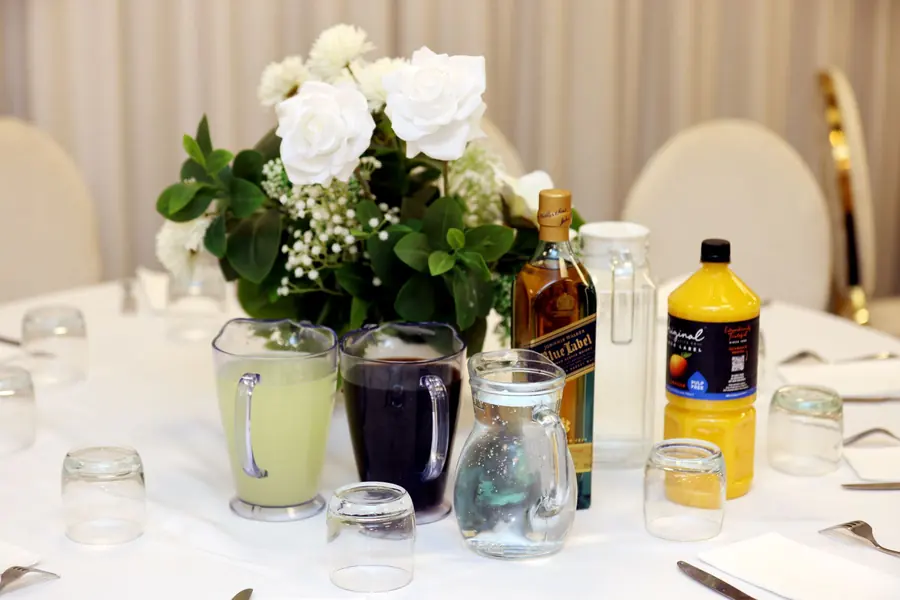
No alcohol on the table is the straightforward part. The part that catches people out is elsewhere in the meal: vanilla extract in a dessert, sherry in a trifle, wine in a reduction, an alcohol-based flavouring in a shop-bought sauce.
Guests differ on how strictly they treat trace amounts, and that is genuinely their call rather than something for a host to decide on their behalf. The workable approach is to tell them what went into anything shop-bought, and let them make their own judgement.
What not to do
- Do not make it a production. Announcing the accommodations at the table turns a meal into an event about one guest.
- Do not guess and hope. One question beforehand is easier for everyone than an apology afterwards.
- Do not serve a separate sad plate. If the main dish will not work for one guest, make the main dish something that works for everyone.
- Do not assume it is about spice, or about the same rules as a friend who is vegetarian. It is a sourcing standard — our guide to what halal does and does not change covers how little it actually alters a menu.

If they are hosting you
The reciprocal situation comes up just as often and worries people just as much. If you are invited to a halal household, there is nothing to prepare for and nothing you need to know in advance — you turn up and eat. Bringing alcohol as a gift is the one thing to avoid; flowers, dessert or fruit are all ordinary and welcome.
If you bring food, the same rules you have just read apply in reverse, and a shop-bought dessert is easier to vouch for than a home-baked one because you can hand over the packaging with it.
Or let someone else cook
Ordering in from a halal kitchen removes every question on this page at once, and for a larger group it is usually easier than cooking anyway. If you are feeding people in or around San Marcos, we cater, and our guide to quantities covers how much to order once you know the numbers.
If you decide to cook meat rather than sidestep it, the shopping trip is the part worth preparing for — our guide to buying from a halal butcher covers the three questions to ask and the cuts worth requesting.
Frequently asked questions
What should I cook for a Muslim guest?
The simplest answer is a vegetarian or fish menu, because it removes the meat sourcing question entirely. If you would rather serve meat, buy it from a halal butcher or as a certified product. In both cases avoid pork in any form and avoid alcohol, including in the cooking.
Does alcohol cook off?
Not reliably, and this is the point people most often get wrong. Wine in a sauce or beer in a batter should be treated as present. Guests differ on how strictly they treat trace amounts, so the practical approach is to tell them what is in a dish and let them decide.
Do I need separate pans and utensils?
It depends on your kitchen and on your guest. If pork is regularly cooked in your kitchen, using clean boards, pans and utensils is a sensible courtesy, and avoid frying in oil that has had bacon through it. Asking your guest is better than guessing at how strict to be.
Is it rude to ask a guest about their dietary requirements?
The opposite. Halal covers a range of practice and people observe it differently, so one specific question beforehand is considerate and saves everyone an awkward moment at the table. Ask whether vegetarian is easiest or whether they would prefer you sourced halal meat.
Is seafood a safe choice for a halal guest?
Fish is widely accepted and does not carry the slaughter question that meat does, which makes it a straightforward option. Views on shrimp, shellfish and squid do vary between schools of thought, so it is worth asking before planning a shellfish course.
The whole thing reduces to one message sent a few days early, and a menu that does not depend on meat.
Hosting a group? We cater across San Marcos.