
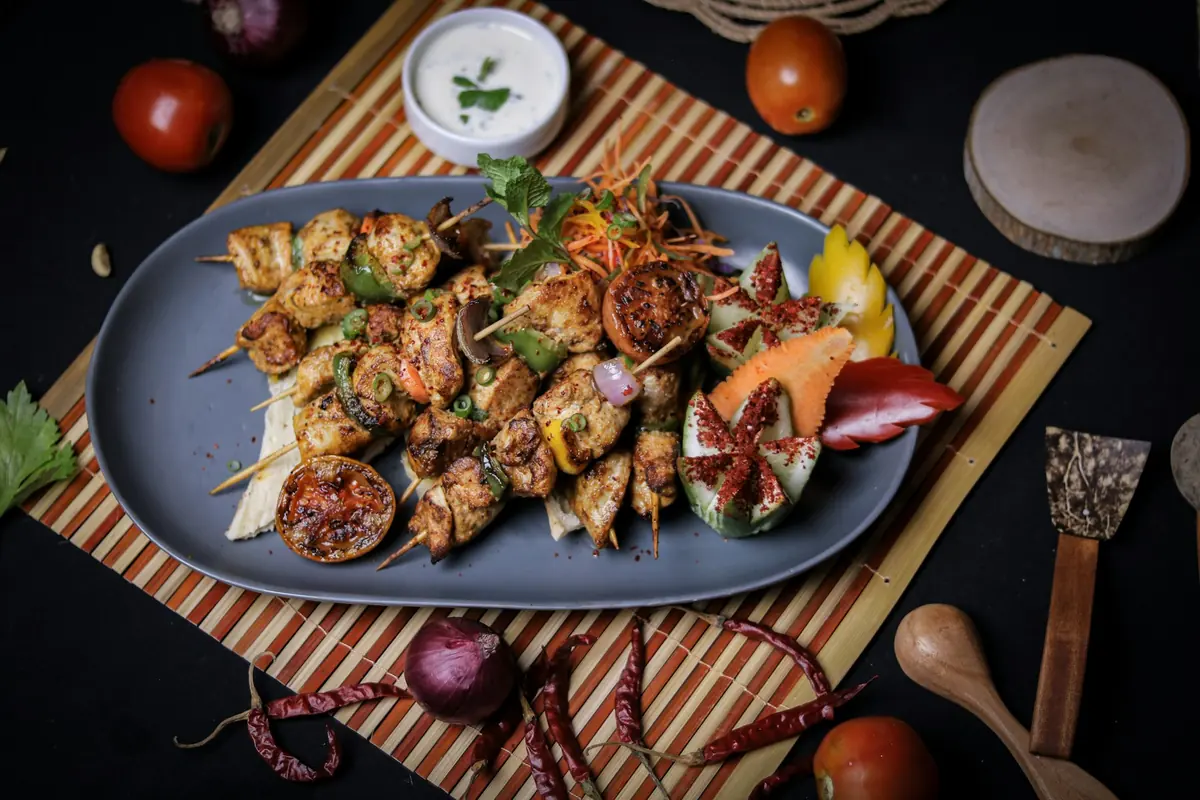
These three words appear on the same menus constantly, and they are not parallel terms. That is the source of most of the confusion.
Once you know how they relate to each other, a Mediterranean or Middle Eastern menu becomes much easier to read.
The short answer
“Kebab” is a whole family of grilled meat dishes, not one dish. Shawarma is a specific dish — marinated meat stacked on a vertical spit and carved off. Kofta is seasoned ground meat, usually shaped onto a skewer and grilled, and it is itself one type of kebab.
Kebab is a category
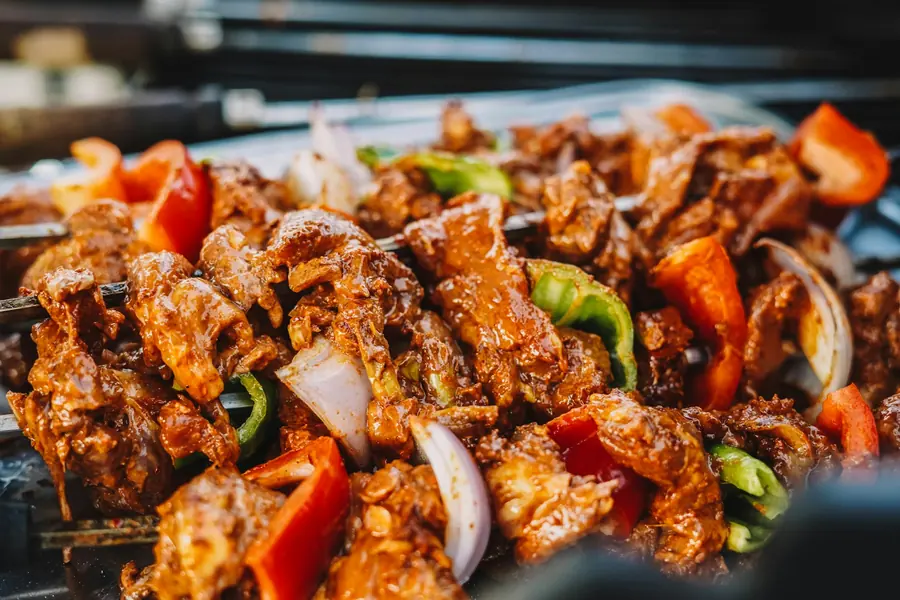
Kebab covers most things grilled or roasted on a skewer or over flame across the Middle East, Turkey, the Caucasus and South Asia. Shish kebab is cubed meat on a skewer. Seekh kebab is minced and spiced. Doner kebab is the vertical-rotisserie version.
So asking whether you want “kebab or shawarma” is a bit like asking whether you want pasta or lasagne. The Smithsonian’s history of the doner kebab traces how one branch of that family travelled and became several different dishes.
Shawarma is a method as much as a dish
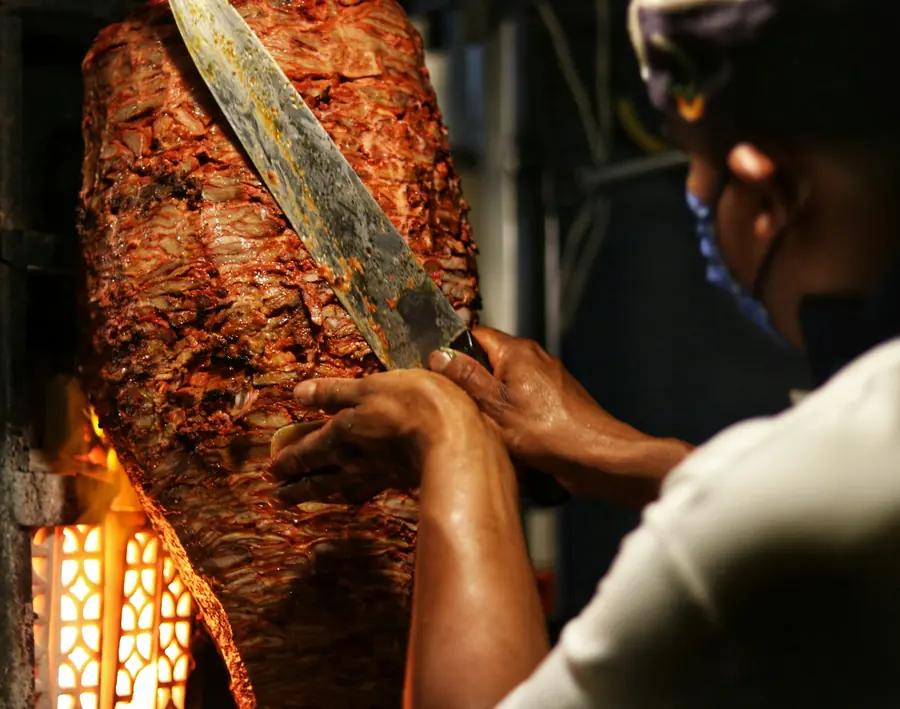
Shawarma is built by stacking marinated slices of chicken, beef or lamb onto a vertical spit, roasting the outside slowly, and shaving off the cooked layer as it browns. The marinade is long and warm-spiced — cumin, coriander, turmeric, cinnamon.
Because it is carved from the outside in, shawarma has a texture no skewer can reproduce: crisp edges from the surface, tender meat from underneath, all in the same portion.
Kofta is about the grind, not the shape
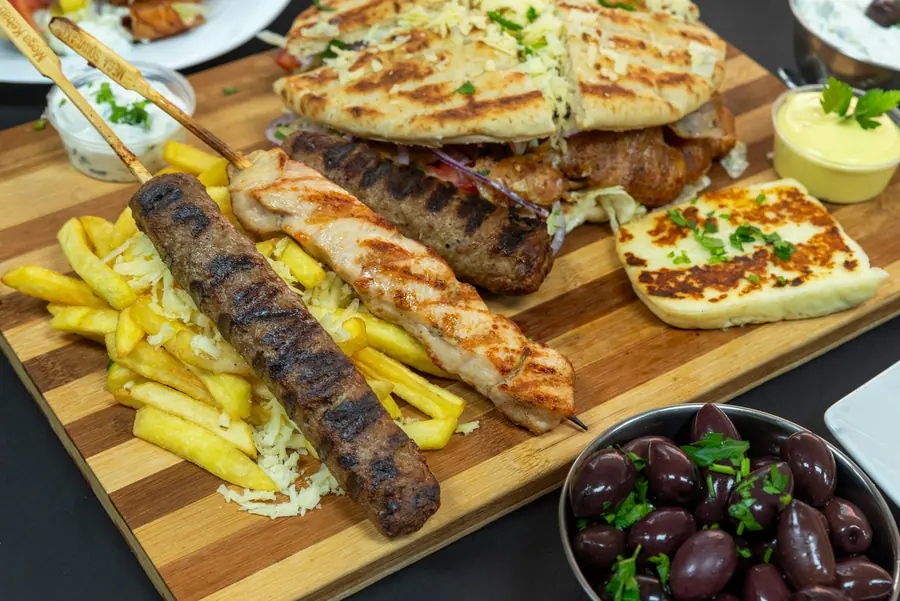
Kofta starts with ground meat — usually beef or lamb — mixed with onion, parsley and spices, then shaped by hand around a skewer or into patties and grilled.
The seasoning runs all the way through rather than sitting on the surface, which is why kofta tastes stronger than a plain grilled cut. It is a kebab, but it is the ground-meat branch of the family.
Side by side
| Kebab | Shawarma | Kofta | |
|---|---|---|---|
| What it is | A family of grilled dishes | One specific dish | One type of kebab |
| Meat form | Cubes, chunks or ground, depending on type | Whole cuts stacked on a spit | Ground and seasoned |
| Cooked on | Skewer or grill | Vertical rotisserie | Skewer or grill |
| Texture | Varies by type | Crisp edges, tender interior | Even and dense |
| Seasoning | Varies widely | Long warm-spiced marinade | Mixed through the meat |
| Usually served | On a plate or in bread | In a wrap or over rice | With flatbread and salad |
Once you have settled on the preparation, the remaining choice is the meat. Our guide to choosing between chicken, beef and lamb covers how much the protein actually changes, and how much of what you taste is really the marinade.
Which to order
If you want variety of texture in one portion, shawarma. If you want a clean grilled flavour where you can taste the cut of meat, a skewer kebab. If you want the most seasoning per bite, kofta.
It is also worth knowing that shawarma has a close Greek relative. Our comparison of gyro and shawarma covers how the two split apart, and why the sourcing question differs between them.
How to tell whether it is being done well
A few signs are worth knowing, whichever of the three you order.
- A spit that is actually turning and browning. Shawarma is meant to be carved as the outer layer crisps. Meat pre-carved and held warm loses the texture that makes the dish.
- Kofta that holds together without being dense. Over-worked mince goes rubbery; well-made kofta is tender and slightly loose.
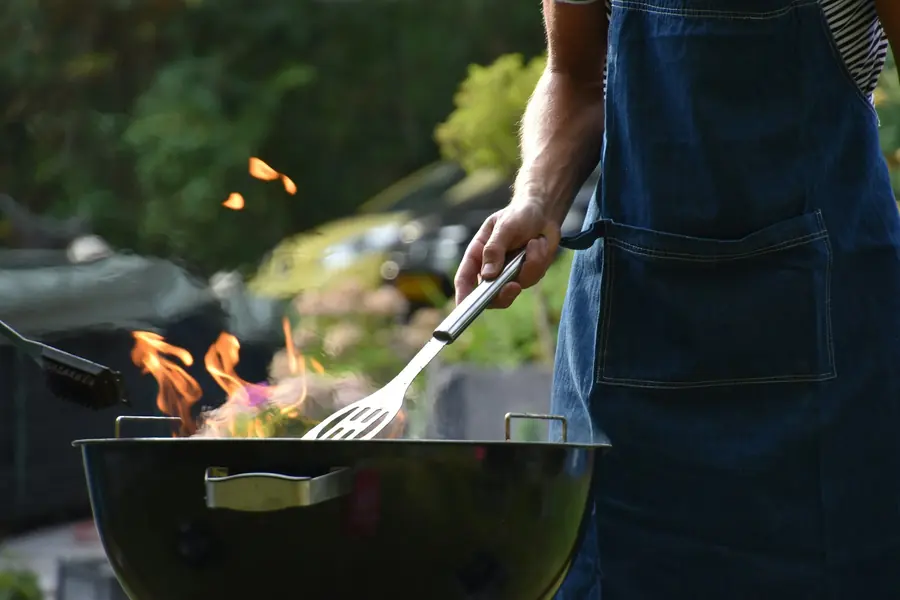
- Skewers with some char. Kebab cooked over real heat picks up dark edges. Uniformly pale meat has usually been cooked on a flat top.
How each one is actually cooked
The three differ less in what goes into them than in what heat does to them, and the method explains most of what you notice on the plate.
Shawarma: cooked continuously, carved repeatedly
The spit is built rather than loaded. Marinated slices of whole muscle are stacked one on top of the next, with fat placed through the stack so that it renders downward as it turns. The stack rotates against a vertical heat source, which means only the outer few millimetres are ever cooking at any moment. That layer is shaved off as it browns, exposing the next one.
This is why shawarma is not the same dish at every hour of the day. A stack that has just gone on gives paler, softer meat; one that has been turning for hours gives darker, crisper edges. It is also why a spit standing still is a bad sign: the dish depends on the cooking and the carving happening together.
Skewer kebab: one pass, high heat
A skewer kebab is cooked once, to order, over direct heat. Cubes or chunks are threaded and grilled until the outside chars and the inside is done, which happens fast and leaves very little margin. Nothing is held and re-cooked, so what you taste is the cut of meat and a short, hot exposure — which is why a mediocre cut has nowhere to hide on a skewer.
Kofta: the grind and the working
Kofta starts from meat ground with onion, herbs and spices, then worked until the mixture turns tacky enough to hold its shape on a skewer. That working is the technique. Too little and the kofta breaks apart on the grill; too much and the texture tightens into something springy.
Because the seasoning is distributed all the way through rather than sitting on a surface, kofta tastes of itself sooner than a whole cut does — and dries out sooner too, which is why it is cooked hot and briefly.
| Shawarma | Skewer kebab | Kofta | |
|---|---|---|---|
| Heat source | Vertical, indirect, constant | Direct, from below or beside | Direct, from below |
| When it cooks | Continuously, through service | Once, to order | Once, to order |
| What is cooking | Only the outer layer | The whole piece | The whole piece |
| Form of the meat | Whole cuts, stacked | Cubes or chunks | Ground and worked |
| Where the seasoning sits | Marinade on every slice | Surface and marinade | Through the mixture |
| What goes wrong | Pre-carved and held warm | Overcooked in seconds | Over-worked and dense |
None of that is a recipe, and it is not meant to be one. Marinade times, spice quantities and grill temperatures are a kitchen’s own business and vary enormously between them. What is worth knowing as a diner is which method produced the thing in front of you, and what it should look like when it has been done properly.
The method also decides which serving format suits each one, which is a separate choice from the meat — our guide to choosing between a plate, a wrap and a bowl covers how the three formats differ once you have picked the preparation.
Where each one comes from
The geography explains a lot of the difference. Skewer kebabs are ancient and widespread — cooking meat on a stick over fire is not an invention anyone owns — but the named varieties developed regionally, from Turkish shish to South Asian seekh.
The vertical rotisserie is far more recent, appearing in Ottoman Turkey in the nineteenth century. From there it spread outward and picked up new names and seasonings in each place it landed: shawarma across the Levant, gyro in Greece, doner in Turkey and later across Europe.
Kofta sits slightly apart. Ground, spiced meat is common to a huge stretch of cooking from the Balkans to South Asia, which is why you meet versions of it under many names on menus that otherwise look nothing alike.
How each is usually served
The serving format follows from the cooking method more than from tradition.
- Shawarma comes off the spit already in thin pieces, so it suits wraps and rice plates where it can be spread evenly through the dish.
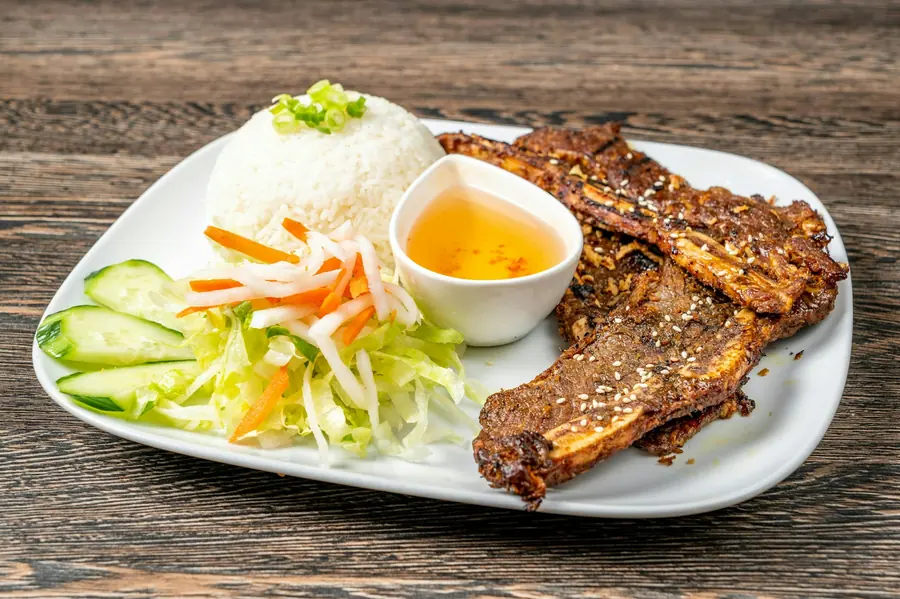
- Skewer kebabs come off in chunks and are usually plated with rice, salad and bread so you eat them as distinct pieces.
- Kofta holds its shape, so it is typically served alongside flatbread and a dip rather than wrapped inside anything.
On our menu
We serve chicken shawarma, carved to order and served with lettuce, tomato, onion and garlic sauce. Kofta comes with flatbread, hummus and salad. Both are made with halal ingredients, as is everything else we cook.
If the rest of the menu is unfamiliar, our guide to ordering at a Mediterranean restaurant explains how the plates, wraps and sauces fit together, or you can go straight to the menu.
A note on names across menus
Spelling varies enormously — shawarma, shwarma and schawarma all appear, as do kofta, kufta and kefta. These are transliterations from Arabic and Turkish rather than different dishes, so do not read too much into which spelling a restaurant uses. What tells you more is how the meat is described underneath.
All three are warm-spiced rather than hot, whatever the marinade smells like. Our guide to heat on a Mediterranean menu explains where the chilli turns up and how to ask for more of it.
Frequently asked questions
Can kofta be made with chicken?
Yes. Kofta is defined by the ground and seasoned meat rather than by which animal it comes from, so chicken kofta exists alongside the more common beef and lamb versions. It is lighter and slightly drier than a lamb kofta.
What is the difference between shawarma and kebab?
Kebab is a broad family of grilled meat dishes, while shawarma is one specific dish within that tradition, made from marinated meat stacked on a vertical spit and carved off as it cooks. Most kebabs are cooked on skewers instead.
Is kofta a kebab?
Yes. Kofta is the ground-meat branch of the kebab family. The meat is minced and seasoned, then shaped onto a skewer or into patties and grilled, which gives it a denser texture and stronger seasoning than a cubed kebab.
Is shawarma the same as doner kebab?
They share the same vertical-rotisserie method and a common origin, but they developed separately. Doner is the Turkish original; shawarma is the Middle Eastern version, with different spicing and different sauces.
Which is the spiciest of the three?
Kofta usually carries the most seasoning per bite, because the spices are mixed right through the ground meat. Shawarma is heavily marinated but warm-spiced rather than hot, and skewer kebabs are typically the mildest.
How is shawarma made?
Marinated slices of chicken, beef or lamb are stacked onto a vertical spit with fat layered through the stack, and the spit turns against a heat source so that only the outer layer is cooking at any moment. That layer is shaved off as it browns and the next one is exposed, which is why a single portion has crisp edges and tender meat in it at the same time.
What is kofta made of?
Ground meat, usually beef or lamb, mixed with onion, parsley and spices and then worked until it binds well enough to hold its shape on a skewer. The seasoning runs through the mixture rather than sitting on the surface, which is what gives kofta more flavour per bite than a plain grilled cut.
The short version: kebab is the family, shawarma is a specific member of it cooked on a vertical spit, and kofta is the ground-meat branch. None of them is a substitute for the others.
If you are ordering all three across a couple of visits, you will notice the seasoning is what separates them more than the meat does.
Shawarma and kofta are both on the menu, both made with halal ingredients.