
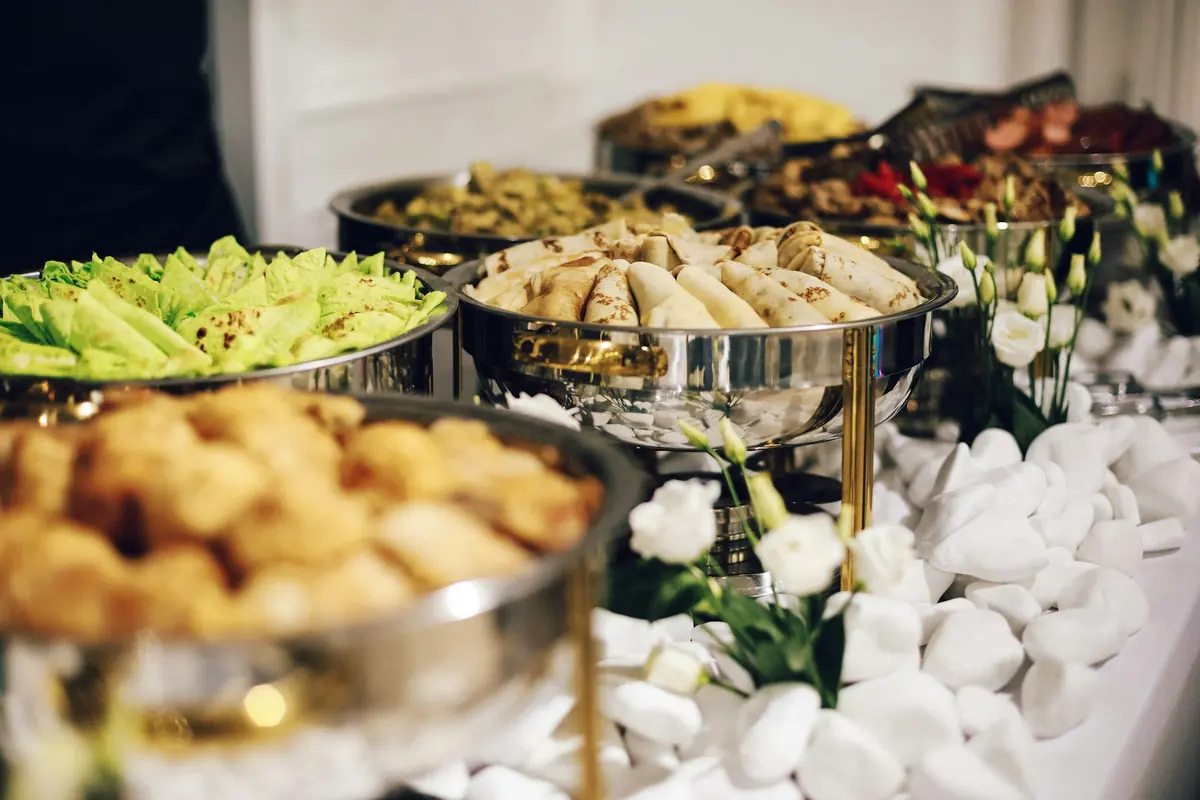
Ordering food for twenty people is a different problem from ordering dinner. Order too little and you are apologising; order too much and you are carrying trays home.
Mediterranean food is unusually forgiving here, because it is built to be shared. Here is how to work out quantities without guessing.
The quick rule
For a mixed group, plan on roughly one main portion per person, plus about half a portion of sides per person, plus one dip or salad for every four to six people. If the group is standing and grazing rather than sitting down to eat, you can reduce the mains and increase the sides.
Why Mediterranean food scales well
The traditional structure of this cuisine leans on grains, vegetables and legumes, with meat used more sparingly than in a typical American main course. Oldways, the nonprofit behind the Mediterranean Diet Pyramid, recommends building meals around beans, whole grains and vegetables and treating meat as a garnish rather than the centrepiece.
That matters for group ordering, because rice, salads and dips are cheaper per head than meat and they stretch further. A spread that looks generous does not have to be mostly protein.
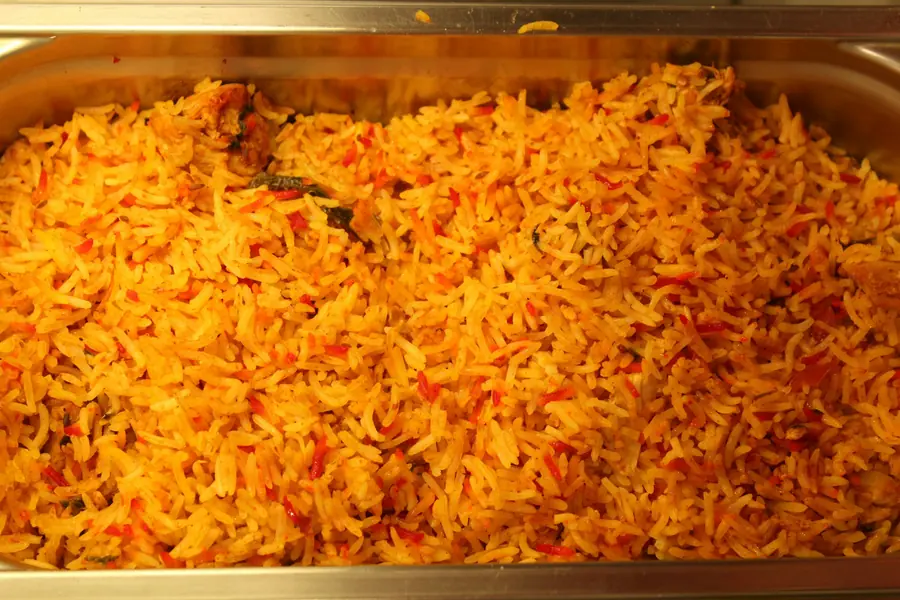
Planning by headcount
These are planning starting points rather than fixed rules — appetites, timing and whether it is a sit-down meal all shift the numbers.
| Group size | Mains | Sides and rice | Dips and salads |
|---|---|---|---|
| 10–15 | 10–14 portions | 5–7 portions | 2–3 shared |
| 20–30 | 20–28 portions | 10–15 portions | 4–6 shared |
| 40–60 | 38–55 portions | 20–30 portions | 8–12 shared |
| 75–100 | 70–95 portions | 35–50 portions | 15–20 shared |
Two adjustments are worth making. Lunch crowds eat less than dinner crowds. And if the event runs long — an open house rather than a seated meal — people graze steadily, so weight the order toward things that hold well.

The same question applies afterwards, and there will be leftovers. Our guide to storing and reheating Mediterranean food covers what comes back well the next day and what is strictly a same-day proposition.
What holds well, and what does not
Not everything survives sitting on a table for an hour. If your event has a long serving window, lean on the first list.
| Holds well | Serve promptly |
|---|---|
| Rice and grain dishes | Wraps, which soften once assembled |
| Grilled meats kept covered | Fried items, which lose their crispness |
| Hummus and other dips | Dressed salads, which wilt |
| Roasted vegetables and potatoes | Anything served hot and crisp |
A practical trick: order dressings and sauces on the side for large groups. Salads stay crisp, and people who want more sauce can add it themselves.
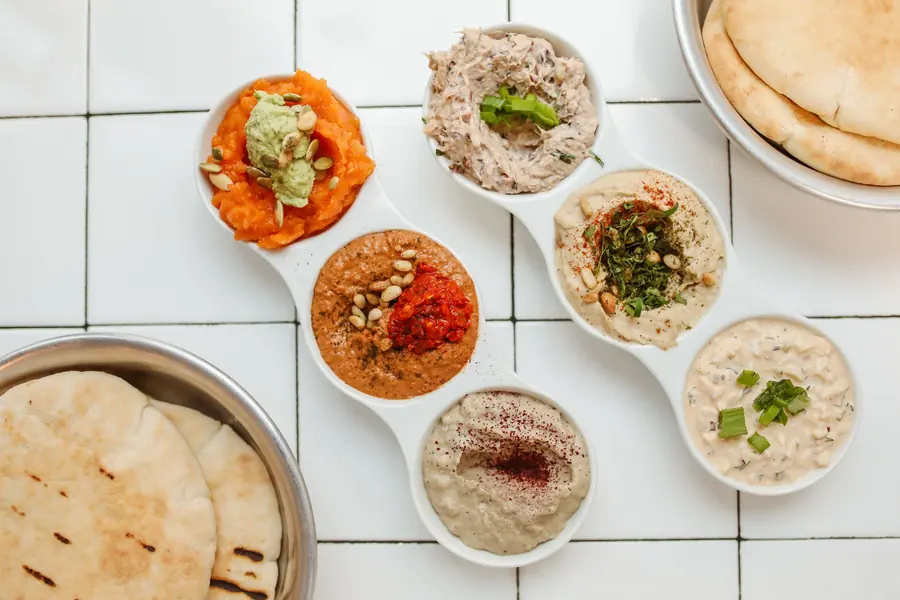
Cover the whole room, not just the average guest
The most common ordering mistake is planning only for the middle of the group. A few small additions make a spread work for everyone.
- Include a substantial vegetarian option — falafel, hummus and salad work as a full plate, not just a side.
- Ask about allergens directly rather than assuming from dish names. Sesame in particular is common in this cuisine, in tahini and in bread.
- Confirm the dietary standard if it matters to your guests. If you need the food to be halal, ask the restaurant rather than inferring it from the cuisine — the two are not the same thing.
- Order a little extra rice and bread. They are the cheapest way to make a table look generous, and they are what runs out first.
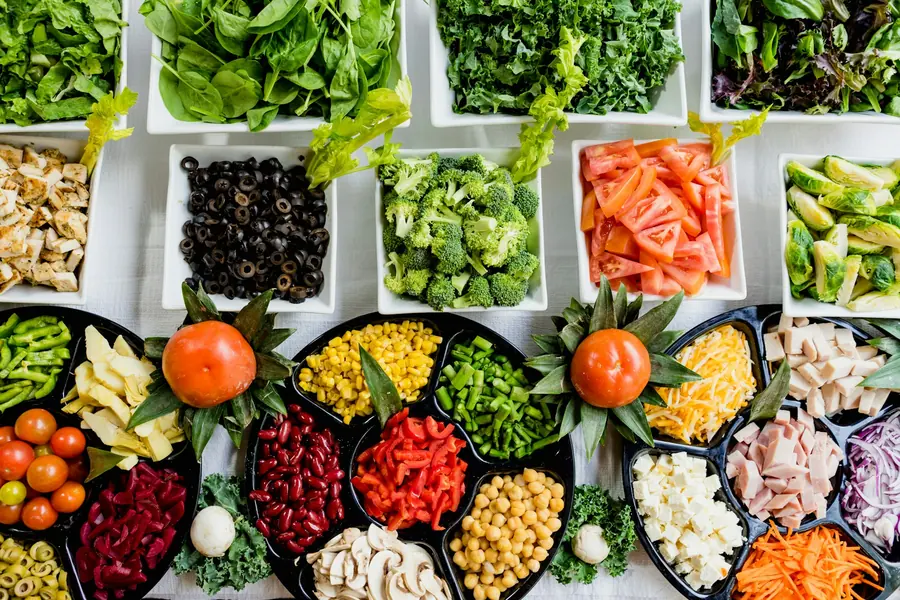
Allergens deserve their own conversation when you are ordering for a group. Our guide to common allergens on a Mediterranean menu covers where sesame, nuts and dairy typically appear and how to raise them when you book.
What people actually eat, versus what you order
Group orders rarely get eaten evenly, and knowing the pattern saves money.
- The first dish on the line runs out first, whatever it is. Put the least expensive item there.
- Chicken goes faster than beef or lamb in mixed groups, so weight the protein split toward chicken unless you know the room well.
- Vegetarian dishes get eaten by everyone, not only by vegetarians. Order more than the number of vegetarians present.
- Bread and rice absorb the shortfall. Slightly too little meat goes unnoticed if there is plenty of both.
A useful sanity check: if meat makes up more than about half the volume of food on the table, you have probably over-ordered on the expensive part and under-ordered on everything else.
If some of your guests eat halal, there is an additional decision about whether to split the order or cater everything from one kitchen. Our guide to how halal catering works in San Marcos goes through that, and through buffet versus boxed formats.
Quantity is one half of a catering order and timing is the other. Our catering planning timeline covers how far ahead to book, when to confirm the final headcount, and how to time the food so it is not sitting out through the first hour.
Timing and logistics
Quantity is only half of a group order. The other half is when the food arrives and how it is served.
- Order earlier than feels necessary. Large orders take kitchen time, and weekends and holidays book up first.
- Decide pickup or delivery early, because it changes how the food is packed. Trays for a buffet and individual containers for a desk lunch are different orders.
- Give a serving time, not just a collection time. A kitchen can pack food to be at its best at 12:30 if it knows that is when people will eat.
- Plan the serving line. Rice first, then meat, then salads and sauces at the end keeps the queue moving and stops the first ten people taking all the toppings.
If the group includes people who will arrive late, ask for some of the food to be held back rather than all of it going out at once.
Catering at Halal Basket
We cater in San Marcos for office lunches, family celebrations and events. Our catering request form covers groups from 10 to 500, and you choose from the same menu we serve in the restaurant — meat plates, wraps, salads, sides, pizzas, kids’ options and dessert.
If you are new to the food itself, our guide to ordering at a Mediterranean restaurant explains what the plates, wraps and sauces actually are, which makes choosing a spread much easier.
Everything we serve is made with halal ingredients, which removes one question from the planning if you are feeding a mixed group. Tell us the headcount and the date and we will help you work out quantities — the catering request form is here, or you can look through the menu first.

A halal kitchen is also the lowest-friction choice for a table where people eat differently, which is a large part of why groups end up at one — we go through why that is.
Frequently asked questions
How much food should I order per person for a group?
As a starting point, plan on about one main portion per person, roughly half a portion of sides per person, and one dip or salad shared between every four to six people. Reduce the mains if guests are grazing rather than sitting down.
Is it better to over-order or under-order?
Slightly over-order on rice, bread and dips rather than on meat. They are the least expensive items, they are what runs out first, and they keep better as leftovers than dressed salads or fried food.
What food holds up best for a long event?
Rice and grain dishes, covered grilled meats, dips and roasted vegetables all hold well. Wraps, fried items and dressed salads are best served promptly, so ask for dressings on the side if the serving window is long.
How far ahead should I place a catering order?
Give as much notice as you can, particularly for larger groups and weekends. Contact the restaurant directly with your headcount and date to confirm what is possible.
Can you cater for guests with different dietary needs?
Ask the restaurant directly rather than assuming from the menu. Include a substantial vegetarian option in any group order, and raise allergens explicitly — sesame is common in Mediterranean cooking, in tahini and in some breads.
Ordering for a group is mostly about structure rather than volume: one main each, sides at roughly half that, and dips shared between every few people.
Tell us your headcount and date and we will help you plan the order.