
Greek food looks like a safe bet for halal eating. Grilled meat, lemon, olive oil, yogurt, vegetables, warm bread — very little of it sounds like a problem.
Most of it is not. But Greek cuisine has two specific habits that catch people out, and both are easy to miss if you order by dish name alone.
The short answer
Greek food is not automatically halal. Many Greek dishes — salads, dips, grilled chicken, rice, roasted vegetables — are straightforward. But pork is one of the most common meats in Greek cooking, and wine is used routinely in braises and sauces. Whether a Greek meal is halal depends on the dish and the kitchen.
The two things to watch for
1. Pork is everywhere in traditional Greek cooking
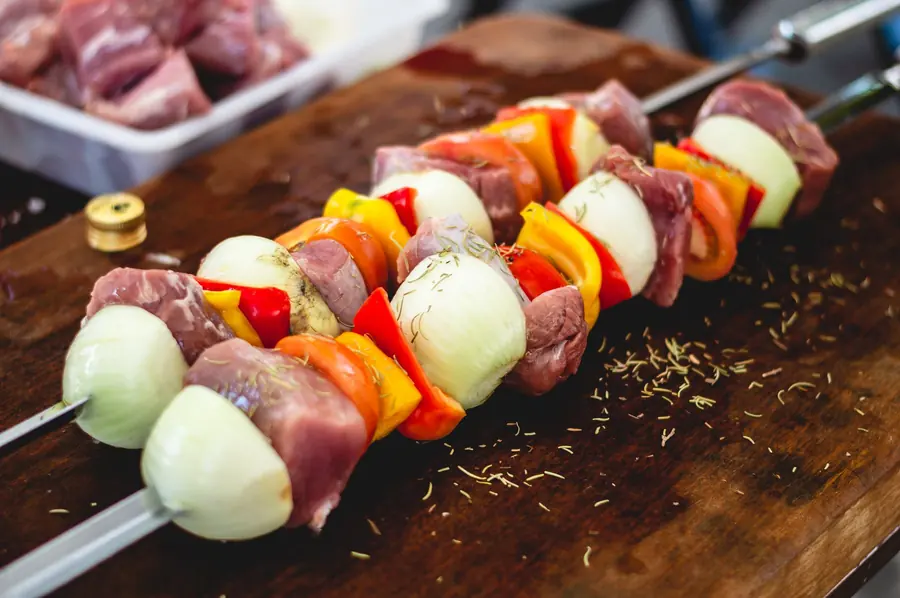
This is the big one. Gyro in Greece is traditionally pork. So is souvlaki in much of the country. Dishes like hirino are pork by definition, and cured pork appears in pies and bakes.
It is not a fringe ingredient — it is a staple, which is why you cannot assume a Greek meat dish is lamb or beef just because those feel more Mediterranean.
2. Wine is a cooking ingredient, not just a drink
Greek braises, stews and pan sauces frequently start with wine. Retsina and brandy show up in slow-cooked dishes and in some desserts. The alcohol is often described as cooking off, but for halal purposes the question is whether it was used at all, so it is worth asking directly.
Greek dishes: usually fine, or worth checking
| Dish | Usually fine? | The catch |
|---|---|---|
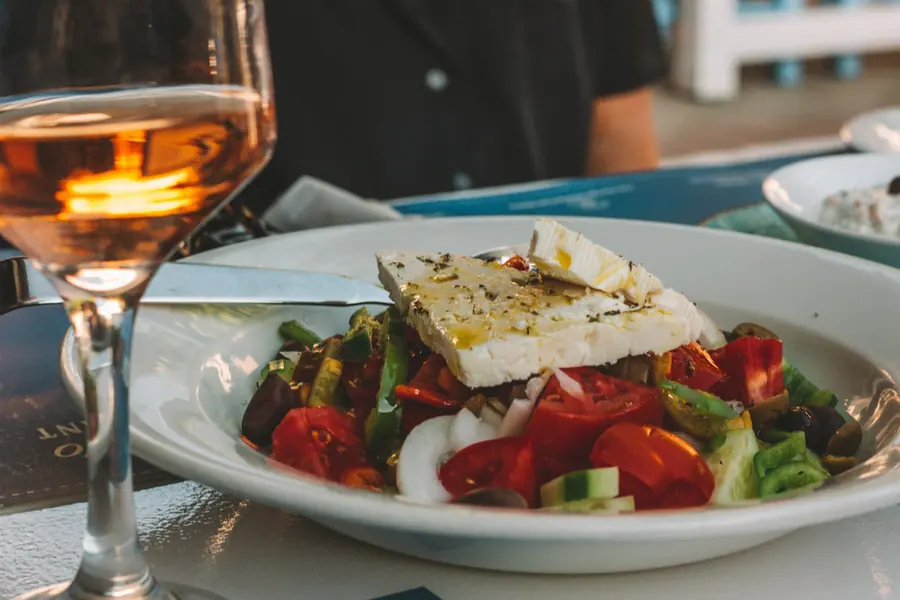
| Greek salad (horiatiki) | Yes | Just the dressing |
| Tzatziki and yogurt dips | Yes | Dairy-based, no meat |
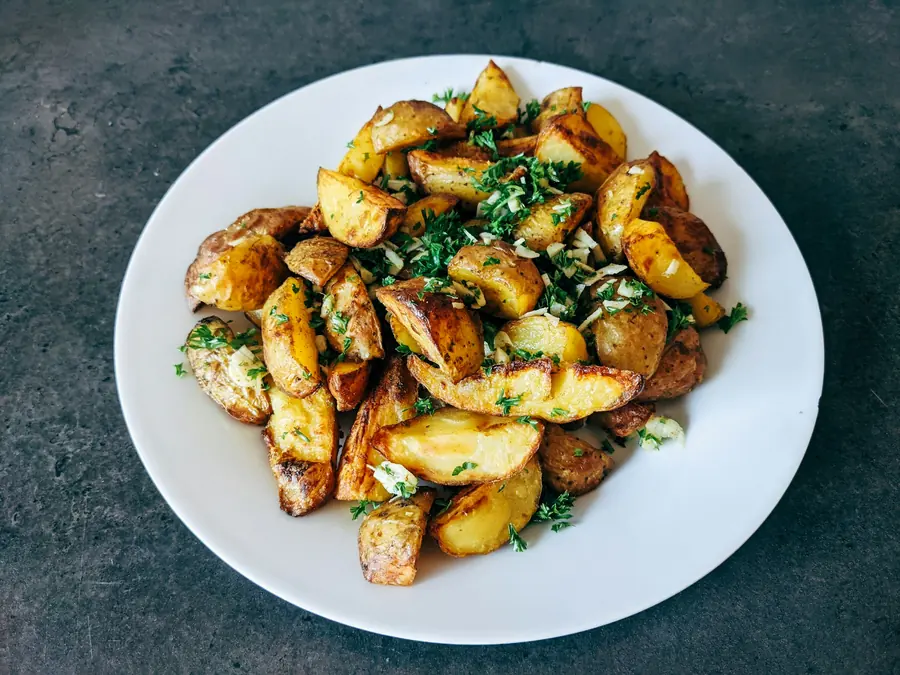
| Lemon roasted potatoes | Yes | Occasionally roasted in meat fat |
| Dolmades (stuffed vine leaves) | Usually | Some versions are stuffed with pork |
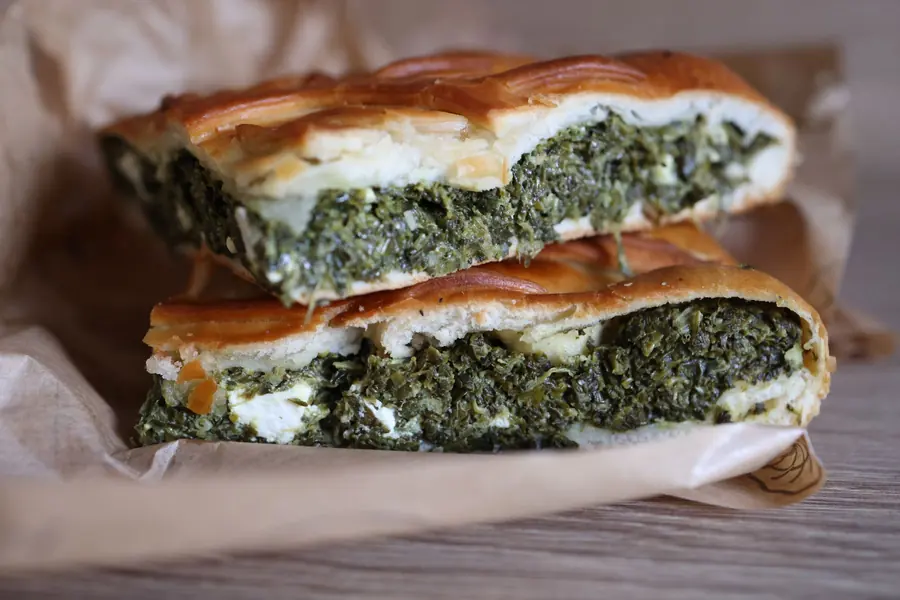
| Spanakopita | Usually | Spinach and cheese; check the pastry and filling |
| Grilled chicken souvlaki | Depends | Sourcing of the meat |
| Pork souvlaki or pork gyro | No | Pork by definition |
| Moussaka | Depends | Usually lamb or beef, but wine is common in the sauce |
| Stifado and other braises | Needs checking | Almost always built on wine |
The vegetarian half of a Greek menu
Greek cooking has an unusually deep vegetable tradition, partly because the Orthodox calendar includes long periods of fasting from meat and dairy. The result is a whole category of dishes — collectively called ladera, meaning cooked in olive oil — that were never built around meat in the first place.
Gigantes plaki (baked butter beans), briam (roasted vegetables), fava (split pea purée), horta (boiled greens with lemon) and stuffed tomatoes all sit in this group. The Greek national tourism organisation’s overview of Greek gastronomy gives a sense of how central these dishes are rather than being an afterthought for vegetarians.
If you are ever unsure about a Greek meat dish, this side of the menu is usually the easier order.
So can Greek-style food be halal?
Comfortably, yes — and this is where a lot of Mediterranean restaurants in the US sit. The flavour profile of Greek cooking does not depend on pork or wine. Oregano, lemon, garlic, olive oil and yogurt do the work.
Swap the pork for beef, lamb or chicken and leave the wine out of the pan, and you keep everything that makes the food taste Greek. That is why halal gyro, halal souvlaki-style skewers and tzatziki sit together on menus without any awkwardness.
Desserts, pastries and drinks
The sweet end of a Greek menu is mostly uncomplicated. Baklava is built from phyllo, nuts and honey syrup. Galaktoboureko is a custard pastry. Loukoumades are dough fritters in honey. None of these depend on anything forbidden, though it is reasonable to ask whether butter or any spirit has gone into the syrup, since brandy occasionally does.
Drinks are the clearer issue. Ouzo, retsina and Greek wines are a real part of the traditional table, so a Greek restaurant will often have a full bar. That does not affect the food you order, but it is worth knowing if you would rather eat somewhere that does not serve alcohol at all.
What to ask, and what to order
- Ask what the gyro meat is. Beef and lamb is a common answer outside Greece; pork is the traditional answer inside it.
- Ask about wine in the sauces if you are ordering anything braised or slow-cooked.
- Lean on the vegetarian side of the menu when you are unsure — Greek salads, dips, potatoes and pastries carry the cuisine well on their own.
Greek cooking is the strictest case in the region. Its Levantine neighbours use pork far less — we look at that in whether Lebanese food is halal, which sits at the other end of the same spectrum.
For the rules themselves rather than the Greek case, our overview of what halal covers goes through slaughter, alcohol, cross-contamination and certification.
Eating Greek food outside Greece
Greek restaurants abroad often differ from Greek restaurants in Greece, and usually in the direction that helps here. Kitchens adapt to the meat their suppliers carry and to what their customers actually order.
In much of the US that has meant beef and lamb gyro rather than pork, simply because it sells to a broader range of customers. The result is that a Greek-style menu in Texas can be far easier to eat halal than the same menu in Athens — but it is the individual restaurant, not the country, that decides.
That cuts both ways, which is why it is worth asking rather than assuming. Some American Greek restaurants do serve pork gyro and pork souvlaki, and the menu will not always spell it out.
Turkey sits between the two on this question — pork barely appears in Turkish cooking, but alcohol is common in Turkish restaurants. We cover that in whether Turkish food is halal.
Greek-style dishes on our menu
At Halal Basket in San Marcos, the Greek influence shows up in the gyro and the Greek salad — lettuce, tomatoes, cucumber, onions, olives, feta cheese and Greek dressing. Our gyro is served over rice with hummus, salad and tzatziki sauce, or as a loaded wrap, and it is not made with pork.
All our menu items are made with halal ingredients, which is what lets us put gyro and tzatziki next to shawarma and kofta without any of the usual caveats. If you want to see how the dishes differ, our comparison of gyro and shawarma goes through the meat and sauces in detail, or you can look through the whole menu.
The wording on the window is worth reading carefully wherever you are — halal, halal-friendly and no pork are not synonyms, and the gap between the strongest and weakest of them is large.
Frequently asked questions
Is Greek food halal?
Not automatically. Many Greek dishes such as salads, dips, rice and grilled chicken are straightforward, but pork is a staple meat in Greek cooking and wine is commonly used in braises and sauces. It depends on the dish and the kitchen.
Is Greek gyro made from pork?
In Greece it traditionally is. Outside Greece, gyro is often made from a blend of beef and lamb, which is what makes halal gyro possible. Ask the restaurant what meat they use.
Is tzatziki halal?
Tzatziki is made from yogurt, cucumber, garlic and herbs, so the ingredients themselves contain nothing forbidden. It is normally fine, though as with any dish it is worth checking how it is prepared.
Is feta cheese halal?
It depends on the rennet used to make it. Some cheeses use animal rennet, others use microbial or vegetable rennet. If this matters to you, ask the restaurant or check the producer.
What can I order at a Greek restaurant if I eat halal?
Greek salad, tzatziki and other yogurt dips, hummus, lemon potatoes, rice and grilled vegetables are usually safe choices. For meat, confirm both what the meat is and whether it is halal before ordering.
Greek cuisine is not off-limits if you eat halal — but it is one of the Mediterranean cuisines where the dish name genuinely does not tell you enough. Pork and wine are both traditional, and both are easy to cook without.
Our Greek salad and gyro are both made with halal ingredients. Have a look at what else is on.